
BuddhistCatholicContemplativeEvangelicalGeneral ChristianHinduJewishLatter-day SaintMuslimNew VisionsProgressive Christian
Beliefs
- Buddhist
- Catholic
- Contemplative
- Evangelical
- General Christian
- Hindu
- Jewish
- Latter-day Saint
- More Voices
- Muslim
- New Visions
- Pagan
- Progressive Christian
Topics
- Religion News
- Food and Religion
- Sports and Religion
- Religious Art
- Religious Music and Entertainment
- Religious Events
- History and Religion
- Style and Religion
- Politics and Religion
- Women in Religion
- Recreation Outdoors and Religion
- Business Finance and Religion
- Careers Workplace and Religion
- Education and Religion
- Family Parenting and Religion
- Health Fitness and Religion
- Home and Religion
- Relationships and Religion
- Technology and Religion
- Travel and Religion
Columnists
- Buddhist Columnists
- Business Finance and Religion Columnists
- Careers Workplace and Religion Columnists
- Catholic Columnists
- Contemplative Columnists
- Education and Religion Columnists
- Evangelists Columnists
- Family Parenting and Religion Columnists
- General Christian Columnists
- Health Fitness and Religion Columnists
- Hindu Columnists
- History and Religion Columnists
- Home and Religion Columnists
- Jewish Columnists
- More Voices Columnists
- Latter Day Columnists
- Muslim Columnists
- New Visions Columnists
- Nonreligious Columnists
- Pagan Columnists
- Politics and Religion Columnists
- Progressive Columnists
- Recreation Outdoors and Religion Columnists
- Relationships and Religion Columnists
- Religion News Columnists
- Religious Art Columnists
- Religious Events Columnists
- Religious Music and Entertainment Columnists
- Sports and Religion Columnists
- Style and Religion Columnists
- Technology and Religion Columnists
- Travel and Religion Columnists
- Women in Religion Columnists
Resource Library
- 2026 Calendar
- Library of World Religions
- The 100 Most Holy Places on Earth
- Patheos Answers
- Podcasts
- Videos
- Faith Leaders Database
- Anglican Episcopalian
- Bahai
- Baptist
- Buddhism
- Christianity
- Confucianism
- Eastern Orthodoxy
- Hinduism
- Holiness and Pentecostal
- ISKCON
- Islam
- Judaism
- Lutheran
- Methodist
- The Church of Jesus Christ of Latter-day Saints
- New Age
- Paganism
- Presbytarian and Reformed
- Protestantism
- Religion Behind the Scenes
- Roman Catholic
- Scientology
- Shia Islam
- Sikhism
- Sufism
- Sunni Islam
- Taoism
- Zen
- See all religions
Research Tools
 Ad-Free & Subscriber Log-In Subscription Support
Follow Patheos 

- Trending:
- Advent
- |
- Forgiveness
- |
- Thanksgiving
- |
- Election
- |
- Seasonal Holidays
- |
- Marriage
Memorial Day and the Spirit of Sacrifice
May 17, 2011 by Bruce Epperly
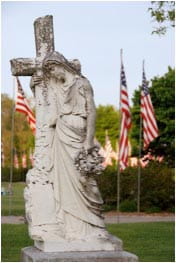
As I ponder the theological and spiritual dimensions of Memorial Day, my thoughts return to the Mother's Day Celebration at our home in Lancaster, Pennsylvania. My son and I, and our nine-month-old grandson, gave thanks for the gifts of love embodied in three generations of mothers. A parent's love embraces joy and sorrow, playfulness and sacrifice. For parents, fathers and mothers alike, love is embodied in acts of sacrifice—midnight feedings, trips to the doctor and pharmacy, helping with homework rather than playing golf or going to a movie, agonizing over a child's fears and anxieties, and deferring personal gratification so that our children may have the financial resources to flourish. Whether it's a matter of choice or DNA—and most likely it is both—parenting is, by nature, sacrificial. It expands our sense of self to include our children's wellbeing.
I would go so far as to say that sacrifice is built into the nature of reality, or at least what it means to live a good life. We let go of certain things, so that greater things may come to pass. We defer gratification, so that others might flourish. We live simply so that others might simply live. We give up our time—and maybe even our lives—to protect the innocent and vulnerable.
Sacrifice is built into the interdependence of life. Contrary to Ayn Rand's rugged and metaphysically implausible individualism, every achievement an individual makes is grounded in the sacrifices of others; some are sacrifices freely chosen, while others are tragically forced (for example, sweat shops and slavery). Sacrifice is essential to the wellbeing of the "body of Christ," described in 1 Corinthians 12. The various parts consciously—and I want to underline the word "consciously" or "willingly"—choose to place their own wellbeing in relationship to the wellbeing of the whole body. Here we are not talking about co-dependence or masochistic behavior but willingness to expand (and sometimes sacrifice) our understanding of our wellbeing to include the wellbeing of the wider world, whether it is our family, congregation, country, or the planet.
Jesus proclaimed that there is no greater love than giving one's life for another. This isn't a matter of being a scapegoat, although there is much wisdom in the work of Girard and his followers, but a deeper recognition of one's responsibility to sacrifice so that others may experience safety, joy, growth, and abundant life. Jesus followed the way of the cross—when other alternatives were possible, I believe—as a working out of his vocation and choice to affirm his calling so that we might have abundant life. Jesus' sacrifice was neither compelled by God nor predestined but emerged from the alignment of his vision and will with God's vision for abundant life for all creation.
Memorial Day has traditionally been about sacrificial living. Beginning first in the years following the Civil War, Memorial Day commemorated those who died in this tragic conflict. After World War I, Memorial Day was expanded to include all who died in service to their country. Initially, just military graves were decorated with flowers. However, over the years, many people also chose to decorate the graves of loved ones—fathers, mothers, children, brothers, and friends—on Memorial Day. This was an acknowledgement that "greater love" has many dimensions that go beyond military sacrifice.
While Memorial Day is a national holiday, it has profound spiritual lessons for us. It is about sacrifice and love of family and nation, not chauvinism and violence. If Memorial Day has a place in the liturgies or worship services of the church, its place is to inspire gratitude and remembrance for those who have sacrificed life and labor, and time, talent, and treasure, for the greater good.
Regardless of your political and religious views of military service and just warfare, I believe that it is appropriate to remember fallen soldiers and first responders in Christian worship on Memorial Day weekend. The spiritual dimension of their sacrifice is that they looked beyond their own self-interest, even as they climbed the steps of the World Trade Center, protected an Afghan family, or guard our nation's coastline or skies. In saying "yes" to their vocation, they knew it might place them in harm's way.
The sacrificial love remembered on Memorial Day is about vocation and choice, rather than co-dependence or aggrandizement. As we look at the vocation of those who sacrifice on our behalf, we are challenged to move beyond our individualism, narcissism, consumerism, and self-interest—and this may even include "American exceptionalism" or "America first" ideologies—to embrace the wellbeing of others, including the planet. We can celebrate our nation's fallen heroes without being nationalistic.
Memorial Day is about remembering, and then dedicating our own lives to a larger, greater good for those we love, our nation—and this may mean protesting against military action, injustice, and enmity to immigrants—and the planet as a whole.
As you ponder Memorial Day, take time to ask the following questions: What sacrifices are you called to make for the greater good—in your family, among your circle of friends, and in your congregation, community, and nation? What sacrifices are you called to make for the vulnerable people in our land and across the globe? What sacrifices are you called to make for this good earth?
5/17/2011 4:00:00 AM
Mainline Protestant
Mainline Protestantism
Memorial Day
Sacrifice
Christianity
more at patheos
1

Spiritual Resilience Grows Here
2

The Joyful Noise Principle: Worshiping God As He Deserves
3

4
Faith & Works: Harmonizing the Bible (Dialogue)
About Bruce Epperly
Bruce Epperly is a theologian, spiritual guide, pastor, and author of twenty one books, including Process Theology: A Guide for the Perplexed, Holy Adventure: 41 Days of Audacious Living, and The Center is Everywhere: Celtic Spirituality for the Postmodern Age. He may be reached at [email protected] for lectures, workshops, and retreats.
Patheos Explore the world's faith through different perspectives on religion and spirituality! Patheos has the views of the prevalent religions and spiritualities of the world.
Ad-Free & Subscriber Log-In Subscription Support
- About Us
- 2026 Calendar
- Videos
- Podcasts
- Library of World Religions
- Faith In Media Tracker
- Advertise With Us
- Write for Us
- Privacy Policy
- Terms of Service
- Do Not Sell My Data
- Contact Us
- Radiant Digital
- Manage Newsletter Subscriptions
- Unsubscribe From Notifications
- Sitemap
Copyright 2008-2026, Patheos, part of the Radiant Digital network of media brands. All rights reserved.
Subscription Support Ad-Free & Subscriber Log-In
Follow Patheos