
BuddhistCatholicContemplativeEvangelicalGeneral ChristianHinduJewishLatter-day SaintMuslimNew VisionsProgressive Christian
Beliefs
- Buddhist
- Catholic
- Contemplative
- Evangelical
- General Christian
- Hindu
- Jewish
- Latter-day Saint
- More Voices
- Muslim
- New Visions
- Pagan
- Progressive Christian
Topics
- Religion News
- Food and Religion
- Sports and Religion
- Religious Art
- Religious Music and Entertainment
- Religious Events
- History and Religion
- Style and Religion
- Politics and Religion
- Women in Religion
- Recreation Outdoors and Religion
- Business Finance and Religion
- Careers Workplace and Religion
- Education and Religion
- Family Parenting and Religion
- Health Fitness and Religion
- Home and Religion
- Relationships and Religion
- Technology and Religion
- Travel and Religion
Columnists
- Buddhist Columnists
- Business Finance and Religion Columnists
- Careers Workplace and Religion Columnists
- Catholic Columnists
- Contemplative Columnists
- Education and Religion Columnists
- Evangelists Columnists
- Family Parenting and Religion Columnists
- General Christian Columnists
- Health Fitness and Religion Columnists
- Hindu Columnists
- History and Religion Columnists
- Home and Religion Columnists
- Jewish Columnists
- More Voices Columnists
- Latter Day Columnists
- Muslim Columnists
- New Visions Columnists
- Nonreligious Columnists
- Pagan Columnists
- Politics and Religion Columnists
- Progressive Columnists
- Recreation Outdoors and Religion Columnists
- Relationships and Religion Columnists
- Religion News Columnists
- Religious Art Columnists
- Religious Events Columnists
- Religious Music and Entertainment Columnists
- Sports and Religion Columnists
- Style and Religion Columnists
- Technology and Religion Columnists
- Travel and Religion Columnists
- Women in Religion Columnists
Resource Library
- 2026 Calendar
- Library of World Religions
- The 100 Most Holy Places on Earth
- Patheos Answers
- Podcasts
- Videos
- Faith Leaders Database
- Anglican Episcopalian
- Bahai
- Baptist
- Buddhism
- Christianity
- Confucianism
- Eastern Orthodoxy
- Hinduism
- Holiness and Pentecostal
- ISKCON
- Islam
- Judaism
- Lutheran
- Methodist
- The Church of Jesus Christ of Latter-day Saints
- New Age
- Paganism
- Presbytarian and Reformed
- Protestantism
- Religion Behind the Scenes
- Roman Catholic
- Scientology
- Shia Islam
- Sikhism
- Sufism
- Sunni Islam
- Taoism
- Zen
- See all religions
Research Tools
 Ad-Free & Subscriber Log-In Subscription Support
Ad-Free & Subscriber Log-In Subscription Support
Follow Patheos 

- Trending:
- Forgiveness
- |
- Marriage
- |
- Consciousness
- |
- Death Penalty
- |
- Election
- |
- Halloween
Pagan
Free and Easy Wandering
May 29, 2011 by Eric Scott
In a few hours, I will be heading out to the Gaea Retreat for the Heartland Pagan Festival. Heartland is the only Pagan festival I have attended, due to it being less than an hour away from my apartment and because I have friends who would murder me if I tried to skip it. As a result, Heartland is my only regular exposure to the greater Pagan community; most of the time, I'm just working with my family coven. I have never been one much for public rituals or community meetings, I'm afraid—it's the hermit in me.
But Heartland gives me a little time every year to drown myself in the company of Pagans far afield of my usual interests. I've met Pagans who draw much firmer lines between their beliefs and everybody else's than I do; I've met Pagans whose beliefs seem so fluid that they change mid-sentence. I've met many people more uptight than myself, and many, many more with less shame. I have participated in several rituals and workshops that I found embarrassing, and several that have been life-changing. Even at a regional festival like mine, there are a great many things calling themselves "Paganism." I can only imagine what it's like at a bigger festival, what variations on the "Pagan" label could be found.
I read Drew Jacob's "Why I'm Not Pagan" post today, which deals with his own temple's grappling with the questions of Pagan identity (and their eventual decision not to claim it). I came away from it with mixed feelings. Morally, I have no problem with Jacob's decision. I have a few intellectual qualms—I feel, probably unjustly, that there's an element of pulling rank in the decision not to identify with neo-Paganism, but instead to identify with more "legitimate" faiths like Hinduism. The Heroic Path, I must admit, seems like just a particularly strong form of Celtic Reconstructionist Paganism to me. But if the Temple of the River's adherents don't consider themselves Pagans, then they aren't, simple as that—self-definition is the most fundamental freedom.
Still, I've always wondered about the ways we define ourselves, we Pagans and heathens and witches and polytheists. Most of the blog posts I've seen in reference to "Why I'm Not Pagan" have included a sentence of self-definition: "I'm a Hellenic/Kemetic/Druidic/etc. polytheist whose practice include . . ." These statements tend to puzzle me. I have never had a moment of such certainty in my life. People have such firm visions of what their identity includes—and, perhaps more importantly, what it does not include—and I guess I've simply never felt that way.
Let me engage in a bit of hypocrisy and give my own self-definition. My family coven is Wiccan, a few steps removed from Alex Sanders, and that has always been the foundation of my beliefs, more or less. But I've never just been Wiccan. I studied Taoism when I was 9 years old; when I was in high school, I developed a strong love for Egyptian deities, especially Horus and Set; in college (as a result of a Heartland experience, in fact) I became fascinated by Heathenry and Asatru. Every year and a half or so, I get a Kabbalistic urge and try to make sense of the sephira again. I even flirted with Gnosticism once, until I realized I was only looking for somebody to cheer for in a History of Christian Thought class.
But I've never stopped being Taoist, or a Wiccan, or a Kabbalist. The idea of making hard lines like that in my identity has just never occurred to me. It's entirely possible that this is because of my early adoption of Taoism, which has always existed in harmony with other religions; as the old saying goes, the Chinese were Confucians at work, Taoists at play, and Buddhists at death. I suppose I've always taken that sentiment and applied it to my Pagan beliefs as well. When I'm doing a ritual with my coven, I'm Wiccan; when I'm doing toasting Odin at my altar, I'm Asatru; when I'm listening to the birds in the forest, I'm Taoist. Perhaps that makes me undedicated, disrespectful or—worst of all—eclectic, but it's how I am.
And perhaps that's why I don't quite understand all the fuss about labels. Adopt them or ignore them as you like; as far as I'm concerned, a Pagan is a person who calls herself a Pagan. There are more useful theoretical definitions for our hodge-podge of faiths, but on a practical, individual level, that's the only one that matters. We should call ourselves whatever we want to call ourselves, and respect the decisions of others to do the same. As I walk around Heartland tomorrow, I'm sure to find all manner of things I consider either too silly or too humorless for my tastes, but that's fine—healthy, even. Who wants homogeneity?
The only time I feel like the greater Pagan/polytheist/whatever community really needs to stay together is when it comes to defending our collective religious freedoms, but I can't imagine we'd abandon each other just because of nomenclature. (Well, okay, I can imagine it, but it would be silly.) Even if we consider the practical differences between our paths to be irreconcilable, protecting each other's rights to pursue those paths is in everyone's best interests.
But in terms of personal association? Be with the people you want to be with, call yourself what you want to call yourself, believe what you want to believe. Otherwise, we're just living with a different kind of dogma.
5/29/2011 4:00:00 AM
Pagan
Family Traditions
Community
identity
Paganism
more at patheos
1
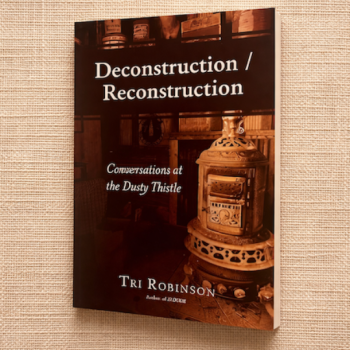
Secondhand Smoke: Tri Robinson Discusses Deconstruction
2

How Can We Utilize AI in a Way That Honors Christ?
3

4

The Obsolete Paradigm of a Purely Mythical Jesus

About Eric Scott
Eric Scott was raised in St. Louis by Coven Pleiades, a Wiccan group based in the Alexandrian tradition. His fiction and memoir explore the joys and doubts of being a second-generation Pagan in the modern world. He holds an MFA in Creative Writing from the University of Missouri. His work has appeared in or is forthcoming in Ashe! Journal, Kerouac's Dog Magazine, Caper Literary Journal, and Witches & Pagans. He is also a Contributing Editor at Killing the Buddha.
Patheos Explore the world's faith through different perspectives on religion and spirituality! Patheos has the views of the prevalent religions and spiritualities of the world.
Ad-Free & Subscriber Log-In Subscription Support
- About Us
- 2026 Calendar
- Videos
- Podcasts
- Library of World Religions
- Faith In Media Tracker
- Advertise With Us
- Write for Us
- Privacy Policy
- Terms of Service
- Do Not Sell My Data
- Contact Us
- Radiant Digital
- Manage Newsletter Subscriptions
- Unsubscribe From Notifications
- Sitemap
Copyright 2008-2026, Patheos. All rights reserved.
Subscription Support Ad-Free & Subscriber Log-In
Follow Patheos