
BuddhistCatholicContemplativeEvangelicalGeneral ChristianHinduJewishLatter-day SaintMuslimNew VisionsProgressive Christian
Beliefs
- Buddhist
- Catholic
- Contemplative
- Evangelical
- General Christian
- Hindu
- Jewish
- Latter-day Saint
- More Voices
- Muslim
- New Visions
- Pagan
- Progressive Christian
Topics
- Religion News
- Food and Religion
- Sports and Religion
- Religious Art
- Religious Music and Entertainment
- Religious Events
- History and Religion
- Style and Religion
- Politics and Religion
- Women in Religion
- Recreation Outdoors and Religion
- Business Finance and Religion
- Careers Workplace and Religion
- Education and Religion
- Family Parenting and Religion
- Health Fitness and Religion
- Home and Religion
- Relationships and Religion
- Technology and Religion
- Travel and Religion
Columnists
- Buddhist Columnists
- Business Finance and Religion Columnists
- Careers Workplace and Religion Columnists
- Catholic Columnists
- Contemplative Columnists
- Education and Religion Columnists
- Evangelists Columnists
- Family Parenting and Religion Columnists
- General Christian Columnists
- Health Fitness and Religion Columnists
- Hindu Columnists
- History and Religion Columnists
- Home and Religion Columnists
- Jewish Columnists
- More Voices Columnists
- Latter Day Columnists
- Muslim Columnists
- New Visions Columnists
- Nonreligious Columnists
- Pagan Columnists
- Politics and Religion Columnists
- Progressive Columnists
- Recreation Outdoors and Religion Columnists
- Relationships and Religion Columnists
- Religion News Columnists
- Religious Art Columnists
- Religious Events Columnists
- Religious Music and Entertainment Columnists
- Sports and Religion Columnists
- Style and Religion Columnists
- Technology and Religion Columnists
- Travel and Religion Columnists
- Women in Religion Columnists
Resource Library
- 2026 Calendar
- Library of World Religions
- The 100 Most Holy Places on Earth
- Patheos Answers
- Podcasts
- Videos
- Faith Leaders Database
- Anglican Episcopalian
- Bahai
- Baptist
- Buddhism
- Christianity
- Confucianism
- Eastern Orthodoxy
- Hinduism
- Holiness and Pentecostal
- ISKCON
- Islam
- Judaism
- Lutheran
- Methodist
- The Church of Jesus Christ of Latter-day Saints
- New Age
- Paganism
- Presbytarian and Reformed
- Protestantism
- Religion Behind the Scenes
- Roman Catholic
- Scientology
- Shia Islam
- Sikhism
- Sufism
- Sunni Islam
- Taoism
- Zen
- See all religions
Research Tools
 Ad-Free & Subscriber Log-In Subscription Support
Ad-Free & Subscriber Log-In Subscription Support
Follow Patheos 

- Trending:
- Forgiveness
- |
- Marriage
- |
- Consciousness
- |
- Death Penalty
- |
- Election
- |
- Halloween
A Chance for a New Creation: An Interview with Bishop Greg Rickel
May 23, 2011 by Greg Garrett
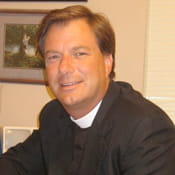 On May 6, at Saint Mark's Cathedral in Seattle, Greg Rickel, the Episcopal Bishop of Olympia (Western Washington), participated in an interfaith service of prayer with Muslim leaders, including Imam Feisal Abdul Rauf, the so-called "Ground Zero" imam. At the end of the evening, he and Imam Rauf embraced, and shortly afterward, an audience member approached Bishop Rickel with tears running down his face. "That has brought my faith back," he said, and the memory of that evening of encounter was still lighting up Greg Rickel's face recently when we met for a couple of pints near the Episcopal Seminary of the Southwest in Austin, Texas.
Helping to remind people of the life-saving elements of faith—or to ignite faith in the first place—is at the heart of Greg's career in ministry, first as a parish priest, now as one of the youngest and most dynamic bishops in the Episcopal Church. I was once Greg's parishioner at St. James Episcopal Church in East Austin, and our relationship was a vital part of my re-engagement with the Church and with my renewed life as a Child of God. My story is far from unique. Ask anyone who has worshipped with Greg or worked with Greg and you'll hear similar engagement and enthusiasm. In a world where too many believers are angry, suspicious, moralistic, and fearful, Greg Rickel is constantly reminding us that true faith is about love, forgiveness, and spiritual practice.
Greg Garrett: Greg, you went from working in parishes in the American South and Southwest to serve as the Bishop of Olympia, working in the largely Post-Christian culture of the Northwest. What have you observed about what is working for the churches and people of your diocese? How can the Church continue to be relevant and draw people into the life of the spirit as the culture changes around us?
Greg Rickel: Good question, Greg, and one I get from time to time. One answer is that people are people, and even more church people are church people. That being said, what works seems to be similar too, but even more important and even crucial here: authenticity, honesty, and contextual intuition. I find that people do not so much look for a place where everyone believes "like them" as much as a place where people are real, not afraid to ask questions, and can find a safe place to be in holy disagreement.
I experienced also in the South a last vestige of the social requirement to be in church, belief not necessarily being a part of that requirement. There is none of that here, which, in some ways makes it much more authentic. In the South it was expected, and maybe for at least a little longer, you are looked down on if you don't attend church. Here, it is exactly the opposite. If you are in the church in the Pacific Northwest, you really want to be there!
Beyond that which I would call the good holy discourse and conversation, is good music. It almost doesn't matter what kind, but that it is done well, taken seriously. An example would be a small church of ours on Camano Island which monthly does what they call a Selah Service, which consists of a violinist, and an electric piano player who also sings and chants. They are both incredible musicians, playing Celtic music, much of it written by them, with a deep 10-minute silence right in the middle. The night I snuck up to see it, as incognito as I could, there were almost 60 people present. Another example would be the Compline service at St. Mark's Cathedral, Seattle, which has gone on every Sunday night for over 55 years, and consistently draws 600+, many of them young people, for a 30-minute Gregorian chant service. They all stand for the Nicene Creed. It is remarkable to be part of. My blog, www.bishoprickel.com, has a list of seven questions I asked people 19-35 to respond too. If you look at those responses, music, good music, is all over the place.
I think this "none zone" part of the world gives us a great opportunity, as many of those who do not consider themselves religious also do not have a negativity toward it, especially very young ones. Some of them know nothing of it, so the opportunity is not to have to begin with so much of the baggage of the past interdenominational and intradenominational squabbles of the past. There is, in the midst of what seems like despair, the chance for a new creation. Sounds like Easter to me!
GG: Thanks, Greg. This makes sense. In The Other Jesus I wrote about communities coming together for God reasons as opposed to cultural reasons, and what you're experiencing in the Northwest may be a model for us of what is coming—or could be, if we do things right. Hearing about what seems to be working, though, makes me also wonder about where we're falling flat as a church. When I asked Andy Doyle [Episcopal Bishop of Texas] what he considered the biggest bar to the Church reaching out to the world, he named our own internal brokenness, the lawsuits, the split churches. Why, he asked, would people in a broken world want to step into more brokenness? I know there's something to what he says. If I had stepped into St. James, Austin, back in the early 2000s and experienced from you and the parish there anything less than the warmest hospitality and the most extravagant love, I wouldn't have been back. And I also wouldn't be alive today.
Article Continued On Next Page
Page: 1 of 3
5/23/2011 4:00:00 AM
Mainline Protestant
Bishop Greg Rickel
Episcopal Church
Mainline Protestantism
Christianity
more at patheos
1
Does Persecution Make Faith Stronger?
2
Patheos August 2026 Featured Writer: David Schloss
3

Reflections on My Religious Deconstruction
4

About Greg Garrett
Greg Garrett is (according to BBC Radio) one of America's leading voices on religion and culture. He is the author or co-author of over twenty books of fiction, theology, cultural criticism, and spiritual autobiography. His most recent books are The Prodigal, written with the legendary Brennan Manning, Entertaining Judgment: The Afterlife in Popular Imagination, and My Church Is Not Dying: Episcopalians in the 21st Century. A contributor to Patheos since 2010, Greg also writes for the Huffington Post, Salon.com, OnFaith, The Tablet, Reform, and other web and print publications in the US and UK.
Patheos Explore the world's faith through different perspectives on religion and spirituality! Patheos has the views of the prevalent religions and spiritualities of the world.
Ad-Free & Subscriber Log-In Subscription Support
- About Us
- 2026 Calendar
- Videos
- Podcasts
- Library of World Religions
- Faith In Media Tracker
- Advertise With Us
- Write for Us
- Privacy Policy
- Terms of Service
- Do Not Sell My Data
- Contact Us
- Radiant Digital
- Manage Newsletter Subscriptions
- Unsubscribe From Notifications
- Sitemap
Copyright 2008-2026, Patheos. All rights reserved.
Subscription Support Ad-Free & Subscriber Log-In
Follow Patheos