
BuddhistCatholicContemplativeEvangelicalGeneral ChristianHinduJewishLatter-day SaintMuslimNew VisionsProgressive Christian
Beliefs
- Buddhist
- Catholic
- Contemplative
- Evangelical
- General Christian
- Hindu
- Jewish
- Latter-day Saint
- More Voices
- Muslim
- New Visions
- Pagan
- Progressive Christian
Topics
- Religion News
- Food and Religion
- Sports and Religion
- Religious Art
- Religious Music and Entertainment
- Religious Events
- History and Religion
- Style and Religion
- Politics and Religion
- Women in Religion
- Recreation Outdoors and Religion
- Business Finance and Religion
- Careers Workplace and Religion
- Education and Religion
- Family Parenting and Religion
- Health Fitness and Religion
- Home and Religion
- Relationships and Religion
- Technology and Religion
- Travel and Religion
Columnists
- Buddhist Columnists
- Business Finance and Religion Columnists
- Careers Workplace and Religion Columnists
- Catholic Columnists
- Contemplative Columnists
- Education and Religion Columnists
- Evangelists Columnists
- Family Parenting and Religion Columnists
- General Christian Columnists
- Health Fitness and Religion Columnists
- Hindu Columnists
- History and Religion Columnists
- Home and Religion Columnists
- Jewish Columnists
- More Voices Columnists
- Latter Day Columnists
- Muslim Columnists
- New Visions Columnists
- Nonreligious Columnists
- Pagan Columnists
- Politics and Religion Columnists
- Progressive Columnists
- Recreation Outdoors and Religion Columnists
- Relationships and Religion Columnists
- Religion News Columnists
- Religious Art Columnists
- Religious Events Columnists
- Religious Music and Entertainment Columnists
- Sports and Religion Columnists
- Style and Religion Columnists
- Technology and Religion Columnists
- Travel and Religion Columnists
- Women in Religion Columnists
Resource Library
- 2026 Calendar
- Library of World Religions
- The 100 Most Holy Places on Earth
- Patheos Answers
- Podcasts
- Videos
- Faith Leaders Database
- Anglican Episcopalian
- Bahai
- Baptist
- Buddhism
- Christianity
- Confucianism
- Eastern Orthodoxy
- Hinduism
- Holiness and Pentecostal
- ISKCON
- Islam
- Judaism
- Lutheran
- Methodist
- The Church of Jesus Christ of Latter-day Saints
- New Age
- Paganism
- Presbytarian and Reformed
- Protestantism
- Religion Behind the Scenes
- Roman Catholic
- Scientology
- Shia Islam
- Sikhism
- Sufism
- Sunni Islam
- Taoism
- Zen
- See all religions
Research Tools
 Ad-Free & Subscriber Log-In Subscription Support
Ad-Free & Subscriber Log-In Subscription Support
Follow Patheos 

- Trending:
- Forgiveness
- |
- Marriage
- |
- Consciousness
- |
- Death Penalty
- |
- Election
- |
- Halloween
Seeing the World through Resurrection Eyes
April 20, 2011 by Greg Garrett
"Jesus thown everything off balance."
As some of you will recognize, those are the words of the Misfit, the murderous creation of the Southern Catholic writer Flannery O'Connor. At the end of her story "A Good Man Is Hard to Find," O'Connor has the Misfit explain why he does what he does, and as is often the case in O'Connor's fiction, it centers around Christian practice and belief. The Misfit says, "If [Jesus] did what He said, then it's nothing for you to do but thow away everything and follow Him, and if He didn't, then it's nothing for you to do but enjoy the few minutes you got left the best way you can."
In other words, the Misfit recognizes that the Resurrection represents the crucial problem of human life—either it's true or it isn't, and your belief about it will change everything.
It will throw everything off balance.
Only for most of us, it hasn't. In two primary ways of being Christian in America, we find Resurrection—that unsettling and hard to believe thing—decentered. While you will find the Resurrection in some evangelical songs ("Because He Lives," et. al.), the crux of evangelical belief is the Cross: Jesus died for my sins.
And while you will find some progressive pastors and theologians arguing that the Resurrection represents God's ultimate "no" to all the forces of darkness—violence, imperial power, death—progressive day-to-day belief and practice is often centered on the life of Jesus. Since Jesus taught, healed, and fed, that is what we should be doing.
So what do we do with the Resurrection?
The lectionary Gospel reading for the second Sunday of Easter is that section of John we have come to identify with the character we usually call Doubting Thomas. We've been awfully hard on him over the years, which I think is unfortunate because it allows us to look down on him, to distance ourselves from his situation, to think of ourselves as somehow different or even better than he is, which we most certainly are not.
The Gospel of John encourages us to see Thomas as a figure in contrast to the Beloved Disciple and Peter, who see and believe in the Risen Christ on much less evidence than Thomas is initially offered. But it also offers Thomas as the character who makes the climactic confession of faith in the gospel: "My Lord and My God!"—the highest Christological statement in any of the gospels, in fact, and John's clear bookend to the majestic Prologue: "In the beginning was the Word, and the Word was with God, and the Word was God."
The tradition gives us two ways of looking at Thomas. Matthew Henry's 18th-century commentary summarizes one: that Thomas's lack of belief is "not only a sin, but a scandal," and that Thomas is a fool not to believe on the testimony of others. In opposition to this, we find the classical interpretation of this episode made by Augustine and Aquinas: that seeing Jesus the man and yet believing him to be God, as Thomas confesses, is in itself, an act of tremendous faith. Augustine said of Thomas, "He saw and touched the man, and acknowledged the God whom he neither saw nor touched."
These diametrically-opposed interpretations leave us in the either/or realm of typical discourse: "Did he believe or didn't he?" But I want to step away from the question of whether Thomas was a faithless cad or a saint-in-training, and instead to read him as many biblical scholars suggest we should, as a symbolic and altogether typical human being. Like the Misfit, most of us are Thomases. It's so much easier not to really believe that Jesus is the risen Lord, the Son of God. I like to imagine that there was a part of Thomas that thought, "No, it's easier if Jesus is dead. It's sad, sure. But if he's alive—if he really has come back to life—then that's going to change my life in ways I can't even begin to imagine."
But at this moment in the church calendar, we too are forced to wrestle with the Resurrection, and Thomas's story makes us ask the hard question: Do we really believe in the risen Christ?
And if we do—or don't—how does that change us?
Does it throw us off balance?
I know a little something about being off-balance. I grew up in a conservative Evangelical Christian home where God was assumed to be capable of intervening in reality whenever someone with sufficient faith asked Him to. Miracles abounded even now. After leaving the Church for decades, I returned to a faith that was skeptical of supernatural spirituality, a belief that found it hard to believe in miracles, and thus harder still to get my head around the Resurrection.
But a few summers ago, I was working as a hospital chaplain at Brackenridge, the regional trauma center near downtown Austin. Most victims of drowning, overdose, car wrecks, and other mishaps are taken to Brackenridge, and during my summer there, I walked alongside people and their families as they suffered great losses.
Article Continued On Next Page
Page: 1 of 2
4/20/2011 4:00:00 AM
Mainline Protestant
Faithful Citizenship
Easter
Mainline Protestantism
Resurrection
Christianity
more at patheos
1
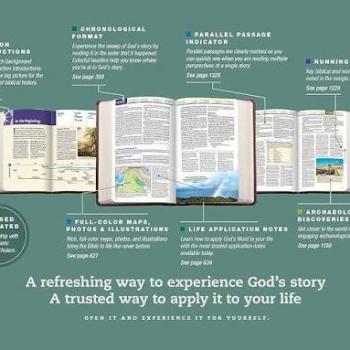
An Amazing Chronological Bible
2

Catholic Mom’s Miscarriage Journey Inspires New Book
3
Solomon's Paradox: Everyone's Deceived but Us
4

Finding God In The Great Outdoors

About Greg Garrett
Greg Garrett is (according to BBC Radio) one of America's leading voices on religion and culture. He is the author or co-author of over twenty books of fiction, theology, cultural criticism, and spiritual autobiography. His most recent books are The Prodigal, written with the legendary Brennan Manning, Entertaining Judgment: The Afterlife in Popular Imagination, and My Church Is Not Dying: Episcopalians in the 21st Century. A contributor to Patheos since 2010, Greg also writes for the Huffington Post, Salon.com, OnFaith, The Tablet, Reform, and other web and print publications in the US and UK.
Patheos Explore the world's faith through different perspectives on religion and spirituality! Patheos has the views of the prevalent religions and spiritualities of the world.
Ad-Free & Subscriber Log-In Subscription Support
- About Us
- 2026 Calendar
- Videos
- Podcasts
- Library of World Religions
- Faith In Media Tracker
- Advertise With Us
- Write for Us
- Privacy Policy
- Terms of Service
- Do Not Sell My Data
- Contact Us
- Radiant Digital
- Manage Newsletter Subscriptions
- Unsubscribe From Notifications
- Sitemap
Copyright 2008-2026, Patheos. All rights reserved.
Subscription Support Ad-Free & Subscriber Log-In
Follow Patheos