
BuddhistCatholicContemplativeEvangelicalGeneral ChristianHinduJewishLatter-day SaintMuslimNew VisionsProgressive Christian
Beliefs
- Buddhist
- Catholic
- Contemplative
- Evangelical
- General Christian
- Hindu
- Jewish
- Latter-day Saint
- More Voices
- Muslim
- New Visions
- Pagan
- Progressive Christian
Topics
- Religion News
- Food and Religion
- Sports and Religion
- Religious Art
- Religious Music and Entertainment
- Religious Events
- History and Religion
- Style and Religion
- Politics and Religion
- Women in Religion
- Recreation Outdoors and Religion
- Business Finance and Religion
- Careers Workplace and Religion
- Education and Religion
- Family Parenting and Religion
- Health Fitness and Religion
- Home and Religion
- Relationships and Religion
- Technology and Religion
- Travel and Religion
Columnists
- Buddhist Columnists
- Business Finance and Religion Columnists
- Careers Workplace and Religion Columnists
- Catholic Columnists
- Contemplative Columnists
- Education and Religion Columnists
- Evangelists Columnists
- Family Parenting and Religion Columnists
- General Christian Columnists
- Health Fitness and Religion Columnists
- Hindu Columnists
- History and Religion Columnists
- Home and Religion Columnists
- Jewish Columnists
- More Voices Columnists
- Latter Day Columnists
- Muslim Columnists
- New Visions Columnists
- Nonreligious Columnists
- Pagan Columnists
- Politics and Religion Columnists
- Progressive Columnists
- Recreation Outdoors and Religion Columnists
- Relationships and Religion Columnists
- Religion News Columnists
- Religious Art Columnists
- Religious Events Columnists
- Religious Music and Entertainment Columnists
- Sports and Religion Columnists
- Style and Religion Columnists
- Technology and Religion Columnists
- Travel and Religion Columnists
- Women in Religion Columnists
Resource Library
- 2026 Calendar
- Library of World Religions
- The 100 Most Holy Places on Earth
- Patheos Answers
- Podcasts
- Videos
- Faith Leaders Database
- Anglican Episcopalian
- Bahai
- Baptist
- Buddhism
- Christianity
- Confucianism
- Eastern Orthodoxy
- Hinduism
- Holiness and Pentecostal
- ISKCON
- Islam
- Judaism
- Lutheran
- Methodist
- The Church of Jesus Christ of Latter-day Saints
- New Age
- Paganism
- Presbytarian and Reformed
- Protestantism
- Religion Behind the Scenes
- Roman Catholic
- Scientology
- Shia Islam
- Sikhism
- Sufism
- Sunni Islam
- Taoism
- Zen
- See all religions
Research Tools
 Ad-Free & Subscriber Log-In Subscription Support
Ad-Free & Subscriber Log-In Subscription Support
Follow Patheos 

- Trending:
- Forgiveness
- |
- Marriage
- |
- Consciousness
- |
- Death Penalty
- |
- Election
- |
- Halloween
Evangelical
The Prisoner as Scapegoat
April 06, 2011 by Samuel Atchison
A number of years ago, during a Good Friday service in the maximum security prison where I served as chaplain, one of my inmate congregants challenged me with a perspective on the crucifixion that I had never before considered. Expounding upon the fourth of Jesus' sayings from the cross—"My God, my God, why hast thou forsaken Me?"—my friend connected Jesus' crucifixion with the rite of the scapegoat, which was required by Old Testament law.
In the Bible a "scapegoat" was one of the goats used by the Jewish high priest to represent the sins of the Hebrew nation on the annual Day of Atonement. According to Leviticus 16:21-22, after the first of the goats was slaughtered and its blood sprinkled on the mercy seat of the Ark of the Covenant as an atonement for the sins of the people, the high priest would then place his hands on the head of the remaining goat—the scapegoat—while confessing over it the sins of the people. He would then drive the goat away from the community, into the wilderness, symbolically removing the sins from the people.
As my friend explained, this dynamic is reflected in Jesus' cry on the cross. In being rejected by God the Father, Jesus was fulfilling the role of the scapegoat because the sins of the entire world were imputed to him. As such, he continued, Jesus—who was condemned as a criminal and died among criminals—made salvation possible for all people, including criminals.
It was a brilliant treatise, in the classic tradition of Christian theology. Indeed, it was all the more appropriate because scapegoating is exactly what our society does with inmates.
The way we adjudicate and punish crimes, through a legal and bureaucratic vehicle known as the criminal justice system, reflects our response to the most visible sinners in our society. A classic example can be seen in the system's generation-old "get tough" approach, which featured sentences stipulating a period of parole ineligibility, eliminating parole entirely for some offenses, and lowering the age at which youthful offenders can be tried and sentenced as adults. As with the scapegoat, we've simply imputed the culture's sins and their effects on the heads of the criminals and driven them away from us.
To be sure, we are rightly concerned about the impact of lawlessness on our society. Yet locking up those who disturb our peace means nothing if we make no provision for them upon their return. And the reality is that they are returning, by the hundreds of thousands each year.
Thus, in an admittedly difficult economic environment, the question we should be asking is: "Is there redemption for the scapegoat?" Are we willing to forgive, assist them, and—dare I say it—hire them?
4/6/2011 4:00:00 AM
Evangelical
A Matter of Color
Law
Ministry
Prison
Sacred Texts
Scapegoats
Christianity
Judaism
Evangelicalism
more at patheos
1

Ice Cream: The History of a Sweet & National Celebration
2
Ecclesiastes and Life After Death
3
Finding the First Book Ever Written on a Hidden Gospel
4
Sunday Readings: It's All About Forgiveness
About Samuel Atchison
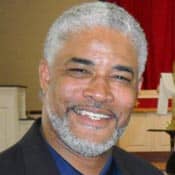
Rev. Samuel K. Atchison has served as a welfare policy analyst, social services administrator, social policy consultant, and prison chaplain. He is the president of the Trenton Ecumenical Area Ministry (TEAM), which serves as a coordinating agency for the community outreach efforts of churches in Mercer County, New Jersey. He is also a community partnership manager with the Amachi Mentoring Coalition Project (AMCP), a program of the Philadelphia Leadership Foundation that provides mentoring to children impacted by incarceration.
Patheos Explore the world's faith through different perspectives on religion and spirituality! Patheos has the views of the prevalent religions and spiritualities of the world.
Ad-Free & Subscriber Log-In Subscription Support
- About Us
- 2026 Calendar
- Videos
- Podcasts
- Library of World Religions
- Faith In Media Tracker
- Advertise With Us
- Write for Us
- Privacy Policy
- Terms of Service
- Do Not Sell My Data
- Contact Us
- Radiant Digital
- Manage Newsletter Subscriptions
- Unsubscribe From Notifications
- Sitemap
Copyright 2008-2026, Patheos. All rights reserved.
Subscription Support Ad-Free & Subscriber Log-In
Follow Patheos