
BuddhistCatholicContemplativeEvangelicalGeneral ChristianHinduJewishLatter-day SaintMuslimNew VisionsProgressive Christian
Beliefs
- Buddhist
- Catholic
- Contemplative
- Evangelical
- General Christian
- Hindu
- Jewish
- Latter-day Saint
- More Voices
- Muslim
- New Visions
- Pagan
- Progressive Christian
Topics
- Religion News
- Food and Religion
- Sports and Religion
- Religious Art
- Religious Music and Entertainment
- Religious Events
- History and Religion
- Style and Religion
- Politics and Religion
- Women in Religion
- Recreation Outdoors and Religion
- Business Finance and Religion
- Careers Workplace and Religion
- Education and Religion
- Family Parenting and Religion
- Health Fitness and Religion
- Home and Religion
- Relationships and Religion
- Technology and Religion
- Travel and Religion
Columnists
- Buddhist Columnists
- Business Finance and Religion Columnists
- Careers Workplace and Religion Columnists
- Catholic Columnists
- Contemplative Columnists
- Education and Religion Columnists
- Evangelists Columnists
- Family Parenting and Religion Columnists
- General Christian Columnists
- Health Fitness and Religion Columnists
- Hindu Columnists
- History and Religion Columnists
- Home and Religion Columnists
- Jewish Columnists
- More Voices Columnists
- Latter Day Columnists
- Muslim Columnists
- New Visions Columnists
- Nonreligious Columnists
- Pagan Columnists
- Politics and Religion Columnists
- Progressive Columnists
- Recreation Outdoors and Religion Columnists
- Relationships and Religion Columnists
- Religion News Columnists
- Religious Art Columnists
- Religious Events Columnists
- Religious Music and Entertainment Columnists
- Sports and Religion Columnists
- Style and Religion Columnists
- Technology and Religion Columnists
- Travel and Religion Columnists
- Women in Religion Columnists
Resource Library
- 2026 Calendar
- Library of World Religions
- The 100 Most Holy Places on Earth
- Patheos Answers
- Podcasts
- Videos
- Faith Leaders Database
- Anglican Episcopalian
- Bahai
- Baptist
- Buddhism
- Christianity
- Confucianism
- Eastern Orthodoxy
- Hinduism
- Holiness and Pentecostal
- ISKCON
- Islam
- Judaism
- Lutheran
- Methodist
- The Church of Jesus Christ of Latter-day Saints
- New Age
- Paganism
- Presbytarian and Reformed
- Protestantism
- Religion Behind the Scenes
- Roman Catholic
- Scientology
- Shia Islam
- Sikhism
- Sufism
- Sunni Islam
- Taoism
- Zen
- See all religions
Research Tools
 Ad-Free & Subscriber Log-In Subscription Support
Ad-Free & Subscriber Log-In Subscription Support
Follow Patheos 

- Trending:
- Forgiveness
- |
- Marriage
- |
- Consciousness
- |
- Death Penalty
- |
- Election
- |
- Halloween
Catholic
Missionary of the Passion: James Kent Stone
April 18, 2011 by Pat McNamara
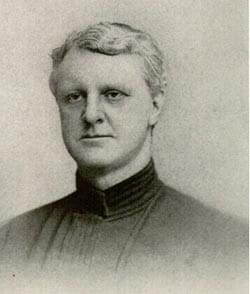 As Christians celebrate Jesus' Passion, death, and Resurrection, this week's column focuses on a religious community dedicated to proclaiming "Christ's crucified love." During the Passionists' early years in America, one of their preeminent figures was James Kent Stone (1840-1921). Before age 30, he had been a Harvard graduate, Civil War veteran, minister, professor, and president of two colleges. One Passionist historian refers to him as "this illustrious man."
He was named for his maternal grandfather, one of America's foremost legal minds. His father was an Episcopal priest, whom Daniel Webster considered the best preacher of his time. Kent (as he was familiarly known) attended private school and later Harvard, where friends included Oliver Wendell Holmes. After graduation in 1861, he studied abroad in Europe, but returned to fight in the Civil War.
A Lieutenant in the Second Massachusetts Infantry, he fought in the Battle of Antietam, the war's single bloodiest day. By the end of 1862, a severe hernia ended his army days and he took a teaching position at Kenyon College, an Episcopal school in Ohio. That summer he married Cornelia Fay. They would have three daughters. In 1867, at 27, he was named President of Kenyon. He was also ordained.
At the time, Episcopalians were split between between "Low Church" adherents, leaning toward Evangelical Protestantism, and "High Church" followers, emphasizing ritual and tradition. Kenyon was predominantly Low Church. The local bishop felt Stone's sermons were too High Church. After heated controversy, he resigned in 1868, but was soon named President of New York's Hobart College, a High Church school.
At first, he saw Episcopalianism as a middle way between what he considered Puritan and Roman extremes. Raised in a strongly anti-Catholic atmosphere, Stone one morning woke up with a thought: "What if the old Roman Church should be right after all?" Such a notion, he added, had previously "never entered my mind." When Pope Pius IX invited Protestant leaders to reconsider their theological basis, Stone responded. In 1869, he resigned both from the college and the ministry.
That December, he was received into the Catholic Church. He discussed his reasons in a book titled The Invitation Heeded. Catholicism alone offered "safety for the soul and healing for the nations." To those citing corruption, he responded: "There are scandals . . . if we look for them. But there have been saints and martyrs . . . of whom the world knows nothing. And there are saints still." While his parents didn't reject him, a cousin labeled him "the weak-minded one of the family."
During this period, Stone's wife died. Most such-situated widowers saw themselves as having two choices: remarry or send the children elsewhere. He had his daughters baptized Catholic and placed with a family he knew in California. But it wasn't an easy choice, and it tortured him for decades. Years later as a priest, when a little girl ran up to him and hugged him, the normally cool and collected father and widower broke down in tears.
After his conversion, Stone was offered a teaching position at Georgetown, but he wanted to continue his priestly ministry. He liked the Passionists, with whom he made a retreat, but wasn't sure he could handle their austere lifestyle. George Searle, a Harvard friend, had joined the Paulists, a community composed predominantly of converts dedicated to evangelizing America. He suggested that Stone join them.
In 1872, James Kent Stone was ordained a Paulist priest. He was a successful preacher, but he still felt a pull toward the Passionists. In 1877, he finally joined, taking the name "Fidelis of the Cross." (In religious life, name changes symbolized a deeper interior change.) At 37 he started over once more. But what one saw most, peers noted, was his happiness.
The Passionists' main work was preaching missions, a weeklong series of talks and services designed to re-energize local Catholic life. (In many cases, these drew thousands.) Its ultimate goal, for St. Paul of the Cross, was "to teach people how to pray." Stone was one of their best preachers. A handsome man well into old age, he stood over six feet tall, with a winning smile and a well-modulated voice.
Felix Ward, a Passionist historian, writes: "As he stood on the platform beneath the large crucifix, in the Passionist habit, few could resist his appeals." He once preached in Baltimore to a crowd that included President Chester A. Arthur and members of his cabinet. Later he would preach at his alma mater, Harvard, one of the first Catholic priests to do so.
Article Continued On Next Page
Page: 1 of 2
4/18/2011 4:00:00 AM
Catholic
In Ages Past
History
Christianity
Roman Catholicism
more at patheos
1

Why Public Theology Needs a Theology of Nature
2

Earthen Vessels Holding Divine Light
3

Learning to Confess and Understand Our Father Even in Crisis
4
“A cloud as small as a man’s hand is rising from the sea.”

About Pat McNamara
Dr. Pat McNamara is a published historian. He blogs about American Catholic History at McNamara's Blog.
Patheos Explore the world's faith through different perspectives on religion and spirituality! Patheos has the views of the prevalent religions and spiritualities of the world.
Ad-Free & Subscriber Log-In Subscription Support
- About Us
- 2026 Calendar
- Videos
- Podcasts
- Library of World Religions
- Faith In Media Tracker
- Advertise With Us
- Write for Us
- Privacy Policy
- Terms of Service
- Do Not Sell My Data
- Contact Us
- Radiant Digital
- Manage Newsletter Subscriptions
- Unsubscribe From Notifications
- Sitemap
Copyright 2008-2026, Patheos. All rights reserved.
Subscription Support Ad-Free & Subscriber Log-In
Follow Patheos