
BuddhistCatholicContemplativeEvangelicalGeneral ChristianHinduJewishLatter-day SaintMuslimNew VisionsProgressive Christian
Beliefs
- Buddhist
- Catholic
- Contemplative
- Evangelical
- General Christian
- Hindu
- Jewish
- Latter-day Saint
- More Voices
- Muslim
- New Visions
- Pagan
- Progressive Christian
Topics
- Religion News
- Food and Religion
- Sports and Religion
- Religious Art
- Religious Music and Entertainment
- Religious Events
- History and Religion
- Style and Religion
- Politics and Religion
- Women in Religion
- Recreation Outdoors and Religion
- Business Finance and Religion
- Careers Workplace and Religion
- Education and Religion
- Family Parenting and Religion
- Health Fitness and Religion
- Home and Religion
- Relationships and Religion
- Technology and Religion
- Travel and Religion
Columnists
- Buddhist Columnists
- Business Finance and Religion Columnists
- Careers Workplace and Religion Columnists
- Catholic Columnists
- Contemplative Columnists
- Education and Religion Columnists
- Evangelists Columnists
- Family Parenting and Religion Columnists
- General Christian Columnists
- Health Fitness and Religion Columnists
- Hindu Columnists
- History and Religion Columnists
- Home and Religion Columnists
- Jewish Columnists
- More Voices Columnists
- Latter Day Columnists
- Muslim Columnists
- New Visions Columnists
- Nonreligious Columnists
- Pagan Columnists
- Politics and Religion Columnists
- Progressive Columnists
- Recreation Outdoors and Religion Columnists
- Relationships and Religion Columnists
- Religion News Columnists
- Religious Art Columnists
- Religious Events Columnists
- Religious Music and Entertainment Columnists
- Sports and Religion Columnists
- Style and Religion Columnists
- Technology and Religion Columnists
- Travel and Religion Columnists
- Women in Religion Columnists
Resource Library
- 2026 Calendar
- Library of World Religions
- The 100 Most Holy Places on Earth
- Patheos Answers
- Podcasts
- Videos
- Faith Leaders Database
- Anglican Episcopalian
- Bahai
- Baptist
- Buddhism
- Christianity
- Confucianism
- Eastern Orthodoxy
- Hinduism
- Holiness and Pentecostal
- ISKCON
- Islam
- Judaism
- Lutheran
- Methodist
- The Church of Jesus Christ of Latter-day Saints
- New Age
- Paganism
- Presbytarian and Reformed
- Protestantism
- Religion Behind the Scenes
- Roman Catholic
- Scientology
- Shia Islam
- Sikhism
- Sufism
- Sunni Islam
- Taoism
- Zen
- See all religions
Research Tools
 Ad-Free & Subscriber Log-In Subscription Support
Ad-Free & Subscriber Log-In Subscription Support
Follow Patheos 

- Trending:
- Forgiveness
- |
- Marriage
- |
- Consciousness
- |
- Death Penalty
- |
- Election
- |
- Halloween
Evangelical
The Indispensable Prison Church
April 20, 2011 by Samuel Atchison
During my years as a prison chaplain, it was common for inmates—most of whom were persons of color—to view their circumstances as analogous to slavery. Within this context, I found it useful to frame their church experience as a response to oppression. As the late sociologist E. Franklin Frazier notes in his classic study, The Negro Church in America, one of the church's primary functions within a context of Southern white oppression was to provide the black man "an opportunity for self-expression and status" denied him in the larger society.
Functioning as "a nation within a nation," he writes, the church became "the main area of social life in which Negroes could aspire to become leaders of men. It was the area of social life where ambitious individuals could achieve distinction and the symbols of status. The church was the arena in which the struggle for power and the thirst for power could be satisfied."
In my experience, what Frazier observed of the Negro church-as-political-proxy under Jim Crow can be applied in large measure to the prison church today. Depending on the racial climate of the institution, the oppression experienced by inmates may or may not be primarily racial in nature, but it is oppression nonetheless.
To enter any prison is to enter a world within a world. In, but not of, society, the prison has its own culture, language, rules, and ethics. Such is to be expected because, as criminologist Todd Clear wrote in a 1992 study, "Prisoners, Prisons and Religion": "A prisoner is a social outcast . . . To be shunned by one's community is to invite a special kind of shame, the mortification that comes with undeniable public rebuke."
To be sure, such rebuke, as seen in the systematic deprivation of privileges previously taken for granted, may be considered a just consequence of the criminals' misdeeds—doing the time for doing the crime.
Yet the insensitivity, neglect, and outright brutality inmates often experience from staff is not. Indeed, a common complaint among prisoners is that corrections officers are in some cases rewarded with promotions and desirable assignments for exhibiting the same kind of behavior that led to the inmates' incarceration in the first place. Such abuse further pollutes an atmosphere that is already filled with the self-recriminations of men and women whose lack of education, employment, and life-management skills often helped to lead them to a life of crime in the first place.
Most prisoners are given few opportunities for self-discovery, and little hope of redemption, for multiple reasons: cutbacks in prison education and training programs; increasingly restrictive policies regarding family visitation and other privileges; and political campaigns portraying them as animals not worth saving. Thus the importance of the prison church, with its emphasis on personal atonement and the intrinsic value of the individual, its ritual cleansing through baptism, its intellectual stimulation through Bible study, and its opportunities for self-expression through testimony and often-ecstatic worship.
In the church, an individual hungry for recognition can be recognized in a positive manner. Known outside the church by his or her last name, inmate number, and housing unit (i.e., prison mailing address), the prisoner is embraced in the church as "Brother" or "Sister," and treated with a dignity shown virtually nowhere else in the prison. Similarly, to hold a position in the prison church confers upon the office-holder a level of trust he or she has likely never before experienced. Given both the training and the opportunity to demonstrate responsibility (within appropriate parameters), an inmate will often rise to the occasion, developing an understanding of leadership and mutual accountability in the process.
The prison church also gives a sense of purpose to the believers within the walls. The nation's prisons contain within them a potential leadership pool that has "been there and done that." These potential leaders understand clearly the wages of sin and continue to reap what they have sown. For many inmates, their most enduring legacies are the progeny that wreak havoc on our city streets, the next generation of criminal offenders who are following in the footsteps of their mothers and fathers.
So these potential leaders are highly motivated to share the lessons they have learned with the people they have left behind. Yet they cannot do so on their own. The voices that at-risk children in America's urban wastelands most need to hear—the voices of their fathers and mothers, who have walked that path and know where it leads—are confined behind prison walls. Inmates require the assistance of outside pastors and other faith leaders who will walk alongside them as mentors and serve as bridges of grace between them and their families.
The prison church, constrained and confined, can only go so far. It remains an extraordinary untapped resource for the transformation of America's inner cities. It just needs the help of churches outside the walls.
4/20/2011 4:00:00 AM
Evangelical
A Matter of Color
History
Prison
Christianity
Black Church
Evangelicalism
more at patheos
1

How Can We Understand Transcendent Experiences?
2

No, the Rainbow is Not a Christian Trademark
3
Why are the Scriptures Holy? Dr. Thomas Robinson Responds
4

Getting Comfortable in the Company of Angels
About Samuel Atchison
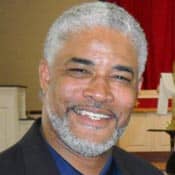
Rev. Samuel K. Atchison has served as a welfare policy analyst, social services administrator, social policy consultant, and prison chaplain. He is the president of the Trenton Ecumenical Area Ministry (TEAM), which serves as a coordinating agency for the community outreach efforts of churches in Mercer County, New Jersey. He is also a community partnership manager with the Amachi Mentoring Coalition Project (AMCP), a program of the Philadelphia Leadership Foundation that provides mentoring to children impacted by incarceration.
Patheos Explore the world's faith through different perspectives on religion and spirituality! Patheos has the views of the prevalent religions and spiritualities of the world.
Ad-Free & Subscriber Log-In Subscription Support
- About Us
- 2026 Calendar
- Videos
- Podcasts
- Library of World Religions
- Faith In Media Tracker
- Advertise With Us
- Write for Us
- Privacy Policy
- Terms of Service
- Do Not Sell My Data
- Contact Us
- Radiant Digital
- Manage Newsletter Subscriptions
- Unsubscribe From Notifications
- Sitemap
Copyright 2008-2026, Patheos. All rights reserved.
Subscription Support Ad-Free & Subscriber Log-In
Follow Patheos