
BuddhistCatholicContemplativeEvangelicalGeneral ChristianHinduJewishLatter-day SaintMuslimNew VisionsProgressive Christian
Beliefs
- Buddhist
- Catholic
- Contemplative
- Evangelical
- General Christian
- Hindu
- Jewish
- Latter-day Saint
- More Voices
- Muslim
- New Visions
- Pagan
- Progressive Christian
Topics
- Religion News
- Food and Religion
- Sports and Religion
- Religious Art
- Religious Music and Entertainment
- Religious Events
- History and Religion
- Style and Religion
- Politics and Religion
- Women in Religion
- Recreation Outdoors and Religion
- Business Finance and Religion
- Careers Workplace and Religion
- Education and Religion
- Family Parenting and Religion
- Health Fitness and Religion
- Home and Religion
- Relationships and Religion
- Technology and Religion
- Travel and Religion
Columnists
- Buddhist Columnists
- Business Finance and Religion Columnists
- Careers Workplace and Religion Columnists
- Catholic Columnists
- Contemplative Columnists
- Education and Religion Columnists
- Evangelists Columnists
- Family Parenting and Religion Columnists
- General Christian Columnists
- Health Fitness and Religion Columnists
- Hindu Columnists
- History and Religion Columnists
- Home and Religion Columnists
- Jewish Columnists
- More Voices Columnists
- Latter Day Columnists
- Muslim Columnists
- New Visions Columnists
- Nonreligious Columnists
- Pagan Columnists
- Politics and Religion Columnists
- Progressive Columnists
- Recreation Outdoors and Religion Columnists
- Relationships and Religion Columnists
- Religion News Columnists
- Religious Art Columnists
- Religious Events Columnists
- Religious Music and Entertainment Columnists
- Sports and Religion Columnists
- Style and Religion Columnists
- Technology and Religion Columnists
- Travel and Religion Columnists
- Women in Religion Columnists
Resource Library
- 2026 Calendar
- Library of World Religions
- The 100 Most Holy Places on Earth
- Patheos Answers
- Podcasts
- Videos
- Faith Leaders Database
- Anglican Episcopalian
- Bahai
- Baptist
- Buddhism
- Christianity
- Confucianism
- Eastern Orthodoxy
- Hinduism
- Holiness and Pentecostal
- ISKCON
- Islam
- Judaism
- Lutheran
- Methodist
- The Church of Jesus Christ of Latter-day Saints
- New Age
- Paganism
- Presbytarian and Reformed
- Protestantism
- Religion Behind the Scenes
- Roman Catholic
- Scientology
- Shia Islam
- Sikhism
- Sufism
- Sunni Islam
- Taoism
- Zen
- See all religions
Research Tools
 Ad-Free & Subscriber Log-In Subscription Support
Follow Patheos 

- Trending:
- Advent
- |
- Forgiveness
- |
- Thanksgiving
- |
- Election
- |
- Seasonal Holidays
- |
- Marriage
Blueprint for Living, Part Five: A Lenten Series on the Sermon on the Mount
April 20, 2011 by Justin Tull
Editor's Note: This is the fifth and final in a series of Lenten reflections on the Sermon on the Mount. To read an introduction to this series, click here.
 Doing the Word
Matthew 7:21-29
The climax of Jesus' words on the "Sermon of the Mount" comes in the final nine verses. In these challenging words we discover an important theme in Jesus' teaching and certainly a key theme in the gospel of Matthew. For Matthew the Christian life is not "righteous" by virtue of following the commandments or by demonstrating outward signs of piety. It is not accomplished even by profession of faith. Verse 21 is quick to offer its stern warning: "Not everyone who says to me, 'Lord, Lord,' will enter the kingdom of heaven, but only the one who does the will of my Father in heaven."
Jesus then likens the life of a faithful Christian to the one who builds his house on a rock, the one who faithfully follows Jesus' teaching. These words have now expanded the requirements of goodness to include more than obeying the commandments, more than outward piety. To obey Jesus' words means a commitment to purity of mind, body, and spirit. It requires a goodness from within, one that does not retaliate against those who bring harm nor harbor ill will in the privacy of the inner self, but seeks to love and forgive as God does.
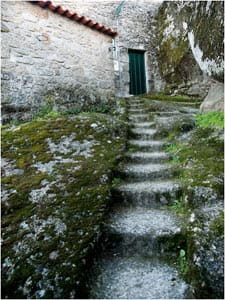
During my pastorate at Denton, Texas, I was required to find my own housing since there was no parsonage. My wife and I took the opportunity to build our own home. We selected a builder, found a suitable lot, and then had plans drawn. Before we could build, however, the contractor had to do a soil study. To my utter horror they drilled down 27 feet and never found anything but sand! How was I going to tell my congregation that their preacher was building his house on sand? Fortunately the samples from the lot were not "sifting sand" but rather "concretized sand," a material judged to be solid enough to be a firm foundation!
A foundation is crucial for a home. But the foundation of our lives is all the more important. During my lifetime, I have witnessed a few ministers who have failed to stay "grounded" in the faith. They have placed their trust in other things. Some, like the hypocrites in Jesus' teachings, were seduced by their own rave reviews. They reveled in their "good works" and somewhere in the privacy of their own souls they sold out to their inner demons and succumbed to betrayal and infidelity. The words of Jesus would prove to be both tragic and true for them. Those who build their houses on sand and not on rock, those who live their lives for themselves and fail to follow the teachings of Jesus will eventually fall—and great will be the fall. All of us have witnessed such tragedies.
Jesus' call to righteousness is one that offers us a solid foundation, one that stands firm even in the midst of the storms of life. Such a foundation is not produced as the hypocrites thought by following rules of ethics and rituals of piety. It is not as simple as mastering outward actions no matter how religious or altruistic they might seem. What is required is even more than the crucial ingredient of belief. Jesus insists that the Christian life is more than calling him, "Lord." One must serve him as Lord. It is not enough to believe in him, to be able to pick Jesus out of a line-up and identify him as Savior. More will be required, much more, as the "Sermon on the Mount" makes inescapably clear. To put it simply, it is not enough to believe in this Jesus, one must faithfully follow him. To do so, will be life giving, even life abundant.
For Reflection:
- Was your life ever resting on shifting sand, an unstable foundation of living?
- Are the teachings of the "Sermon on the Mount" essential components of Christian living or are they more like a wish list for especially dedicated Christians?
- What is most characteristic of your Christian life: your belief in Jesus as God's Son or your commitment to follow him?
4/20/2011 4:00:00 AM
Mainline Protestant
Lent
Mainline Protestantism
Christianity
more at patheos
1

I Love to Say “I Told You So”: Polyamory in Churches
2
3
'No Limbs, No Limits' Traces Nick Vujicic's Faith Journey
4

About Justin Tull
The Reverend Dr. Justin W. Tull is a retired ordained United Methodist minister having served thirty-seven years in the North Texas area. During this time he was senior pastor of nine churches ranging in membership from 274 to 2200. Dr. Tull is currently receiving training to teach those seeking certification as interim pastors.
Patheos Explore the world's faith through different perspectives on religion and spirituality! Patheos has the views of the prevalent religions and spiritualities of the world.
Ad-Free & Subscriber Log-In Subscription Support
- About Us
- 2026 Calendar
- Videos
- Podcasts
- Library of World Religions
- Faith In Media Tracker
- Advertise With Us
- Write for Us
- Privacy Policy
- Terms of Service
- Do Not Sell My Data
- Contact Us
- Radiant Digital
- Manage Newsletter Subscriptions
- Unsubscribe From Notifications
- Sitemap
Copyright 2008-2026, Patheos, part of the Radiant Digital network of media brands. All rights reserved.
Subscription Support Ad-Free & Subscriber Log-In
Follow Patheos