
BuddhistCatholicContemplativeEvangelicalGeneral ChristianHinduJewishLatter-day SaintMuslimNew VisionsProgressive Christian
Beliefs
- Buddhist
- Catholic
- Contemplative
- Evangelical
- General Christian
- Hindu
- Jewish
- Latter-day Saint
- More Voices
- Muslim
- New Visions
- Pagan
- Progressive Christian
Topics
- Religion News
- Food and Religion
- Sports and Religion
- Religious Art
- Religious Music and Entertainment
- Religious Events
- History and Religion
- Style and Religion
- Politics and Religion
- Women in Religion
- Recreation Outdoors and Religion
- Business Finance and Religion
- Careers Workplace and Religion
- Education and Religion
- Family Parenting and Religion
- Health Fitness and Religion
- Home and Religion
- Relationships and Religion
- Technology and Religion
- Travel and Religion
Columnists
- Buddhist Columnists
- Business Finance and Religion Columnists
- Careers Workplace and Religion Columnists
- Catholic Columnists
- Contemplative Columnists
- Education and Religion Columnists
- Evangelists Columnists
- Family Parenting and Religion Columnists
- General Christian Columnists
- Health Fitness and Religion Columnists
- Hindu Columnists
- History and Religion Columnists
- Home and Religion Columnists
- Jewish Columnists
- More Voices Columnists
- Latter Day Columnists
- Muslim Columnists
- New Visions Columnists
- Nonreligious Columnists
- Pagan Columnists
- Politics and Religion Columnists
- Progressive Columnists
- Recreation Outdoors and Religion Columnists
- Relationships and Religion Columnists
- Religion News Columnists
- Religious Art Columnists
- Religious Events Columnists
- Religious Music and Entertainment Columnists
- Sports and Religion Columnists
- Style and Religion Columnists
- Technology and Religion Columnists
- Travel and Religion Columnists
- Women in Religion Columnists
Resource Library
- 2026 Calendar
- Library of World Religions
- The 100 Most Holy Places on Earth
- Patheos Answers
- Podcasts
- Videos
- Faith Leaders Database
- Anglican Episcopalian
- Bahai
- Baptist
- Buddhism
- Christianity
- Confucianism
- Eastern Orthodoxy
- Hinduism
- Holiness and Pentecostal
- ISKCON
- Islam
- Judaism
- Lutheran
- Methodist
- The Church of Jesus Christ of Latter-day Saints
- New Age
- Paganism
- Presbytarian and Reformed
- Protestantism
- Religion Behind the Scenes
- Roman Catholic
- Scientology
- Shia Islam
- Sikhism
- Sufism
- Sunni Islam
- Taoism
- Zen
- See all religions
Research Tools
 Ad-Free & Subscriber Log-In Subscription Support
Follow Patheos 

- Trending:
- Advent
- |
- Forgiveness
- |
- Thanksgiving
- |
- Election
- |
- Seasonal Holidays
- |
- Marriage
Blueprint for Living: The Introduction to a Lenten Series on Matthew 5-7
March 08, 2011 by Justin Tull
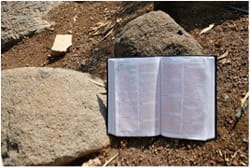 Reflections on the Sermon on the Mount for Lent
Matthew 5-7
Rationale
Those who follow the lectionary in both preaching and teaching may be hesitant to use the Sermon on the Mount as a primary or supplemental source for preaching or teaching during Lent. As one who has both preached from the lectionary and deviated from it, I would like to make a brief argument in favor of preaching from the Sermon on the Mount as a series and suggest that the season of Lent is an ideal time to do so.
The lectionary spreads out the teachings contained in the Sermon on the Mount over three years and never in consecutive weekly doses. There is an advantage, I suppose, in sharing these important teachings over such time in that one may thereby reach a varied audience and by such a method be able to give a sweep of each of the four gospels. The effect of such dissection, however, is to thereby separate the intentional grouping that both Matthew and Luke create.
In Matthew's case at least, the Sermon on the Mount is a gathering of teaching focused primarily on the nature of the Christian life. In this brief Lenten study I have chosen to concentrate on those sections of teaching that relate to this dominant theme, thus leaving out some familiar material such as the Beatitudes and the Lord's Prayer. In the sections that I do explore, Matthew shares what it means to be both righteous and Christian: such things as loving our enemies, practicing proper piety, tending to one's inner thoughts and motives, treating others with respect and love, rejecting self-righteousness, and understanding that the Christian life is more than believing -- it is also doing.
If the season of Lent is not an obvious choice for such teaching, let me simply share two elements I believe to be especially fitting for this holy season as we approach the events of the passion and anticipate the transforming event of the resurrection: attention to spiritual life and a focus on the ministry and teaching of Jesus. If one believes as I do, and as Matthew does, that the teachings of Jesus are absolutely essential to the Christian life, then care should be taken that the key elements of such teaching are presented to all those seeking discipleship.
I would argue that at some point in our teaching and preaching career that the teachings found in the Sermon on the Mount should be shared not piecemeal or spread out over years, but presented as Matthew presents it, in one block carefully tied together by theme and design. I offer therefore this series of reflections on the Sermon on the Mount for any number of purposes: seeds for sermons during Lent or other times, a beginning place for a Lenten study, or as a study/devotional guide that is best undertaken not privately but among gathered Christians. I hope that this short series of reflections will serve as an invitation to preachers and teachers alike to "take on" this challenging body of Christ's teachings. I believe such careful attention by the church was Matthew's clear intent.
Overview
It is a difficult decision for most of us to choose a favorite gospel. I have, however, after years of Bible study and even more of human experience made my difficult choice. I was certainly tempted to side with Luke's gospel with its compassion for the least, last, and lost and its powerful parables of grace, like the Prodigal Son. Mark, too, had its appeal with its ongoing sense of urgency and its emphasis on the mighty and miraculous acts of Jesus. And as one with a philosophical bent, I was drawn to John's fascination with the divinity of Jesus and the theme of Jesus' oneness with the Father.
But it is Matthew's gospel that has become central in my own faith journey. It is Matthew who carefully preserves, collects, and elevates the teachings of Jesus, and holds them as absolutely crucial for the Christian life. For Matthew, Jesus is more than simply Messiah or one who performs mighty works. He is the one who "teaches with authority." Through Jesus' words we learn who God is, and how we are supposed to live. For Matthew, a Christian is to be more than believer; a Christian is nothing if not a follower. Jesus' teachings, therefore, become the manual for the Christian life, a "blueprint for living."
As a strong proponent of Matthew, it should not surprise anyone that I view the Sermon on the Mount as an essential kernel of Jesus' teaching. Indeed, the Sermon on the Mount is the largest uninterrupted block of Jesus' teaching in the New Testament. It is the first of five collections of teaching that Matthew strategically lays out for us as he proclaims the "good news." In the three chapters that comprise this collection of teaching, Matthew shares many of Jesus' essential elements for Christian living. For Matthew, Jesus' primary work is not his mighty acts, as in Mark. The trademark for Jesus in the gospel of Matthew is his transforming gift of teachings graciously offered to all who would be his disciples. It is the truth that can set one free.
Article Continued On Next Page
Page: 1 of 2
3/8/2011 5:00:00 AM
Mainline Protestant
Preachers
Mainline Protestantism
Preaching Resources
Sacred Texts
Christianity
more at patheos
1
The Role of Education In Fostering Human Dignity
2

Is this the right room for an argument?
3

The Fourth Watch: Jesus, the Storm, Injustice & Drowning
4

Professing Faith Through Soccer
About Justin Tull
The Reverend Dr. Justin W. Tull is a retired ordained United Methodist minister having served thirty-seven years in the North Texas area. During this time he was senior pastor of nine churches ranging in membership from 274 to 2200. Dr. Tull is currently receiving training to teach those seeking certification as interim pastors.
Patheos Explore the world's faith through different perspectives on religion and spirituality! Patheos has the views of the prevalent religions and spiritualities of the world.
Ad-Free & Subscriber Log-In Subscription Support
- About Us
- 2026 Calendar
- Videos
- Podcasts
- Library of World Religions
- Faith In Media Tracker
- Advertise With Us
- Write for Us
- Privacy Policy
- Terms of Service
- Do Not Sell My Data
- Contact Us
- Radiant Digital
- Manage Newsletter Subscriptions
- Unsubscribe From Notifications
- Sitemap
Copyright 2008-2026, Patheos, part of the Radiant Digital network of media brands. All rights reserved.
Subscription Support Ad-Free & Subscriber Log-In
Follow Patheos