
BuddhistCatholicContemplativeEvangelicalGeneral ChristianHinduJewishLatter-day SaintMuslimNew VisionsProgressive Christian
Beliefs
- Buddhist
- Catholic
- Contemplative
- Evangelical
- General Christian
- Hindu
- Jewish
- Latter-day Saint
- More Voices
- Muslim
- New Visions
- Pagan
- Progressive Christian
Topics
- Religion News
- Food and Religion
- Sports and Religion
- Religious Art
- Religious Music and Entertainment
- Religious Events
- History and Religion
- Style and Religion
- Politics and Religion
- Women in Religion
- Recreation Outdoors and Religion
- Business Finance and Religion
- Careers Workplace and Religion
- Education and Religion
- Family Parenting and Religion
- Health Fitness and Religion
- Home and Religion
- Relationships and Religion
- Technology and Religion
- Travel and Religion
Columnists
- Buddhist Columnists
- Business Finance and Religion Columnists
- Careers Workplace and Religion Columnists
- Catholic Columnists
- Contemplative Columnists
- Education and Religion Columnists
- Evangelists Columnists
- Family Parenting and Religion Columnists
- General Christian Columnists
- Health Fitness and Religion Columnists
- Hindu Columnists
- History and Religion Columnists
- Home and Religion Columnists
- Jewish Columnists
- More Voices Columnists
- Latter Day Columnists
- Muslim Columnists
- New Visions Columnists
- Nonreligious Columnists
- Pagan Columnists
- Politics and Religion Columnists
- Progressive Columnists
- Recreation Outdoors and Religion Columnists
- Relationships and Religion Columnists
- Religion News Columnists
- Religious Art Columnists
- Religious Events Columnists
- Religious Music and Entertainment Columnists
- Sports and Religion Columnists
- Style and Religion Columnists
- Technology and Religion Columnists
- Travel and Religion Columnists
- Women in Religion Columnists
Resource Library
- 2026 Calendar
- Library of World Religions
- The 100 Most Holy Places on Earth
- Patheos Answers
- Podcasts
- Videos
- Faith Leaders Database
- Anglican Episcopalian
- Bahai
- Baptist
- Buddhism
- Christianity
- Confucianism
- Eastern Orthodoxy
- Hinduism
- Holiness and Pentecostal
- ISKCON
- Islam
- Judaism
- Lutheran
- Methodist
- The Church of Jesus Christ of Latter-day Saints
- New Age
- Paganism
- Presbytarian and Reformed
- Protestantism
- Religion Behind the Scenes
- Roman Catholic
- Scientology
- Shia Islam
- Sikhism
- Sufism
- Sunni Islam
- Taoism
- Zen
- See all religions
Research Tools
 Ad-Free & Subscriber Log-In Subscription Support
Ad-Free & Subscriber Log-In Subscription Support
Follow Patheos 

- Trending:
- Forgiveness
- |
- Marriage
- |
- Consciousness
- |
- Death Penalty
- |
- Election
- |
- Halloween
Catholic
Wordless Wonder: Deaf Ministry Formation
February 23, 2011 by Lisa Mladinich
Preach the gospel always. If necessary, use words. ~ St. Francis of Assisi
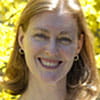 Almost forty years ago, Sister Rita Ann Wigginton, OSU, discovered her life's mission while visiting the home of a fellow Ursuline nun. The family's unique situation captivated her. Of six girls, five had been sent to Catholic schools, but a deaf daughter had not. The Catholic schools couldn't afford services for the Deaf, so the family enrolled her in a hearing public school, where she was laboriously taught English through a complex process that did not include sign language. Adept at lip-reading, the young girl was able to cope at school and at home, but she felt marginalized in both environments.
The family, meanwhile, had regrets. They had failed her, they said, and wished they had all learned American Sign Language (ASL) in order to be closer and to more fully share the faith with her.
"Ten percent of deaf people are raised by deaf parents," says Sister. "Those children are much more likely to receive proper faith formation. But for the 90 percent of deaf people who have hearing parents, there's a real communication gap. Hearing parents want their kids to be just like them, to succeed, to speak their language. I'm very sympathetic to their feelings, but what they don't understand is that their children are not like them."
With her order's encouragement, the young Sister Rita Ann sought post-graduate training in Deaf Ministry. She earned a master's degree in Deaf Education from Gallaudet University in Washington, D.C., and later went on to Boston College, where she earned a Certificate of Advanced Educational Specialization in Religious Education.
In the early years of working with the Deaf, Sister made some friends who changed the course of her life yet again. "A group of us met at a National Catholic Office for the Deaf conference, and then met regularly each fall to discuss what we could do to better serve the Deaf. At that time, we were adapting retreats, marriage preparation programs, and educational methods that worked with the hearing and using them with the Deaf," she says, "but we very much wanted to understand if deaf spirituality was different from hearing spirituality; so three of us wrote a proposal to the NCOD for a grant to do a study." The result was a book entitled, Eye Centered: A Study on the Spirituality of Deaf People, with Implications for Pastoral Ministry.
One of the most urgent recommendations arising from their work was that the Church should create programs for training deaf leaders. In 1993, their deaf colleague, Sister Maureen Langton, SSJ, developed the Ministry Formation Program for deaf and hard-of-hearing adults, which still operates in the Chicago area. Sister Rita Ann has taught in the program for years and is now its administrator. Its students come from dioceses all over the country.
When asked why the Deaf can't be trained as well in their own diocesan programs, Sister Rita Ann explains: "There are lay ministry formation programs in all dioceses, but the Deaf have problems when they try to participate, because of the process of interpreting. The interpreter doesn't know what the speaker is about to say, so he has to listen and process it before signing. By the time the Deaf receive the information, the speaker has moved on, so it's too late for their questions. Even closed-captioning can create delays, since many Deaf adults struggle with reading. They may feel hesitant to ask a question," Sister Rita explains, "because it looks like they're not keeping up." The resulting confusion creates social barriers and inhibits learning.
"It's actually cheaper to send them to Chicago than to pay for interpreters, and the MFP benefits the Deaf so much more," Sister Rita Ann states enthusiastically. "Right now we have two students from the Joliet, IL diocese, three from Topeka, KS, one from Fort Worth, TX, one from Toledo, OH, and one from Covington, KY."
The four-year curriculum at the MFP is demanding, but rich in opportunities for development in many disciplines, including: Adult Education, Family Ministry, RCIDA, Social Service Ministry, and Youth Ministry. "Each student attends classes in Chicago six weekends a year; three in the fall, and three in spring. They arrive Friday afternoon and the session ends at about noon on Sunday."
Article Continued On Next Page
Page: 1 of 2
2/23/2011 5:00:00 AM
Catholic
Be an Amazing Catechist
Catechesis
education
The Deaf
Roman Catholicism
more at patheos
1
Mark Twain Advised the Questioning of Majority Opinion
2

What Biblical Wells Teach Us About the Unpredictable Divine
3

Miracle Mike and the Headless Church
4

"Encroaching Sharia law in US: 'Serious issue.'"
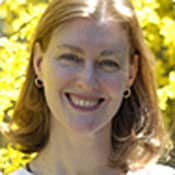
About Lisa Mladinich
Lisa Mladinich is a Catholic wife and mother, catechist and workshop leader, and the author of the popular booklets, "Be An Amazing Catechist: Inspire the Faith of Children," and "Be an Amazing Catechist: Sacramental Preparation" available from Our Sunday Visitor. She is the founder of www.AmazingCatechists.com.
Patheos Explore the world's faith through different perspectives on religion and spirituality! Patheos has the views of the prevalent religions and spiritualities of the world.
Ad-Free & Subscriber Log-In Subscription Support
- About Us
- 2026 Calendar
- Videos
- Podcasts
- Library of World Religions
- Faith In Media Tracker
- Advertise With Us
- Write for Us
- Privacy Policy
- Terms of Service
- Do Not Sell My Data
- Contact Us
- Radiant Digital
- Manage Newsletter Subscriptions
- Unsubscribe From Notifications
- Sitemap
Copyright 2008-2026, Patheos. All rights reserved.
Subscription Support Ad-Free & Subscriber Log-In
Follow Patheos