
BuddhistCatholicContemplativeEvangelicalGeneral ChristianHinduJewishLatter-day SaintMuslimNew VisionsProgressive Christian
Beliefs
- Buddhist
- Catholic
- Contemplative
- Evangelical
- General Christian
- Hindu
- Jewish
- Latter-day Saint
- More Voices
- Muslim
- New Visions
- Pagan
- Progressive Christian
Topics
- Religion News
- Food and Religion
- Sports and Religion
- Religious Art
- Religious Music and Entertainment
- Religious Events
- History and Religion
- Style and Religion
- Politics and Religion
- Women in Religion
- Recreation Outdoors and Religion
- Business Finance and Religion
- Careers Workplace and Religion
- Education and Religion
- Family Parenting and Religion
- Health Fitness and Religion
- Home and Religion
- Relationships and Religion
- Technology and Religion
- Travel and Religion
Columnists
- Buddhist Columnists
- Business Finance and Religion Columnists
- Careers Workplace and Religion Columnists
- Catholic Columnists
- Contemplative Columnists
- Education and Religion Columnists
- Evangelists Columnists
- Family Parenting and Religion Columnists
- General Christian Columnists
- Health Fitness and Religion Columnists
- Hindu Columnists
- History and Religion Columnists
- Home and Religion Columnists
- Jewish Columnists
- More Voices Columnists
- Latter Day Columnists
- Muslim Columnists
- New Visions Columnists
- Nonreligious Columnists
- Pagan Columnists
- Politics and Religion Columnists
- Progressive Columnists
- Recreation Outdoors and Religion Columnists
- Relationships and Religion Columnists
- Religion News Columnists
- Religious Art Columnists
- Religious Events Columnists
- Religious Music and Entertainment Columnists
- Sports and Religion Columnists
- Style and Religion Columnists
- Technology and Religion Columnists
- Travel and Religion Columnists
- Women in Religion Columnists
Resource Library
- 2026 Calendar
- Library of World Religions
- The 100 Most Holy Places on Earth
- Patheos Answers
- Podcasts
- Videos
- Faith Leaders Database
- Anglican Episcopalian
- Bahai
- Baptist
- Buddhism
- Christianity
- Confucianism
- Eastern Orthodoxy
- Hinduism
- Holiness and Pentecostal
- ISKCON
- Islam
- Judaism
- Lutheran
- Methodist
- The Church of Jesus Christ of Latter-day Saints
- New Age
- Paganism
- Presbytarian and Reformed
- Protestantism
- Religion Behind the Scenes
- Roman Catholic
- Scientology
- Shia Islam
- Sikhism
- Sufism
- Sunni Islam
- Taoism
- Zen
- See all religions
Research Tools
 Ad-Free & Subscriber Log-In Subscription Support
Ad-Free & Subscriber Log-In Subscription Support
Follow Patheos 

- Trending:
- Forgiveness
- |
- Marriage
- |
- Consciousness
- |
- Death Penalty
- |
- Election
- |
- Halloween
Catholic
What Catholics Don't Know
February 23, 2011 by Greg Kandra
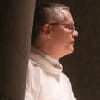 Some months back, a woman came to the rectory to register her newborn for a baptism. As she filled out the paperwork, I explained that one of the godparents had to be Catholic, but that the other, if necessary, could be a baptized Christian.
She put down the pen and furrowed her brow.
"What's the difference?"
That same day, another new mother also arrived to start the process for a baptism. I looked over the paperwork and noticed that she had left blank the question on the form that asked if the parents had been married by a Catholic priest. I asked her about it.
"Well," she began, "I'm not sure if she was a priest . . . "
I smiled. "If it was a she," I explained, "it wasn't a Catholic priest."
She brightened. "Oh," she exclaimed excitedly. "Then she must have been a nun!"
Just another morning at the rectory.
We hear again and again about the empowered laity—that more people in the pews are taking the Church into their own hands, studying ministry programs, delving into the documents of Vatican II, taking graduate courses on theology, boning up on canon law, and learning the ins and outs of parish administration.
I'm sure that's true, somewhere. But the pitiful state of catechesis over the last generation or so has left many nominal Catholics I encounter with only a passing familiarity with the sacraments, the liturgy, and even the basic tenets of the faith. Add to that the dismaying fact that, by most counts, only about a quarter of all Catholics come to church every Sunday, and you end up with parishes that are filled with people who are, more often than not, baffled. They don't really understand what's going on around them. And they're surprisingly outspoken about it.
A couple years ago, during Easter season, a man stopped me after church one Sunday.
He was perturbed. "What's all this Latin doing in the mass?" he asked.
"What do you mean?"
"All this Latin!" he said, exasperated. "I thought they took that out. I don't understand it."
I explained that, well, it is the Easter season, and some of the prayers at a couple points in the mass are sung in Latin, but that's about it.
"Well, I wish they'd stop it," he snapped. "It's divisive." He then proceeded to go on and on about the Kyrie.
Which, of course, is in Greek.
Working as a deacon, I brush up against this sort of thing a lot, and it's easy to draw the conclusion that the situation is beyond repair.
And yet, I continue to see reasons to hope. On a recent Monday night, I wandered past the meeting room in the rectory basement and saw that it was packed with thirty or so adults for Bible study. On any given Sunday, about 2,000 people fill the pews at my church for mass. They line up every weekday for confessions. They light candles and pray the rosary and bow devotedly before the Infant of Prague or St. Anthony or St. Jude, whose feet are almost always covered with tiny folded prayer petitions.
People turn out in droves for novenas to Padre Pio and St. Jean Vianney, and they fill every seat on a Saturday night in spring for the three hours of the Easter Vigil. They come for ashes, and palms, and the blessing of the throats, and they crowd the pews during Lent to pray the Stations of the Cross on a succession of cold Friday nights.
But why?
In a nutshell: people, I think, are hungry. They're craving something—grace, sanctity, a sense of the sacred that somehow touches their lives. They know there is more to being Catholic than showing up on Sunday and dropping the envelope in the basket and racing into the parking lot before the final announcements. There's something deeper going on. They want to experience that something. They want to figure out what it is. They yearn for the deeper connection.
It may be that Catholics don't know what they should when it comes to the basics. But a large number do know that there is something about this rich, glorious, ancient, suffering, broken, triumphant, and transporting religion that matters. It teaches and consoles. It uplifts and saves and sanctifies. It makes us whole. It is there at every Eucharist, when a thousand heads are suddenly raised to focus on a sliver of bread, and a miracle beyond all imagining. Wonder and awe still flood the human heart.
The rest, perhaps, is merely minutiae.
2/23/2011 5:00:00 AM
Catholic
All Things New
Catechesis
Mystery
Christianity
Roman Catholicism
more at patheos
1
A Commentary on Why Christianity is not in Ruins
2
Sunday Readings: God's Mercy, Faith, And Salvation
3

4
This Wednesday, at 4 PM, Utah time
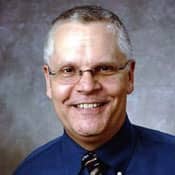
About Greg Kandra
Deacon Greg Kandra is a Roman Catholic Deacon serving the Diocese of Brooklyn, NY, and an award-winning journalist.
Patheos Explore the world's faith through different perspectives on religion and spirituality! Patheos has the views of the prevalent religions and spiritualities of the world.
Ad-Free & Subscriber Log-In Subscription Support
- About Us
- 2026 Calendar
- Videos
- Podcasts
- Library of World Religions
- Faith In Media Tracker
- Advertise With Us
- Write for Us
- Privacy Policy
- Terms of Service
- Do Not Sell My Data
- Contact Us
- Radiant Digital
- Manage Newsletter Subscriptions
- Unsubscribe From Notifications
- Sitemap
Copyright 2008-2026, Patheos. All rights reserved.
Subscription Support Ad-Free & Subscriber Log-In
Follow Patheos