
BuddhistCatholicContemplativeEvangelicalGeneral ChristianHinduJewishLatter-day SaintMuslimNew VisionsProgressive Christian
Beliefs
- Buddhist
- Catholic
- Contemplative
- Evangelical
- General Christian
- Hindu
- Jewish
- Latter-day Saint
- More Voices
- Muslim
- New Visions
- Pagan
- Progressive Christian
Topics
- Religion News
- Food and Religion
- Sports and Religion
- Religious Art
- Religious Music and Entertainment
- Religious Events
- History and Religion
- Style and Religion
- Politics and Religion
- Women in Religion
- Recreation Outdoors and Religion
- Business Finance and Religion
- Careers Workplace and Religion
- Education and Religion
- Family Parenting and Religion
- Health Fitness and Religion
- Home and Religion
- Relationships and Religion
- Technology and Religion
- Travel and Religion
Columnists
- Buddhist Columnists
- Business Finance and Religion Columnists
- Careers Workplace and Religion Columnists
- Catholic Columnists
- Contemplative Columnists
- Education and Religion Columnists
- Evangelists Columnists
- Family Parenting and Religion Columnists
- General Christian Columnists
- Health Fitness and Religion Columnists
- Hindu Columnists
- History and Religion Columnists
- Home and Religion Columnists
- Jewish Columnists
- More Voices Columnists
- Latter Day Columnists
- Muslim Columnists
- New Visions Columnists
- Nonreligious Columnists
- Pagan Columnists
- Politics and Religion Columnists
- Progressive Columnists
- Recreation Outdoors and Religion Columnists
- Relationships and Religion Columnists
- Religion News Columnists
- Religious Art Columnists
- Religious Events Columnists
- Religious Music and Entertainment Columnists
- Sports and Religion Columnists
- Style and Religion Columnists
- Technology and Religion Columnists
- Travel and Religion Columnists
- Women in Religion Columnists
Resource Library
- 2026 Calendar
- Library of World Religions
- The 100 Most Holy Places on Earth
- Patheos Answers
- Podcasts
- Videos
- Faith Leaders Database
- Anglican Episcopalian
- Bahai
- Baptist
- Buddhism
- Christianity
- Confucianism
- Eastern Orthodoxy
- Hinduism
- Holiness and Pentecostal
- ISKCON
- Islam
- Judaism
- Lutheran
- Methodist
- The Church of Jesus Christ of Latter-day Saints
- New Age
- Paganism
- Presbytarian and Reformed
- Protestantism
- Religion Behind the Scenes
- Roman Catholic
- Scientology
- Shia Islam
- Sikhism
- Sufism
- Sunni Islam
- Taoism
- Zen
- See all religions
Research Tools
 Ad-Free & Subscriber Log-In Subscription Support
Ad-Free & Subscriber Log-In Subscription Support
Follow Patheos 

- Trending:
- Forgiveness
- |
- Marriage
- |
- Consciousness
- |
- Death Penalty
- |
- Election
- |
- Halloween
Evangelical
Prophetic Activism for a New Generation: An Interview With Adam Taylor
February 09, 2011 by Timothy Dalrymple
But overall I'm really encouraged. Over the next ten years we're going to see more and more Christians getting involved in issues that transcend political debates and aren't easy to peg as liberal or conservative. An example is the issue of human trafficking, which has really gained traction in the church and not as a conservative issue or a liberal issue. It's about the abuse of power. It's intolerable that more people are trafficked now than they were during the transatlantic slave trade. And the more people come to understand why that's the case, and what's causing it, we'll see greater commitments to ending it.
My hope is that activism in the next ten years can be less ideological than it has been in previous years. The baggage of the 1960s deterred a lot of Christians from getting involved in politics and may have given them a negative image of social justice. But one thing that should unite us as Christians is a keen concern for the most vulnerable and the most marginalized. That concern rings through scripture and the prophets and the words of Jesus. We can disagree on the best way to protect the vulnerable and the best way to advance opportunity and justice for those who are shut out. But it's becoming almost impossible for people to disagree that that is a central tenet of the Christian faith. Once we can unite around that central tenet, we can really change some of our national and international priorities.
What does social justice mean to you?
The way I look at social justice is through the lens of the kingdom of God. As Christians, we're trying to be instruments of God's kingdom come. To me that resembles a world in which every person's dignity is valued and intact. It's a world in which everyone can realize their full potential because they have opportunities to do so. A world in which people's differences, particularly racial differences and gender differences, are respected. A world in which we prioritize the common good above our narrow self-interest. And a world in which people are free from exploitation and abuse. Look at Isaiah 65 and how it describes the new heaven and the new earth. In some sense it's utopian, but it's what we're called to create in faith.
What does racial reconciliation mean in a country that elected a black President?
It was a pivotal, watershed moment that our nation elected its first black President. A moment everyone could celebrate, whether or not they voted for Obama. It was significant. At the same time, I think it's given some people in America a reason to hail so much of the progress we've made while ignoring a great deal of the pain and division that still remains. I fear it's made some people complacent, and dismissive of how much further we have to go in order to achieve a just society in which all forms of racism are no longer a factor.
The challenge is that the black-and-white, overt racism that we saw of course during slavery but more recently through Jim Crow segregation has pretty much been eradicated. Much of what we have to combat now is more subtle, institutionalized, and therefore more insidious. It shows up in the huge economic disparities between racial groups, in the prison system that incarcerates almost an entire generation of black kids (and to an increasing extent, Hispanic kids). Our prison system has become a kind of legalized Jim Crow segregation. Young black kids are being arrested in disproportionate numbers, and they're being sent to prisons often for nonviolent offenses, and in those experiences they essentially become criminalized. When they come out, they can no longer vote in many states, and they can't get a decent job. That puts them on a pretty destructive path.
So I think we have a long way to go, and part of the challenge we face as a country is agreeing on what our ultimate vision is. Is this a country in which we become colorless? I would argue that's the wrong goal, because there's a lot of richness in our cultural heritage that's often tied to race and ethnicity. Instead, I think we should be striving to become a nation in which neither punishment nor privilege is tied to race or ethnicity. I realize that's a very high bar, but I think that's the ultimate goal. Our prison system, as it currently stands, and the extraordinary gap in the incomes and assets of black families and white families, show that we're not there yet.
Visit the Patheos Book Club for more resources on Mobilizing Hope, including a book excerpt and an online discussion.
Page: 3 of 3
2/9/2011 5:00:00 AM
Evangelical
Mainline Protestant
Preachers
Book Club
Mainline Protestantism
Christianity
Evangelicalism
more at patheos
1

Apostolic Succession: 40 Biblical Arguments
2
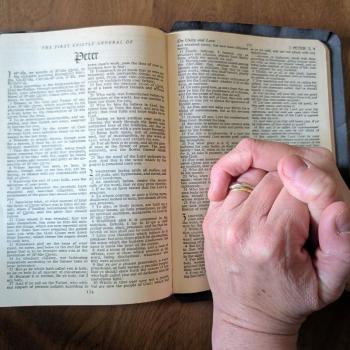
Reclaiming 1 Peter 2:19-25 From Abuse: Sermon for Resistance
3

Some thoughts on Islam and terrorist violence
4

Gospel Rap vs. Christian Hip Hop: They're Not the Same

About Timothy Dalrymple
Timothy Dalrymple is the CEO and Chief Creative Officer of Polymath Innovations, a strategic storytelling agency that advances the good with visionary organizations and brands. He leads a unique team of communicators from around North America and across the creative spectrum, serving mission-driven businesses and nonprofits who need a partner to amplify their voice and good works. Once a world-class gymnast whose career ended with a broken neck, Tim channeled his passions for faith and storytelling into his role as VP of Business Development for Patheos, helping to launch and grow the network into the world's largest religion website. He holds a Ph.D. in Religion from Harvard's Graduate School of Arts and Sciences. Tim blogs at Philosophical Fragments.
Patheos Explore the world's faith through different perspectives on religion and spirituality! Patheos has the views of the prevalent religions and spiritualities of the world.
Ad-Free & Subscriber Log-In Subscription Support
- About Us
- 2026 Calendar
- Videos
- Podcasts
- Library of World Religions
- Faith In Media Tracker
- Advertise With Us
- Write for Us
- Privacy Policy
- Terms of Service
- Do Not Sell My Data
- Contact Us
- Radiant Digital
- Manage Newsletter Subscriptions
- Unsubscribe From Notifications
- Sitemap
Copyright 2008-2026, Patheos. All rights reserved.
Subscription Support Ad-Free & Subscriber Log-In
Follow Patheos