
BuddhistCatholicContemplativeEvangelicalGeneral ChristianHinduJewishLatter-day SaintMuslimNew VisionsProgressive Christian
Beliefs
- Buddhist
- Catholic
- Contemplative
- Evangelical
- General Christian
- Hindu
- Jewish
- Latter-day Saint
- More Voices
- Muslim
- New Visions
- Pagan
- Progressive Christian
Topics
- Religion News
- Food and Religion
- Sports and Religion
- Religious Art
- Religious Music and Entertainment
- Religious Events
- History and Religion
- Style and Religion
- Politics and Religion
- Women in Religion
- Recreation Outdoors and Religion
- Business Finance and Religion
- Careers Workplace and Religion
- Education and Religion
- Family Parenting and Religion
- Health Fitness and Religion
- Home and Religion
- Relationships and Religion
- Technology and Religion
- Travel and Religion
Columnists
- Buddhist Columnists
- Business Finance and Religion Columnists
- Careers Workplace and Religion Columnists
- Catholic Columnists
- Contemplative Columnists
- Education and Religion Columnists
- Evangelists Columnists
- Family Parenting and Religion Columnists
- General Christian Columnists
- Health Fitness and Religion Columnists
- Hindu Columnists
- History and Religion Columnists
- Home and Religion Columnists
- Jewish Columnists
- More Voices Columnists
- Latter Day Columnists
- Muslim Columnists
- New Visions Columnists
- Nonreligious Columnists
- Pagan Columnists
- Politics and Religion Columnists
- Progressive Columnists
- Recreation Outdoors and Religion Columnists
- Relationships and Religion Columnists
- Religion News Columnists
- Religious Art Columnists
- Religious Events Columnists
- Religious Music and Entertainment Columnists
- Sports and Religion Columnists
- Style and Religion Columnists
- Technology and Religion Columnists
- Travel and Religion Columnists
- Women in Religion Columnists
Resource Library
- 2026 Calendar
- Library of World Religions
- The 100 Most Holy Places on Earth
- Patheos Answers
- Podcasts
- Videos
- Faith Leaders Database
- Anglican Episcopalian
- Bahai
- Baptist
- Buddhism
- Christianity
- Confucianism
- Eastern Orthodoxy
- Hinduism
- Holiness and Pentecostal
- ISKCON
- Islam
- Judaism
- Lutheran
- Methodist
- The Church of Jesus Christ of Latter-day Saints
- New Age
- Paganism
- Presbytarian and Reformed
- Protestantism
- Religion Behind the Scenes
- Roman Catholic
- Scientology
- Shia Islam
- Sikhism
- Sufism
- Sunni Islam
- Taoism
- Zen
- See all religions
Research Tools
 Ad-Free & Subscriber Log-In Subscription Support
Ad-Free & Subscriber Log-In Subscription Support
Follow Patheos 

- Trending:
- Forgiveness
- |
- Marriage
- |
- Consciousness
- |
- Death Penalty
- |
- Election
- |
- Halloween
Evangelical
Prophetic Activism for a New Generation: An Interview With Adam Taylor
February 09, 2011 by Timothy Dalrymple
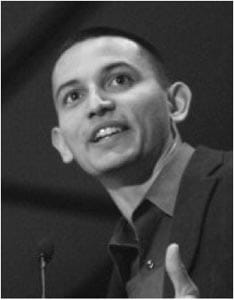 Adam Taylor is the author of Mobilizing Hope, a book that draws upon the heritage of faith-based activism to ground and reimagine political engagement and the fight for biblical justice for a new generation. After earning degrees at Emory and Harvard University's Kennedy School of Government, Taylor founded and served as executive director for Global Justice, an organization that mobilizes students around issues of global human rights and economic justice. He went on to serve as Senior Political Director at Sojourners, as a White House Fellow and now as the Vice President of Advocacy for World Vision, USA. He is also an ordained minister at First Baptist Church in Washington, D.C.
As Mobilizing Hopeis the subject of Patheos' Book Club, Taylor spoke with Timothy Dalrymple by phone.
Why did you feel called to write Mobilizing Hope?
The heart behind the book was twofold. One, I have always been a fan and to some extent a scholar of social movements, particularly the civil rights and anti-apartheid movements. The civil rights movement was such a powerful force in shaping my identity. My parents got married in 1968, the same year Dr King was assassinated. I come from a biracial background. They instilled in me a commitment to diversity and to racial and social justice. And the anti-apartheid movement was coming to a head just as I was growing up. Apartheid mirrored so much of what our country had faced in Jim Crow segregation.
In high school and then college, I felt as though my generation had begun to substitute community service for civic engagement. I've always been a strong believer in community service, and have been involved in many ongoing projects. But young people historically have been on the vanguard of social and political change, and I wanted to find a way to revitalize that commitment to activism.
The other main reason stems from my faith. Faith had a massive impact in driving both of those movements. I started to work more and more within the church. I accepted a call into the ministry and had been working at Sojourners, trying to revitalize our commitment within the church to social justice and what I call prophetic advocacy. A lot of the churches and Christians I was spoke with, young or old, were often conflating social justice with compassion, mercy and charity. Mercy and compassion are critical signs of discipleship, but they're very different from biblical justice. I found myself trying to clarify what biblical justice looks like, and what it calls us to do. So I had to make the case that it's not an add-on to our faith. The fight for biblical justice is not an extra-curricular activity. It's at the very heart of our faith.
So I wanted the book to make a case for why social justice is critical to discipleship, and really offer some tools and "new wineskins" on how we do that in our current political and economic context. There's much we can learn from previous social movements, and I try to draw some of those lessons, but we can't be captive to that history. We need to be active and innovative. I offer concrete examples of how many young people are applying their faith in transformative ways and making a difference at an international or local level, and I try to offer some practical tips and tools for what activism could look like today.
If readers take away one thing from Mobilizing Hope, what should it be?
I think the one thing is expressed in the quote from Dr. King that forms the very foundation of the book: his call to "be a transformed nonconformist." King was preaching from a text in Romans in which Paul calls the followers of Christ to "be not conformed to the patterns of this world, but be transformed by the renewing of your minds." He called for Christians to serve as maladjusted non-conformists.
So the one thing I hope people take away is this: our faith really is a radical faith. We follow a radical savior. In the context of following Christ, we are automatically drawn into the struggles for greater justice and dignity and righteousness in the world. That requires us to strive to transform many of the broken patterns and broken relationships we see around us. It only takes a small committed minority of people who are courageous dedicated to a cause in order to overcome and transform some of the most intractable issues and crises that we face. I hope that people are inspired by examples of many who come before us, but also feel empowered to be maladjusted, creative nonconformists in confronting today's injustices.
Article Continued On Next Page
Page: 1 of 3
2/9/2011 5:00:00 AM
Evangelical
Mainline Protestant
Preachers
Book Club
Mainline Protestantism
Christianity
Evangelicalism
more at patheos
1

Rededicate 250: A Brazen Display of Evangelical Nationalism
2

Does the Talmud Support Pedophilia? Debunking the Viral Lie
3

Jesus & Lao Tzu: The Peaceable Kingdom
4

Pentecost And The Infilling Of The Holy Spirit-A Prayer

About Timothy Dalrymple
Timothy Dalrymple is the CEO and Chief Creative Officer of Polymath Innovations, a strategic storytelling agency that advances the good with visionary organizations and brands. He leads a unique team of communicators from around North America and across the creative spectrum, serving mission-driven businesses and nonprofits who need a partner to amplify their voice and good works. Once a world-class gymnast whose career ended with a broken neck, Tim channeled his passions for faith and storytelling into his role as VP of Business Development for Patheos, helping to launch and grow the network into the world's largest religion website. He holds a Ph.D. in Religion from Harvard's Graduate School of Arts and Sciences. Tim blogs at Philosophical Fragments.
Patheos Explore the world's faith through different perspectives on religion and spirituality! Patheos has the views of the prevalent religions and spiritualities of the world.
Ad-Free & Subscriber Log-In Subscription Support
- About Us
- 2026 Calendar
- Videos
- Podcasts
- Library of World Religions
- Faith In Media Tracker
- Advertise With Us
- Write for Us
- Privacy Policy
- Terms of Service
- Do Not Sell My Data
- Contact Us
- Radiant Digital
- Manage Newsletter Subscriptions
- Unsubscribe From Notifications
- Sitemap
Copyright 2008-2026, Patheos. All rights reserved.
Subscription Support Ad-Free & Subscriber Log-In
Follow Patheos