
BuddhistCatholicContemplativeEvangelicalGeneral ChristianHinduJewishLatter-day SaintMuslimNew VisionsProgressive Christian
Beliefs
- Buddhist
- Catholic
- Contemplative
- Evangelical
- General Christian
- Hindu
- Jewish
- Latter-day Saint
- More Voices
- Muslim
- New Visions
- Pagan
- Progressive Christian
Topics
- Religion News
- Food and Religion
- Sports and Religion
- Religious Art
- Religious Music and Entertainment
- Religious Events
- History and Religion
- Style and Religion
- Politics and Religion
- Women in Religion
- Recreation Outdoors and Religion
- Business Finance and Religion
- Careers Workplace and Religion
- Education and Religion
- Family Parenting and Religion
- Health Fitness and Religion
- Home and Religion
- Relationships and Religion
- Technology and Religion
- Travel and Religion
Columnists
- Buddhist Columnists
- Business Finance and Religion Columnists
- Careers Workplace and Religion Columnists
- Catholic Columnists
- Contemplative Columnists
- Education and Religion Columnists
- Evangelists Columnists
- Family Parenting and Religion Columnists
- General Christian Columnists
- Health Fitness and Religion Columnists
- Hindu Columnists
- History and Religion Columnists
- Home and Religion Columnists
- Jewish Columnists
- More Voices Columnists
- Latter Day Columnists
- Muslim Columnists
- New Visions Columnists
- Nonreligious Columnists
- Pagan Columnists
- Politics and Religion Columnists
- Progressive Columnists
- Recreation Outdoors and Religion Columnists
- Relationships and Religion Columnists
- Religion News Columnists
- Religious Art Columnists
- Religious Events Columnists
- Religious Music and Entertainment Columnists
- Sports and Religion Columnists
- Style and Religion Columnists
- Technology and Religion Columnists
- Travel and Religion Columnists
- Women in Religion Columnists
Resource Library
- 2026 Calendar
- Library of World Religions
- The 100 Most Holy Places on Earth
- Patheos Answers
- Podcasts
- Videos
- Faith Leaders Database
- Anglican Episcopalian
- Bahai
- Baptist
- Buddhism
- Christianity
- Confucianism
- Eastern Orthodoxy
- Hinduism
- Holiness and Pentecostal
- ISKCON
- Islam
- Judaism
- Lutheran
- Methodist
- The Church of Jesus Christ of Latter-day Saints
- New Age
- Paganism
- Presbytarian and Reformed
- Protestantism
- Religion Behind the Scenes
- Roman Catholic
- Scientology
- Shia Islam
- Sikhism
- Sufism
- Sunni Islam
- Taoism
- Zen
- See all religions
Research Tools
 Ad-Free & Subscriber Log-In Subscription Support
Follow Patheos 

- Trending:
- Advent
- |
- Forgiveness
- |
- Thanksgiving
- |
- Election
- |
- Seasonal Holidays
- |
- Marriage
Cairo, Philadelphia, and Self-evident Truths
February 07, 2011 by Frederick Schmidt
 Some years ago now I traveled to Cairo—somewhat unwillingly, I will admit. We had been living in the Middle East. I had been through the Sinai desert on a number of other occasions and I was ready for a break. But it was hard to argue that we should forego a trip that could be "the chance of a lifetime." So, we took a bus across the Sinai desert and spent some time in Cairo.
The recent unrest in Egypt has me thinking back on that trip and on what I have learned along the way about that complex place, its people, and history. Some of what I learned was unexpected, including the deeper realization that the value of human life is not self-evident.
When you first step off a bus in central Cairo the number of people is staggering, even to someone who has frequently visited other large cities, including New York and London. With a population of just under 8 million in the city proper and another 10 million in the immediate surroundings, Cairo ranks behind ten others in the world.
But it is not the size of Cairo that is troubling. There are plenty of crowded cities in the world. It is the number of unattended and abandoned children who roam the streets and crowd the doors of every bus, shouting "baksheesh!" ("handout," "gift,"). Though, to be sure, there are Egyptians who feel differently, the fact of the matter is that human life is cheap there—as cheap, in fact, as it was when the pharaohs were building pyramids.
And it is not just the number of children on the streets. Unchecked police brutality and the fact that 42 percent of the population lives in poverty also underline just how little baseline regard there can be for human life. It's bad in Cairo.
But I have worked and lived in Philadelphia as well and it's bad there too. Drive up Broad Street to Penn Square and you pass block after block of burned out and boarded up homes. And, then, of course, now there is Dr. Kermit Gosnell and the notorious clinic that he ran in Philadelphia. Gosnell made millions over 30 years endangering the lives of countless women, performing late term abortions, and killing at least seven infants with a pair of scissors. It's not entirely "self-evident" that life is valuable in Philadelphia, either—even though we have laws that say it is and Philadelphia was a cradle of the language we often use.
So, if the value of human life is self-evident—along with any other values we might care to specify, including freedom, peace, and self-determination—why isn't it more self-evident?
The answer, of course, is that there are a lot of reasons, including avarice, greed, and lust. But the more basic problem with the language of "self-evident truths" is that they aren't "self-evident."
As familiar and time-honored as that language is, the notion of self-evident truths and morality is an Enlightenment conceit that was predicated upon Christian values that made it possible to assume that there was such a thing in the first place. It was and is an aspirational assertion that had little evidence going for it, then or now. Neither the way in which individuals or cultures behaved justify the notion that people everywhere share the same truths and there have been times in history when entire societies have lived by very different truths.
In forgetting this, Christians have often made the mistake of assuming that we are cheerleaders for values that the rest of the world shares. And we have often been tragically less than rigorous in the demands we make of ourselves. The value of life is not universal and, as the saying goes, the practice of justice begins with the household of God.
It is the Christian's responsibility, then, to live as a witness to the revealed—not self-evident—truth that all people, regardless of their ability or status are of equal value in the eyes of God. There will be others who share this conviction and they will share it for other reasons. (That's a good thing.) But the assumption that this conviction is universal erodes our sense of responsibility for it—in Cairo, Philadelphia, and in any place where its importance surfaces next.
2/7/2011 5:00:00 AM
Mainline Protestant
The Spiritual Landscape
Abortion
Cairo
History
Mainline Protestantism
News
Christianity
more at patheos
1
God’s Word Bears Fruit and Brings New Life
2

3
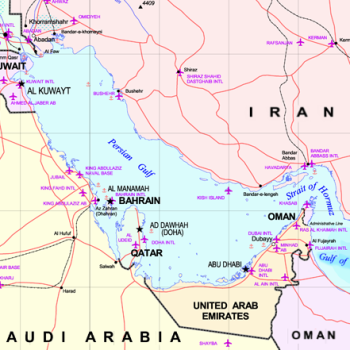
Iran Deal Prevents U.S. & Israel Ship Transits thru Hormuz
4

About Frederick Schmidt
Frederick W. Schmidt is the author of The Dave Test: A Raw Look at Real Life in Hard Times (Abingdon Press: 2013) and several other books, including A Still Small Voice: Women, Ordination and the Church (Syracuse University Press, 1998), The Changing Face of God (Morehouse, 2000), When Suffering Persists (Morehouse, 2001), in Italian translation: Sofferenza, All ricerca di una riposta (Torino: Claudiana, 2004), What God Wants for Your Life (Harper, 2005), Conversations with Scripture: Revelation (Morehouse, 2005) and Conversations with Scripture: Luke (Morehouse, 2009). He holds the Rueben P. Job Chair in Spiritual Formation at Garrett-Evangelical Theological Seminary in Evanston, IL, and directs the Job Institute for Spiritual formation. He is an Episcopal Priest, spiritual director, retreat facilitator, conference leader, writer, and Consulting Editor at Church Publishing in New York. He and his wife, Natalie live in Chicago, Illinois. He can also be reached at: http://frederickwschmidt.com/
Patheos Explore the world's faith through different perspectives on religion and spirituality! Patheos has the views of the prevalent religions and spiritualities of the world.
Ad-Free & Subscriber Log-In Subscription Support
- About Us
- 2026 Calendar
- Videos
- Podcasts
- Library of World Religions
- Faith In Media Tracker
- Advertise With Us
- Write for Us
- Privacy Policy
- Terms of Service
- Do Not Sell My Data
- Contact Us
- Radiant Digital
- Manage Newsletter Subscriptions
- Unsubscribe From Notifications
- Sitemap
Copyright 2008-2026, Patheos, part of the Radiant Digital network of media brands. All rights reserved.
Subscription Support Ad-Free & Subscriber Log-In
Follow Patheos