
BuddhistCatholicContemplativeEvangelicalGeneral ChristianHinduJewishLatter-day SaintMuslimNew VisionsProgressive Christian
Beliefs
- Buddhist
- Catholic
- Contemplative
- Evangelical
- General Christian
- Hindu
- Jewish
- Latter-day Saint
- More Voices
- Muslim
- New Visions
- Pagan
- Progressive Christian
Topics
- Religion News
- Food and Religion
- Sports and Religion
- Religious Art
- Religious Music and Entertainment
- Religious Events
- History and Religion
- Style and Religion
- Politics and Religion
- Women in Religion
- Recreation Outdoors and Religion
- Business Finance and Religion
- Careers Workplace and Religion
- Education and Religion
- Family Parenting and Religion
- Health Fitness and Religion
- Home and Religion
- Relationships and Religion
- Technology and Religion
- Travel and Religion
Columnists
- Buddhist Columnists
- Business Finance and Religion Columnists
- Careers Workplace and Religion Columnists
- Catholic Columnists
- Contemplative Columnists
- Education and Religion Columnists
- Evangelists Columnists
- Family Parenting and Religion Columnists
- General Christian Columnists
- Health Fitness and Religion Columnists
- Hindu Columnists
- History and Religion Columnists
- Home and Religion Columnists
- Jewish Columnists
- More Voices Columnists
- Latter Day Columnists
- Muslim Columnists
- New Visions Columnists
- Nonreligious Columnists
- Pagan Columnists
- Politics and Religion Columnists
- Progressive Columnists
- Recreation Outdoors and Religion Columnists
- Relationships and Religion Columnists
- Religion News Columnists
- Religious Art Columnists
- Religious Events Columnists
- Religious Music and Entertainment Columnists
- Sports and Religion Columnists
- Style and Religion Columnists
- Technology and Religion Columnists
- Travel and Religion Columnists
- Women in Religion Columnists
Resource Library
- 2026 Calendar
- Library of World Religions
- The 100 Most Holy Places on Earth
- Patheos Answers
- Podcasts
- Videos
- Faith Leaders Database
- Anglican Episcopalian
- Bahai
- Baptist
- Buddhism
- Christianity
- Confucianism
- Eastern Orthodoxy
- Hinduism
- Holiness and Pentecostal
- ISKCON
- Islam
- Judaism
- Lutheran
- Methodist
- The Church of Jesus Christ of Latter-day Saints
- New Age
- Paganism
- Presbytarian and Reformed
- Protestantism
- Religion Behind the Scenes
- Roman Catholic
- Scientology
- Shia Islam
- Sikhism
- Sufism
- Sunni Islam
- Taoism
- Zen
- See all religions
Research Tools
 Ad-Free & Subscriber Log-In Subscription Support
Ad-Free & Subscriber Log-In Subscription Support
Follow Patheos 

- Trending:
- Forgiveness
- |
- Marriage
- |
- Consciousness
- |
- Death Penalty
- |
- Election
- |
- Halloween
Latter-day Saint
The Arguments of Religious Freedom under Fire: Part 2
February 16, 2011 by Rosalynde Welch
Liberalism, the great champion of tolerant inclusion, must thus exclude religion or else require it to present itself for possible correction, which, as Oaks recognizes, would annul the very nature of revelation. This irony makes a tidy debating point, and it is ultimately where Oaks and his fellows end up: liberalism is not liberal enough, tolerance is not tolerant enough. But as Mill shows, the inclusiveness of liberal-enlightenment tolerance is not only consistent with but indeed predicated upon an initial exclusion of unanswerable, absolute claims. Liberalism is never more liberal than when it excludes religious claims, and that has been the case from its inception.
If enlightenment liberalism is less liberal than it should be, or so goes the claim, Oaks is perhaps more liberal than he should be. For in the end it is at the great roundtable of democratic liberalism that Oaks wants to save religion's seat as just one of the many "good-faith" contributors. He makes no quarrel with the rules and procedures of liberalism itself; indeed he invokes its central tenets of inclusiveness and public discussion. Even when he argues that religion should enjoy special protection, his rationale is not the absolute claim that religious beliefs are true but rather the deeply utilitarian and instrumental claim that religion advances the aims of liberal democracy. This is a very old idea, and Mill addresses it directly:
The claims of [religious] opinion to be protected from public attack are rested not so much on its truth, as on its importance to society. There are, it is alleged, certain beliefs, so useful, not to say indispensable to well-being, that it is as much the duty of governments to uphold those beliefs, as to protect any other of the interests of society. . . . This mode of thinking makes the justification of restraints on discussion not a question of the truth of doctrines, but of their usefulness.
But as Mill recognizes, the question of what constitutes "well-being" is itself, under enlightened rationalism, a contested issue open to the vigorous debate of asking and answering, conceding and correcting. "The usefulness of an opinion is itself matter of opinion: as disputable, as open to discussion, and requiring discussion as much, as the opinion itself."
Under these rules, religion will never participate fully in liberalism's ongoing discussion precisely because religion is not disputable on its own terms. Stanley Fish recognizes this, in his fine piece on the topic, when he writes:
To put the matter baldly, a person of religious conviction should not want to enter the marketplace of ideas but to shut it down, at least insofar as it presumes to determine matters that he believes have been determined by God and faith. The religious person should not seek an accommodation with liberalism; he should seek to rout it from the field, to extirpate it, root and branch.
But this is the counsel of despair, as Fish undoubtedly knows. Despite its critics' outsized fears of theocracy, American religious institutions—and Mormonism in particular—have neither the resources nor the inclination to seriously challenge democratic liberalism. Yet the best that enlightenment liberalism can offer religion is a polite ceremonial deference and a second-class place at the discussion table.
Perhaps that is enough, in the end, for Oaks and his fellows. After all, religious institutions have co-existed with liberal democracy for hundreds of years despite the deep contradictions in that marriage. Societies in their creaky, many-limbed complexity have a way of lurching forward in spite of contradictions at their foundations.
And Oaks' concerns are pastoral as much as they are philosophical: perhaps he is willing to accept a merely ceremonial place at the table in return for a politer cultural landscape in which his flock can practice its religion without jeers or intimidation. To reach this kind of settlement, though, we must have clear eyes about both the foundations of enlightenment liberalism and the nature of religious claims.
Page: 2 of 2
2/16/2011 5:00:00 AM
Mormon
Salt and Seed
Elder Oaks
Ethics
History
John Stuart Mill
Liberal Democracy
politics
Mormonism
more at patheos
1

World Chocolate Day: Celebrating a Popular Sweet Treat
2

Dusty Spencer: The Oldest Man Florida Has Ever Executed
3
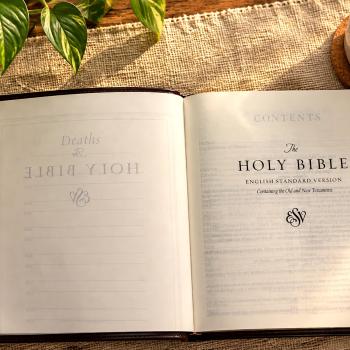
ESV Large Print Thinline Reference Bible Review
4

Christian Theology In a Post-Theological World

About Rosalynde Welch
Rosalynde Welch is an independent scholar who makes her home in St. Louis, Missouri, with her husband and four children.
Patheos Explore the world's faith through different perspectives on religion and spirituality! Patheos has the views of the prevalent religions and spiritualities of the world.
Ad-Free & Subscriber Log-In Subscription Support
- About Us
- 2026 Calendar
- Videos
- Podcasts
- Library of World Religions
- Faith In Media Tracker
- Advertise With Us
- Write for Us
- Privacy Policy
- Terms of Service
- Do Not Sell My Data
- Contact Us
- Radiant Digital
- Manage Newsletter Subscriptions
- Unsubscribe From Notifications
- Sitemap
Copyright 2008-2026, Patheos. All rights reserved.
Subscription Support Ad-Free & Subscriber Log-In
Follow Patheos