
BuddhistCatholicContemplativeEvangelicalGeneral ChristianHinduJewishLatter-day SaintMuslimNew VisionsProgressive Christian
Beliefs
- Buddhist
- Catholic
- Contemplative
- Evangelical
- General Christian
- Hindu
- Jewish
- Latter-day Saint
- More Voices
- Muslim
- New Visions
- Pagan
- Progressive Christian
Topics
- Religion News
- Food and Religion
- Sports and Religion
- Religious Art
- Religious Music and Entertainment
- Religious Events
- History and Religion
- Style and Religion
- Politics and Religion
- Women in Religion
- Recreation Outdoors and Religion
- Business Finance and Religion
- Careers Workplace and Religion
- Education and Religion
- Family Parenting and Religion
- Health Fitness and Religion
- Home and Religion
- Relationships and Religion
- Technology and Religion
- Travel and Religion
Columnists
- Buddhist Columnists
- Business Finance and Religion Columnists
- Careers Workplace and Religion Columnists
- Catholic Columnists
- Contemplative Columnists
- Education and Religion Columnists
- Evangelists Columnists
- Family Parenting and Religion Columnists
- General Christian Columnists
- Health Fitness and Religion Columnists
- Hindu Columnists
- History and Religion Columnists
- Home and Religion Columnists
- Jewish Columnists
- More Voices Columnists
- Latter Day Columnists
- Muslim Columnists
- New Visions Columnists
- Nonreligious Columnists
- Pagan Columnists
- Politics and Religion Columnists
- Progressive Columnists
- Recreation Outdoors and Religion Columnists
- Relationships and Religion Columnists
- Religion News Columnists
- Religious Art Columnists
- Religious Events Columnists
- Religious Music and Entertainment Columnists
- Sports and Religion Columnists
- Style and Religion Columnists
- Technology and Religion Columnists
- Travel and Religion Columnists
- Women in Religion Columnists
Resource Library
- 2026 Calendar
- Library of World Religions
- The 100 Most Holy Places on Earth
- Patheos Answers
- Podcasts
- Videos
- Faith Leaders Database
- Anglican Episcopalian
- Bahai
- Baptist
- Buddhism
- Christianity
- Confucianism
- Eastern Orthodoxy
- Hinduism
- Holiness and Pentecostal
- ISKCON
- Islam
- Judaism
- Lutheran
- Methodist
- The Church of Jesus Christ of Latter-day Saints
- New Age
- Paganism
- Presbytarian and Reformed
- Protestantism
- Religion Behind the Scenes
- Roman Catholic
- Scientology
- Shia Islam
- Sikhism
- Sufism
- Sunni Islam
- Taoism
- Zen
- See all religions
Research Tools
 Ad-Free & Subscriber Log-In Subscription Support
Follow Patheos 

- Trending:
- Advent
- |
- Forgiveness
- |
- Thanksgiving
- |
- Election
- |
- Seasonal Holidays
- |
- Marriage
Making a New Year
January 04, 2011 by Frederick Schmidt
Doubt is the beginning, not the end of wisdom. ~ George Iles
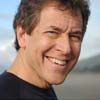 Our relationship to doubt is a complex thing. It is shaped by our personalities, a complex mix of social forces, generational experiences, and encounters, the role that doubt has played in our lives, and the way we have been socialized to experience it.
One dictionary offers a range of meanings for the word "doubt" that hints at just how complex the experience of doubt can be. The meanings ascribed to the word "doubt" range from a tentative state of mind awaiting clarity to a permanent state of mind in which the one thing that is certain is that something can't be known.
As a temporary life-experience, doubt can be a good thing. It can be the beginning of a quest and the first step in finding wisdom. The healthiest of adults also make a variety of commitments in the face of lingering doubts or unanswered questions of one kind or another. Life is not simple.
But thoroughgoing doubt can be debilitating. And doubt that is cultivated as a frame of mind can harden into cynicism that forecloses on the possibility of finding answers and making commitments. Not surprisingly, those of us who are the most susceptible to that kind of debilitating doubt are people who most believed that certainty was once possible. I have lost track now of the number of people I have met who have swung, pendulum like, from fundamentalist certainty to thoroughgoing doubt.
That's not surprising. When we feel betrayed by the promise that we can live in certainty, it is hard not to embrace thoroughgoing doubt as a means of protecting ourselves against further disappointment. But that kind of cynicism offers its own counterfeit certainty and it also brings with it a fresh set of temptations.
If the weakness of the sure and certain fundamentalist is an unthinking certitude, the temptation for the cynic can be pride-filled arrogance. Both are two sides of the same coin and at the heart of both experiences lies the same spiritual problem—the failure to trust. Both run from the need to trust—one by insisting on certainty that makes trust unnecessary, the other by insisting that there is no one to trust.
That's worth knowing at the beginning of a new year. The last year was filled with unwelcome surprises, the failure of old formulas, and no small number of disappointments. And, while it might be different, there is nothing about changing calendars that insures we will awake to a new world on January 1.
But we can awake to a new approach to life. We can trust God. We can live courageously. We can continue to dream and act in ways that will make for a new year—if only in our response to its challenges. New years don't happen, they are made.
The doubts that we bring to this one can be a life-crushing burden. Or they can be the beginning of wisdom. Which of your doubts can kindle the search for new trust and wisdom in the year ahead?
Check back every Monday for the latest from The Spiritual Landscape, a regular column at the Mainline Protestant Portal at Patheos.
1/4/2011 5:00:00 AM
Mainline Protestant
The Spiritual Landscape
Mainline Protestantism
Christianity
more at patheos
1

Will I see you on Tuesday? Wednesday? Thursday? Friday?
2
Reflections For Paschaltide 2026: Introduction
3
Church Is Not a Waiting Room: It’s Where Gifts Are Formed
4

Why Public Theology Needs a Theology of Nature

About Frederick Schmidt
Frederick W. Schmidt is the author of The Dave Test: A Raw Look at Real Life in Hard Times (Abingdon Press: 2013) and several other books, including A Still Small Voice: Women, Ordination and the Church (Syracuse University Press, 1998), The Changing Face of God (Morehouse, 2000), When Suffering Persists (Morehouse, 2001), in Italian translation: Sofferenza, All ricerca di una riposta (Torino: Claudiana, 2004), What God Wants for Your Life (Harper, 2005), Conversations with Scripture: Revelation (Morehouse, 2005) and Conversations with Scripture: Luke (Morehouse, 2009). He holds the Rueben P. Job Chair in Spiritual Formation at Garrett-Evangelical Theological Seminary in Evanston, IL, and directs the Job Institute for Spiritual formation. He is an Episcopal Priest, spiritual director, retreat facilitator, conference leader, writer, and Consulting Editor at Church Publishing in New York. He and his wife, Natalie live in Chicago, Illinois. He can also be reached at: http://frederickwschmidt.com/
Patheos Explore the world's faith through different perspectives on religion and spirituality! Patheos has the views of the prevalent religions and spiritualities of the world.
Ad-Free & Subscriber Log-In Subscription Support
- About Us
- 2026 Calendar
- Videos
- Podcasts
- Library of World Religions
- Faith In Media Tracker
- Advertise With Us
- Write for Us
- Privacy Policy
- Terms of Service
- Do Not Sell My Data
- Contact Us
- Radiant Digital
- Manage Newsletter Subscriptions
- Unsubscribe From Notifications
- Sitemap
Copyright 2008-2026, Patheos, part of the Radiant Digital network of media brands. All rights reserved.
Subscription Support Ad-Free & Subscriber Log-In
Follow Patheos