
BuddhistCatholicContemplativeEvangelicalGeneral ChristianHinduJewishLatter-day SaintMuslimNew VisionsProgressive Christian
Beliefs
- Buddhist
- Catholic
- Contemplative
- Evangelical
- General Christian
- Hindu
- Jewish
- Latter-day Saint
- More Voices
- Muslim
- New Visions
- Pagan
- Progressive Christian
Topics
- Religion News
- Food and Religion
- Sports and Religion
- Religious Art
- Religious Music and Entertainment
- Religious Events
- History and Religion
- Style and Religion
- Politics and Religion
- Women in Religion
- Recreation Outdoors and Religion
- Business Finance and Religion
- Careers Workplace and Religion
- Education and Religion
- Family Parenting and Religion
- Health Fitness and Religion
- Home and Religion
- Relationships and Religion
- Technology and Religion
- Travel and Religion
Columnists
- Buddhist Columnists
- Business Finance and Religion Columnists
- Careers Workplace and Religion Columnists
- Catholic Columnists
- Contemplative Columnists
- Education and Religion Columnists
- Evangelists Columnists
- Family Parenting and Religion Columnists
- General Christian Columnists
- Health Fitness and Religion Columnists
- Hindu Columnists
- History and Religion Columnists
- Home and Religion Columnists
- Jewish Columnists
- More Voices Columnists
- Latter Day Columnists
- Muslim Columnists
- New Visions Columnists
- Nonreligious Columnists
- Pagan Columnists
- Politics and Religion Columnists
- Progressive Columnists
- Recreation Outdoors and Religion Columnists
- Relationships and Religion Columnists
- Religion News Columnists
- Religious Art Columnists
- Religious Events Columnists
- Religious Music and Entertainment Columnists
- Sports and Religion Columnists
- Style and Religion Columnists
- Technology and Religion Columnists
- Travel and Religion Columnists
- Women in Religion Columnists
Resource Library
- 2026 Calendar
- Library of World Religions
- The 100 Most Holy Places on Earth
- Patheos Answers
- Podcasts
- Videos
- Faith Leaders Database
- Anglican Episcopalian
- Bahai
- Baptist
- Buddhism
- Christianity
- Confucianism
- Eastern Orthodoxy
- Hinduism
- Holiness and Pentecostal
- ISKCON
- Islam
- Judaism
- Lutheran
- Methodist
- The Church of Jesus Christ of Latter-day Saints
- New Age
- Paganism
- Presbytarian and Reformed
- Protestantism
- Religion Behind the Scenes
- Roman Catholic
- Scientology
- Shia Islam
- Sikhism
- Sufism
- Sunni Islam
- Taoism
- Zen
- See all religions
Research Tools
 Ad-Free & Subscriber Log-In Subscription Support
Ad-Free & Subscriber Log-In Subscription Support
Follow Patheos 

- Trending:
- Forgiveness
- |
- Marriage
- |
- Consciousness
- |
- Death Penalty
- |
- Election
- |
- Halloween
Catholic
The Pink Candle and Other Musings
December 09, 2010 by Pat Gohn
To the uninitiated, that pink candle at church makes no sense from a decorating point of view. It throws off the symmetry of the other three purple candles in the Advent wreath. Yet, it immediately draws attention.
A common sight in Advent, the pink or rose candle lit on the Third Sunday is a harbinger, a signpost, a little light that stirs the imagination. Something is a little bit different this week . . .
And what are we paying attention to? A respite from purple candles? Um, in a way, yes. But there is a much bigger picture, a broader context than ambience and church décor. Like so many visuals in the Mass, color is just one of the things that corresponds to the liturgical season, always pointing to a deeper truth.
If the purple candles are to remind us of the penitential and preparatory season of Advent, then the pink or rose candle is there to remind us of the soon coming joy of Christmas and the future joy of Christ's coming again. Therefore, the object of our love and devotion should animate our penance, prayer, and service.
In years gone by, most Catholics learned that the Third Sunday was commonly called Gaudete Sunday. Gaudete was translated from the Latin as "rejoice"! Gaudete Sunday gets it name from the opening antiphon and prayers of the Mass that declare: "Rejoice in the Lord always" ("Gaudete in Domino semper") (Phil. 4:4).
This Third Sunday, the Church is harkening to its good news: the Word is made flesh in Jesus, and the Kingdom of Heaven is born in our midst.
The imagery in Sunday's First Reading from Isaiah, recorded centuries before the first coming Christ, hints at this coming joy.
The desert and the parched land will exult; the steppe will rejoice and bloom.
They will bloom with abundant flowers, and rejoice with joyful song. The glory of Lebanon will be given to them, the splendor of Carmel and Sharon; they will see the glory of the LORD, the splendor of our God . . .
Here is your God, he comes with vindication; with divine recompense he comes to save you . . .
Those whom the LORD has ransomed will return and enter Zion singing, crowned with everlasting joy; they will meet with joy and gladness, sorrow and mourning will flee (Is. 35:1-2, 4, 10).
As always, there is much to meditate on, but the simple phrase that captures my attention as we come to this Sunday with joy is that once-and-future hope that the prophet gives about one day coming back to our true homeland, "crowned with everlasting glory."
And I wonder if we could envision ourselves on that special Day, would we live any differently than we do now?
After all, rejoicing, as a verb, means it is something that we do.
Why? Because it is something that we Christians are: Joyful.
Or, are we still works in progress in the joy department?
It is here that the Church is giving hints to what our witness ought to be even within a penitential season. While the ransoming of our lives through Christ takes place long before the crowning occurs, such knowledge is a deep well for joy, hope, and the kind of repentance that leads back to joy.
Joy can be our watchword in this season for it reveals the deepest truth about the deepest reality of Christ's Coming. But even more profoundly, that he has come and will come for me. And you. This joy is personal as well as corporate.
Jesus talked about joy emphatically (and if you want to play an innocent child's game with following verses, insert your name where it says you or your):
As the Father loves me, so I also love you. Remain in my love. If you keep my commandments, you will remain in my love, just as I have kept my Father's commandments and remain in his love. I have told you this so that my joy may be in you and your joy may be complete (Jn. 15:9-11).
Know anyone with complete joy? Those who come to mind, for me, are the saints. The saints started with the same raw materials we did. Yet, we witness their joie de vivre even when imperiled by trial, illness, the devil, or death.
Joy seems a natural byproduct of sanctity, a natural "fruit" of the Spirit (Gal. 5:22). And its presence can even be impervious and independent of circumstances . . . Rejoice in the Lord always.
St. Paul, for one, knew joy. The words joy and rejoicing occur over 120 times in the New Testament. More than a third of those references are found in the Pauline epistles.
Most especially, joy takes up residence in the Blessed Virgin Mary. Her very being was full of grace, and totally receptive and responsive to the presence of the Holy Spirit in her:
Article Continued On Next Page
Page: 1 of 2
12/9/2010 5:00:00 AM
Catholic
A Word in Season
Advent
Holidays
Christianity
Roman Catholicism
more at patheos
1

The Stillness Ambition: Living the Lead a Quiet Life Verse
2
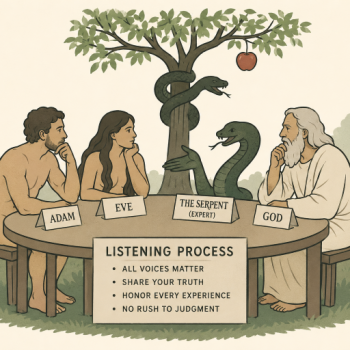
Genesis Reimagined: A Reflection on the Garden Experience
3

Applying A Decolonial Apologetic To Race, Culture, Tolerance
4

Psalm 25 and the Fear of Being Put to Shame (Part 1)

About Pat Gohn
Pat Gohn is a Catholic writer, speaker, and the host of the Among Women Podcast and blog. Her book Blessed, Beautiful and Bodacious: Celebrating the Gift of Catholic Womanhood is published by Ave Maria Press.
Patheos Explore the world's faith through different perspectives on religion and spirituality! Patheos has the views of the prevalent religions and spiritualities of the world.
Ad-Free & Subscriber Log-In Subscription Support
- About Us
- 2026 Calendar
- Videos
- Podcasts
- Library of World Religions
- Faith In Media Tracker
- Advertise With Us
- Write for Us
- Privacy Policy
- Terms of Service
- Do Not Sell My Data
- Contact Us
- Radiant Digital
- Manage Newsletter Subscriptions
- Unsubscribe From Notifications
- Sitemap
Copyright 2008-2026, Patheos. All rights reserved.
Subscription Support Ad-Free & Subscriber Log-In
Follow Patheos