
BuddhistCatholicContemplativeEvangelicalGeneral ChristianHinduJewishLatter-day SaintMuslimNew VisionsProgressive Christian
Beliefs
- Buddhist
- Catholic
- Contemplative
- Evangelical
- General Christian
- Hindu
- Jewish
- Latter-day Saint
- More Voices
- Muslim
- New Visions
- Pagan
- Progressive Christian
Topics
- Religion News
- Food and Religion
- Sports and Religion
- Religious Art
- Religious Music and Entertainment
- Religious Events
- History and Religion
- Style and Religion
- Politics and Religion
- Women in Religion
- Recreation Outdoors and Religion
- Business Finance and Religion
- Careers Workplace and Religion
- Education and Religion
- Family Parenting and Religion
- Health Fitness and Religion
- Home and Religion
- Relationships and Religion
- Technology and Religion
- Travel and Religion
Columnists
- Buddhist Columnists
- Business Finance and Religion Columnists
- Careers Workplace and Religion Columnists
- Catholic Columnists
- Contemplative Columnists
- Education and Religion Columnists
- Evangelists Columnists
- Family Parenting and Religion Columnists
- General Christian Columnists
- Health Fitness and Religion Columnists
- Hindu Columnists
- History and Religion Columnists
- Home and Religion Columnists
- Jewish Columnists
- More Voices Columnists
- Latter Day Columnists
- Muslim Columnists
- New Visions Columnists
- Nonreligious Columnists
- Pagan Columnists
- Politics and Religion Columnists
- Progressive Columnists
- Recreation Outdoors and Religion Columnists
- Relationships and Religion Columnists
- Religion News Columnists
- Religious Art Columnists
- Religious Events Columnists
- Religious Music and Entertainment Columnists
- Sports and Religion Columnists
- Style and Religion Columnists
- Technology and Religion Columnists
- Travel and Religion Columnists
- Women in Religion Columnists
Resource Library
- 2026 Calendar
- Library of World Religions
- The 100 Most Holy Places on Earth
- Patheos Answers
- Podcasts
- Videos
- Faith Leaders Database
- Anglican Episcopalian
- Bahai
- Baptist
- Buddhism
- Christianity
- Confucianism
- Eastern Orthodoxy
- Hinduism
- Holiness and Pentecostal
- ISKCON
- Islam
- Judaism
- Lutheran
- Methodist
- The Church of Jesus Christ of Latter-day Saints
- New Age
- Paganism
- Presbytarian and Reformed
- Protestantism
- Religion Behind the Scenes
- Roman Catholic
- Scientology
- Shia Islam
- Sikhism
- Sufism
- Sunni Islam
- Taoism
- Zen
- See all religions
Research Tools
 Ad-Free & Subscriber Log-In Subscription Support
Ad-Free & Subscriber Log-In Subscription Support
Follow Patheos 

- Trending:
- Forgiveness
- |
- Marriage
- |
- Consciousness
- |
- Death Penalty
- |
- Election
- |
- Halloween
Evangelical
Faithful Politics in the City of Man
October 04, 2010 by Timothy Dalrymple
An Interview with Peter Wehner
By Timothy Dalrymple
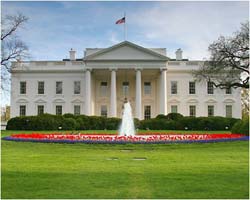 Note from Timothy Dalrymple*:** As some have* alleged that politically conservative Christians have become guilty of conflating the church and the Republican party, and even of America-worship, Patheos' Evangelical Portal invited comment from respected voices on both sides of the aisle. Peter Wehner served at the heart of the Bush administration from 2001 to 2007, and previously served in the Reagan and George H. W. Bush administrations. He is co-author, with former presidential speechwriter and current Washington Post columnist Michael Gerson, of City of Man, a new book exploring the intersection of faith and politics.
You and your co-author, Michael Gerson, worked for years at the center of the Bush administration. You chose political engagement, partly out of a sense of vocation. Why is it important that persons of faith engage the political sphere, and not merely the church sphere?
Just to clarify: We don't argue that every Christian has a duty to be politically active. People have different gifts, different interests, and different skills; it would be silly to pretend otherwise. And we certainly wouldn't criticize people who devote their time and energy to teaching children with special needs or caring for the aged and the infirmed rather than to politics. At the same time, we do believe that there are certain basic duties of citizenship -- like being informed on the issues and voting -- that everyone, Christian and non-Christian, shares and should take seriously. We have a direct role in how our nation is governed, which by historical standards is rare, and a blessing. We should treat it as such.
But Mike [Gerson] and I also believe that politics rightly understood is about how we ought to order our lives together. It can advance human dignity or lead to oppression and massive suffering. So politics broadly understood is important -- and when it's done right, it's a noble and estimable profession. We've seen that up close, which is why neither of us is cynical about politics or government. Quite the opposite, actually.
There are tremendous examples Christians can look to in terms of how people of faith ought to engage the political sphere, from William Wilberforce to Martin Luther King, Jr. to, in an entirely different way, Dietrich Bonhoeffer. I'd add that if Christians cede the terrain of politics, others would be happy to occupy it. Christians, if they do it right, can add something important and distinctive to politics. That's what we argue for in our book.
In City of Man, you discuss -- and largely agree with -- the criticism that conservative evangelicalism has become captured by the Right, in a manner similar to the way in which mainline churches were captured by the Left. Given moral and religious beliefs and values that have a bearing on political matters, what is the proper relationship between a believing individual and a political party?
We have no problem at all when individual Christians become active members of a political party. Where we're much more cautious is when the institutions of Christianity -- churches and parachurch organizations as well as organizations that claim the name of Christ -- become too closely associated with political parties, when they are seen as a cog in a political machine.
A wife of a prominent pastor in America once told me about how much of an obstacle it was for her and her husband to reach out to young people in a major American city. The reason is that these people, many of whom were liberal-leaning in their politics, felt that Christianity was synonymous with the Religious Right, and so they wanted nothing to do with it. They felt like they needed to sign up for a political agenda to be welcomed into the fellowship of believers. That's a very legitimate concern she expressed, and one that faithful Christians need to take seriously.
Our view is that churches can articulate general principles bearing on social concerns -- but in general they should leave it to individuals to apply those principles in particular cases. That's partly because individual Christian laypeople may well possess special competence in policy areas that the church simply doesn't possess and shouldn't be expected to possess. I expect a minister to know something about Paul's Letter to the Romans; I don't assume he should be an expert on welfare policy, the merits and demerits of school choice, or what America's posture ought to be toward Iran.
Article Continued On Next Page
Page: 1 of 3
10/4/2010 4:00:00 AM
Evangelical
politics
Christianity
Evangelicalism
more at patheos
1

Sunday Readings: God Looks for Good Fruit
2

3
4

Pentecost Ignited Forgiveness in Marriage

About Timothy Dalrymple
Timothy Dalrymple is the CEO and Chief Creative Officer of Polymath Innovations, a strategic storytelling agency that advances the good with visionary organizations and brands. He leads a unique team of communicators from around North America and across the creative spectrum, serving mission-driven businesses and nonprofits who need a partner to amplify their voice and good works. Once a world-class gymnast whose career ended with a broken neck, Tim channeled his passions for faith and storytelling into his role as VP of Business Development for Patheos, helping to launch and grow the network into the world's largest religion website. He holds a Ph.D. in Religion from Harvard's Graduate School of Arts and Sciences. Tim blogs at Philosophical Fragments.
Patheos Explore the world's faith through different perspectives on religion and spirituality! Patheos has the views of the prevalent religions and spiritualities of the world.
Ad-Free & Subscriber Log-In Subscription Support
- About Us
- 2026 Calendar
- Videos
- Podcasts
- Library of World Religions
- Faith In Media Tracker
- Advertise With Us
- Write for Us
- Privacy Policy
- Terms of Service
- Do Not Sell My Data
- Contact Us
- Radiant Digital
- Manage Newsletter Subscriptions
- Unsubscribe From Notifications
- Sitemap
Copyright 2008-2026, Patheos. All rights reserved.
Subscription Support Ad-Free & Subscriber Log-In
Follow Patheos