
BuddhistCatholicContemplativeEvangelicalGeneral ChristianHinduJewishLatter-day SaintMuslimNew VisionsProgressive Christian
Beliefs
- Buddhist
- Catholic
- Contemplative
- Evangelical
- General Christian
- Hindu
- Jewish
- Latter-day Saint
- More Voices
- Muslim
- New Visions
- Pagan
- Progressive Christian
Topics
- Religion News
- Food and Religion
- Sports and Religion
- Religious Art
- Religious Music and Entertainment
- Religious Events
- History and Religion
- Style and Religion
- Politics and Religion
- Women in Religion
- Recreation Outdoors and Religion
- Business Finance and Religion
- Careers Workplace and Religion
- Education and Religion
- Family Parenting and Religion
- Health Fitness and Religion
- Home and Religion
- Relationships and Religion
- Technology and Religion
- Travel and Religion
Columnists
- Buddhist Columnists
- Business Finance and Religion Columnists
- Careers Workplace and Religion Columnists
- Catholic Columnists
- Contemplative Columnists
- Education and Religion Columnists
- Evangelists Columnists
- Family Parenting and Religion Columnists
- General Christian Columnists
- Health Fitness and Religion Columnists
- Hindu Columnists
- History and Religion Columnists
- Home and Religion Columnists
- Jewish Columnists
- More Voices Columnists
- Latter Day Columnists
- Muslim Columnists
- New Visions Columnists
- Nonreligious Columnists
- Pagan Columnists
- Politics and Religion Columnists
- Progressive Columnists
- Recreation Outdoors and Religion Columnists
- Relationships and Religion Columnists
- Religion News Columnists
- Religious Art Columnists
- Religious Events Columnists
- Religious Music and Entertainment Columnists
- Sports and Religion Columnists
- Style and Religion Columnists
- Technology and Religion Columnists
- Travel and Religion Columnists
- Women in Religion Columnists
Resource Library
- 2026 Calendar
- Library of World Religions
- The 100 Most Holy Places on Earth
- Patheos Answers
- Podcasts
- Videos
- Faith Leaders Database
- Anglican Episcopalian
- Bahai
- Baptist
- Buddhism
- Christianity
- Confucianism
- Eastern Orthodoxy
- Hinduism
- Holiness and Pentecostal
- ISKCON
- Islam
- Judaism
- Lutheran
- Methodist
- The Church of Jesus Christ of Latter-day Saints
- New Age
- Paganism
- Presbytarian and Reformed
- Protestantism
- Religion Behind the Scenes
- Roman Catholic
- Scientology
- Shia Islam
- Sikhism
- Sufism
- Sunni Islam
- Taoism
- Zen
- See all religions
Research Tools
 Ad-Free & Subscriber Log-In Subscription Support
Ad-Free & Subscriber Log-In Subscription Support
Follow Patheos 

- Trending:
- Forgiveness
- |
- Marriage
- |
- Consciousness
- |
- Death Penalty
- |
- Election
- |
- Halloween
Pagan
Gender, Queer Spiritual Heritage
September 10, 2010 by P. Sufenas Virius Lupus
"I do not think it means what you think it means!"
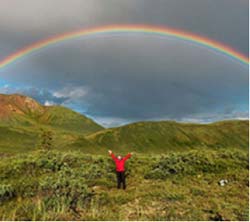 You may be wondering why I'm quoting the great Inigo Montoya (played by Mandy Patinkin) from The Princess Bride in the title of my article here, but just stay with me for a moment . . .
One of the basic starting-points of many queer theological stances and movements within modern paganism has been that there existed in many traditional polytheistic societies (both ancient and modern) particular people who were spiritual functionaries, who were in some sense "queer" in regard to gender or sexual orientation. This is true, though it needs some unpacking and qualification -- on which more later.
However, this viewpoint then often goes a step further, and suggests that to recognize one's own queerness automatically makes one spiritual (and often spiritually superior to non-queer people). Since sexual orientation and gender identity are both widely seen (at least by scientifically minded, politically liberal people) as inborn, unchangeable, and just a simple and expectable variation in human and general biological diversity, a further jump is sometimes made in such viewpoints by implying that queer people are therefore more spiritual by the simple fact of their birth or their existence.
This type of argument is a dimension of what I've come to know as "coming out theology," the ways in which a particular religious viewpoint attempts to reassure a queer person that "it's okay to be gay," or "the gods don't hate you because you're gay." And while stating the terms as plainly as I have above might be more and more rare these days, I've heard what amounts to this exact sort of reasoning used in queer theological presentations and groups on a regular basis. I've heard it very recently, for the last decade and more in which I've been studying the phenomenon, and during which I have been involved in creating and participating in wider queer spiritual movements.
So, let's back up slightly and look at some of the definitions involved here. Yes, there are many examples of gender-variant spiritual functionaries in a variety of ancient religions: the Enarees of Scythia, the Kelabim of the Eastern Mediterranean, and perhaps most famously, the Galli of Cybele/Magna Mater, who began their cultus in Phrygia (Asia Minor) and were eventually brought to Rome. There are roles like this in some modern and more recent polytheistic societies as well, including the various Two-Spirit people within Native North American cultures (though that term is no more than about twenty years old), and the Hijras of India. But what is involved in these is anything on a scale from ritual transvestism, to transgender and transsexual identity (up to and including things like self-castration for males), to special roles being given to people who are "eunuchs" from birth (which would indicate something more like intersexed physiology), to recognition that gender is not necessarily binary, and that third or fourth (or more) possibilities exist beyond the categories of "female" and "male."
Oftentimes, the societies in which these phenomena occur consider these a kind of calling, a destiny from birth, and they are therefore something that is allowed to exist because it is simply a matter of the gods deeming it worthy by its very existence. Note, though, that some degree of social marginality, and even scorn and lack of respect, can often accompany adopting these identities, which is often left out in modern queer spiritual accounts of such phenomena. (See Dr. Ron Long's Men, Homosexuality, and the Gods for more information on some of these subtleties.) In order for something to be truly "queer," it does have to be in some sense radically different from what is generally found or acceptable within society, and so these spiritual identities are truly queer, in that sense. Queerness ceases to exist when a society fully accepts and embraces a particular identity, and so in cases where a third or fourth gender exists in a society, it can be a situation in which "queerness" as such is a highly problematic term.
But, in the last two paragraphs, note the absence of something: namely, any indication of what the sexual orientation of the gender-variant spiritual practitioner happens to be. This is an extremely important factor to recognize. Many of the societies in which these identities occur also have a much wider range and a greater tolerance for a variety of possible sexual orientations, with little or no scorn given to whatever variation a person happens to have -- within certain boundaries, of course. Greece and Rome had very strict guidelines on the ideal and acceptable ages and relationships between people of the same sex engaging in sexual activity, and they were nowhere near as wide as they are often thought to be in the idealizing discourse of queer spirituality. Female homoeroticism, for example, was never as acceptable as male homoeroticism. (For more information on this in the ancient and late antique Mediterranean, see Bernadette J. Brooten, Love Between Women: Early Christian Responses to Female Homoeroticism, which argues that Paul's mention of lesbianism in Romans 1:26ff was not unprecedented in the wider Greek and Roman sexual discourse context.) This is often due to a high degree of misogyny present in the societies in question, which is an entirely other topic. Suffice it to say for now that yes, even societies that worship many goddesses can be misogynistic, and this is as true of Greeks and Romans as it is of the Irish and Welsh, and any number of other groups.
Article Continued On Next Page
Page: 1 of 3
9/10/2010 4:00:00 AM
Pagan
GLBT
gender
History
Sexuality
Paganism
more at patheos
1

2

Medicare and the Push for Universal Health Care
3

The "Passion Translation" of the Bible
4


About P. Sufenas Virius Lupus
P. Sufenas Virius Lupus is a metagender and a founding member of the Ekklesía Antínoou (a queer, Graeco-Roman-Egyptian syncretist reconstructionist polytheist religious group dedicated to Antinous, the deified lover of the Roman Emperor Hadrian and other related gods and divine figures). E is a contributing member of Neos Alexandria and a Celtic Reconstructionist pagan in the filidecht and gentlidecht traditions. Follow Lupus' work on the Aedicula Antinoi blog.
Patheos Explore the world's faith through different perspectives on religion and spirituality! Patheos has the views of the prevalent religions and spiritualities of the world.
Ad-Free & Subscriber Log-In Subscription Support
- About Us
- 2026 Calendar
- Videos
- Podcasts
- Library of World Religions
- Faith In Media Tracker
- Advertise With Us
- Write for Us
- Privacy Policy
- Terms of Service
- Do Not Sell My Data
- Contact Us
- Radiant Digital
- Manage Newsletter Subscriptions
- Unsubscribe From Notifications
- Sitemap
Copyright 2008-2026, Patheos. All rights reserved.
Subscription Support Ad-Free & Subscriber Log-In
Follow Patheos