
BuddhistCatholicContemplativeEvangelicalGeneral ChristianHinduJewishLatter-day SaintMuslimNew VisionsProgressive Christian
Beliefs
- Buddhist
- Catholic
- Contemplative
- Evangelical
- General Christian
- Hindu
- Jewish
- Latter-day Saint
- More Voices
- Muslim
- New Visions
- Pagan
- Progressive Christian
Topics
- Religion News
- Food and Religion
- Sports and Religion
- Religious Art
- Religious Music and Entertainment
- Religious Events
- History and Religion
- Style and Religion
- Politics and Religion
- Women in Religion
- Recreation Outdoors and Religion
- Business Finance and Religion
- Careers Workplace and Religion
- Education and Religion
- Family Parenting and Religion
- Health Fitness and Religion
- Home and Religion
- Relationships and Religion
- Technology and Religion
- Travel and Religion
Columnists
- Buddhist Columnists
- Business Finance and Religion Columnists
- Careers Workplace and Religion Columnists
- Catholic Columnists
- Contemplative Columnists
- Education and Religion Columnists
- Evangelists Columnists
- Family Parenting and Religion Columnists
- General Christian Columnists
- Health Fitness and Religion Columnists
- Hindu Columnists
- History and Religion Columnists
- Home and Religion Columnists
- Jewish Columnists
- More Voices Columnists
- Latter Day Columnists
- Muslim Columnists
- New Visions Columnists
- Nonreligious Columnists
- Pagan Columnists
- Politics and Religion Columnists
- Progressive Columnists
- Recreation Outdoors and Religion Columnists
- Relationships and Religion Columnists
- Religion News Columnists
- Religious Art Columnists
- Religious Events Columnists
- Religious Music and Entertainment Columnists
- Sports and Religion Columnists
- Style and Religion Columnists
- Technology and Religion Columnists
- Travel and Religion Columnists
- Women in Religion Columnists
Resource Library
- 2026 Calendar
- Library of World Religions
- The 100 Most Holy Places on Earth
- Patheos Answers
- Podcasts
- Videos
- Faith Leaders Database
- Anglican Episcopalian
- Bahai
- Baptist
- Buddhism
- Christianity
- Confucianism
- Eastern Orthodoxy
- Hinduism
- Holiness and Pentecostal
- ISKCON
- Islam
- Judaism
- Lutheran
- Methodist
- The Church of Jesus Christ of Latter-day Saints
- New Age
- Paganism
- Presbytarian and Reformed
- Protestantism
- Religion Behind the Scenes
- Roman Catholic
- Scientology
- Shia Islam
- Sikhism
- Sufism
- Sunni Islam
- Taoism
- Zen
- See all religions
Research Tools
 Ad-Free & Subscriber Log-In Subscription Support
Ad-Free & Subscriber Log-In Subscription Support
Follow Patheos 

- Trending:
- Forgiveness
- |
- Marriage
- |
- Consciousness
- |
- Death Penalty
- |
- Election
- |
- Halloween
Opening the Mystery
August 23, 2010 by T. Thorn Coyle

Souls governed by the nature of the universe, leading lives according to their own personal nature and using the powers of nature, should perform their worship in a manner adapted to nature and to the corporeal things moved by nature . . .
Other souls, living according to the Nous alone and the life of the Nous*, and liberated from the bonds of nature, should concern themselves in all parts of theurgy with the intellectual and incorporeal law of the hieratic art.*
Other souls, the media between these, should labor along different paths of holiness according to the differences of their intermediate position . . ." ~ Iamblichus from De Mysteriis as translated by Gregory Shaw
We are at a juncture, those of us known variatively as magic workers, Pagans, Esotericists or, if we want to get old school about it, The Occult. The world needs us. It needs our non-transcendent celebration of the body of the earth, the bodies of plants and animals, the bodies of humans, and the body of the cosmos itself. It needs the concept of immanent deity and the thought that we, too, can become divine.
Why? Because disconnection runs rampant and anything that strives to re-connect us, right here, right now, has got to be of help.
As a consequence of these states of disconnection -- and a deep abiding wish to connect oneself with the sacred, here and now -- the numbers of those interested in Paganism, Heathenism, Witchcraft, Wicca, Ceremonial Magick, Thelema, and any other stripe of magically tinged practice you can name, has been increasing almost exponentially. Naturally, this causes great tension among practitioners of forms that have aspects of the Mystery Religion about them.
Read More from: The Future of Paganism
The hallmarks of these religions are often those of initiations, and this is where so much current tension arises. One simply cannot take large numbers of people through singular, often elaborate, rites. So are these people to be given no aid, no training, and no place to worship in community? Or alternatively, are we to water down our teachings so those who don't want to work very hard can still have access?
There has to be a middle road. Hence the quote from the great Iamblichus that began this essay. Iamblichus, arguably a member of a Mystery Religion himself, and certainly a chronicler, correspondent, philosopher, and practitioner of the arts of magic and worship, states that each soul has its own work to do. Each soul must not only find the God it best relates and responds to, in order to do Divine work here on earth, but each soul has a particular function in the right running of the cosmos. Can we not say the same?
The ancient Pagans and magic workers to whom we look for teaching and inspiration never sought to impart initiation to all. Instead, some were initiates, some argued philosophy or studied math and science, still others created art, and still more fished, farmed, and tended the hearth. Everyone was granted the ability to light the flame, say the prayers, and make the offerings. Everyone was allowed the ability to find relationship as they best saw fit. Not everyone walked the corridors of darkness, deep into the earth, or out onto the astral toward the sun. Only a few trod those pathways. And that was acceptable.
It might behoove us to open up our ideas of priesthood. Not everyone need go through the same initiation. The hierarchy of current initiatory systems only works for a few people. Why? Because the mystery of their particular service, creative spark, or connection to the Gods is not served by the rituals that exist. Those rituals are most often rituals to help people lead covens, or teach a certain pathway of magical practice, or marry a particular set of Deity forms, or often, to pass on that particular initiation.
What about the priest who whispers to the plants in the garden at midnight or dawn, and is initiated by the fecund powers of the earth and the effects of the moon and sun? What about the priestess who is the weaver of fine cloth and who ministers to us all through the mystery that flows together on her loom? What about the priestess who serves as a paramedic, doctor, or nurse? Or the priest who cares for children or the dying? All of these are sacred acts with their own trials and rites of passage. Each of these has a power that I cannot begin to understand. When did we cease to "labor along different paths of holiness" in order to best serve our own souls, our own Gods, our own communities? When did we begin to believe the lie that equality means equivalency? My theory is that because we come from broken traditions, we forget the householders and physicians and set our sights only at those who sat on the high seat or made the sacrifices for the community. We forget that every person had a different role to play and that this helped to keep the community healthy and strong.
Article Continued On Next Page
Page: 1 of 2
8/23/2010 4:00:00 AM
Future of Paganism
Community
Initiation
Leadership
Paganism
more at patheos
1
Denouncing The Theology Of The Rich
2

Tozer, A.W.: Reviewing How to Be Filled with the Holy Spirit
3

What makes a hero? These 7 Cinematic Characters Tell Us
4

Faith and Financial Order During Divorce
About T. Thorn Coyle
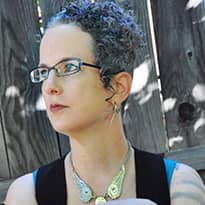
T. Thorn Coyle is an internationally respected visionary and teacher of the magical and esoteric arts. The author of Make Magic of Your Life, Kissing the Limitless, and Evolutionary Witchcraft, she hosts the Elemental Castings podcast series, writes the blog Know Thyself, and has produced several CDs of sacred music. Follow her on Twitter and Facebook!
Patheos Explore the world's faith through different perspectives on religion and spirituality! Patheos has the views of the prevalent religions and spiritualities of the world.
Ad-Free & Subscriber Log-In Subscription Support
- About Us
- 2026 Calendar
- Videos
- Podcasts
- Library of World Religions
- Faith In Media Tracker
- Advertise With Us
- Write for Us
- Privacy Policy
- Terms of Service
- Do Not Sell My Data
- Contact Us
- Radiant Digital
- Manage Newsletter Subscriptions
- Unsubscribe From Notifications
- Sitemap
Copyright 2008-2026, Patheos. All rights reserved.
Subscription Support Ad-Free & Subscriber Log-In
Follow Patheos