
BuddhistCatholicContemplativeEvangelicalGeneral ChristianHinduJewishLatter-day SaintMuslimNew VisionsProgressive Christian
Beliefs
- Buddhist
- Catholic
- Contemplative
- Evangelical
- General Christian
- Hindu
- Jewish
- Latter-day Saint
- More Voices
- Muslim
- New Visions
- Pagan
- Progressive Christian
Topics
- Religion News
- Food and Religion
- Sports and Religion
- Religious Art
- Religious Music and Entertainment
- Religious Events
- History and Religion
- Style and Religion
- Politics and Religion
- Women in Religion
- Recreation Outdoors and Religion
- Business Finance and Religion
- Careers Workplace and Religion
- Education and Religion
- Family Parenting and Religion
- Health Fitness and Religion
- Home and Religion
- Relationships and Religion
- Technology and Religion
- Travel and Religion
Columnists
- Buddhist Columnists
- Business Finance and Religion Columnists
- Careers Workplace and Religion Columnists
- Catholic Columnists
- Contemplative Columnists
- Education and Religion Columnists
- Evangelists Columnists
- Family Parenting and Religion Columnists
- General Christian Columnists
- Health Fitness and Religion Columnists
- Hindu Columnists
- History and Religion Columnists
- Home and Religion Columnists
- Jewish Columnists
- More Voices Columnists
- Latter Day Columnists
- Muslim Columnists
- New Visions Columnists
- Nonreligious Columnists
- Pagan Columnists
- Politics and Religion Columnists
- Progressive Columnists
- Recreation Outdoors and Religion Columnists
- Relationships and Religion Columnists
- Religion News Columnists
- Religious Art Columnists
- Religious Events Columnists
- Religious Music and Entertainment Columnists
- Sports and Religion Columnists
- Style and Religion Columnists
- Technology and Religion Columnists
- Travel and Religion Columnists
- Women in Religion Columnists
Resource Library
- 2026 Calendar
- Library of World Religions
- The 100 Most Holy Places on Earth
- Patheos Answers
- Podcasts
- Videos
- Faith Leaders Database
- Anglican Episcopalian
- Bahai
- Baptist
- Buddhism
- Christianity
- Confucianism
- Eastern Orthodoxy
- Hinduism
- Holiness and Pentecostal
- ISKCON
- Islam
- Judaism
- Lutheran
- Methodist
- The Church of Jesus Christ of Latter-day Saints
- New Age
- Paganism
- Presbytarian and Reformed
- Protestantism
- Religion Behind the Scenes
- Roman Catholic
- Scientology
- Shia Islam
- Sikhism
- Sufism
- Sunni Islam
- Taoism
- Zen
- See all religions
Research Tools
 Ad-Free & Subscriber Log-In Subscription Support
Ad-Free & Subscriber Log-In Subscription Support
Follow Patheos 

- Trending:
- Forgiveness
- |
- Marriage
- |
- Consciousness
- |
- Death Penalty
- |
- Election
- |
- Halloween
Evangelical
Are Evangelicals the New Mainline?
August 06, 2010 by Timothy Dalrymple
 An Interview with Rodney Stark
By Timothy Dalrymple
Rodney Stark is one of America's preeminent scholars of religion, and his numerous books in the sociology and history of religion have reshaped the way in which scholars as well as ordinary Americans have thought of the history of the Christian church globally and in America. Often controversial, a slayer of historical myths, Stark used to describe himself as neither atheistic nor religious; later he identified himself as an "independent Christian."
Patheos recently discussed Professor Stark's book on the Crusades, in an interview entitled "Crusades for Christ." Other noteworthy recent books include The Victory of Reason: How Christianity Led to Freedom, Capitalism, and Western Success; Cities of God: The Real Story of How Christianity Became an Urban Movement and Conquered Rome; and What Americans Really Believe.
He spoke by phone with Timothy Dalrymple for Patheos' discussion of The Future of Evangelicalism. Other portions of the interview will be featured in Patheos' final week on the Future of Religion.
We are reflecting on the future of Christianity (within a broader series on the Future of Religion) while you are working on a book entitled How Denominations Die: The Continuing Self-Destruction of the Protestant "Mainline." Why did you choose this topic?
Read More from: The Future of Evangelicalism
When I was very young, there was a Protestant mainline and they were the Congregationalists, the Episcopalians, Presbyterians, Methodists, American Baptists, the Christian Church (Disciples of Christ), and more recently the media would include the Evangelical Lutheran Church. Once in a while they would even stretch things far enough to include the Unitarians and Quakers. These were the high prestige denominations, and when people became prominent and successful they would shed their old denomination and join one of these.
Now, the belief that these are the mainline denominations simply won't go away. Everyone keeps pretending that these are the folks that count. But the fact is: that's ancient history.
Back in 1972, a marvelous man named Dean Kelley -- he was an executive in the National Council of Churches -- wrote a book in which argued that something really remarkable is happening: the mainline denominations are shrinking. More remarkably, the conservative churches are growing. It isn't as though religion is going out of style; it's just that people are going to different churches.
He was pilloried for that book and its claims, but it was all true. And of course, these denominations have continued to lose members at an incredible rate, and they're tiny now compared to what they were, say, in 1960. Yet one keeps hearing about the "mainline" denominations and this "periphery" called evangelicalism. Well, the periphery is now the mainline, and the mainline is the sideline.
I also decided to write this book partly because of the misperception that this transformation began in the 1960s. The 1760s may be more accurate, and certainly the 1860s, but it didn't start in the 1960s. The 1960s is just when it began to be noticed.
What was really happening was this. As denominations got liberal, they started to shrink. Which means that the Methodists started to shrink much later than the Congregationalists, the Episcopalians, and the Presbyterians. But rapid population growth masked this decline for many, many decades. So at the end of every year, the Congregationalists and Episcopalians would look around and notice that they had more members than the year before. But through this whole period, their share of the market was declining. When you calculate that, you suddenly see a very different picture. These groups had been going downhill for a very long time.
Article Continued On Next Page
Page: 1 of 5
8/6/2010 4:00:00 AM
Future of Evangelicalism
Evangelical
Mainline Protestant
History
Youth
Christianity
Evangelicalism
more at patheos
1

The Problem with Substituionary Atonement
2

Can a Fallen Pastor Ever Lead Again?
3

Is Male Headship Biblical?: 1 Corinthians 11:2-3 - Pt. IV.
4
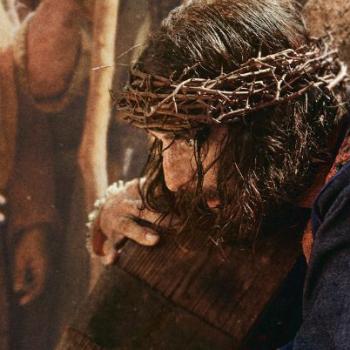
First Look at 'The Chosen' Season 6, Arriving Nov 15

About Timothy Dalrymple
Timothy Dalrymple is the CEO and Chief Creative Officer of Polymath Innovations, a strategic storytelling agency that advances the good with visionary organizations and brands. He leads a unique team of communicators from around North America and across the creative spectrum, serving mission-driven businesses and nonprofits who need a partner to amplify their voice and good works. Once a world-class gymnast whose career ended with a broken neck, Tim channeled his passions for faith and storytelling into his role as VP of Business Development for Patheos, helping to launch and grow the network into the world's largest religion website. He holds a Ph.D. in Religion from Harvard's Graduate School of Arts and Sciences. Tim blogs at Philosophical Fragments.
Patheos Explore the world's faith through different perspectives on religion and spirituality! Patheos has the views of the prevalent religions and spiritualities of the world.
Ad-Free & Subscriber Log-In Subscription Support
- About Us
- 2026 Calendar
- Videos
- Podcasts
- Library of World Religions
- Faith In Media Tracker
- Advertise With Us
- Write for Us
- Privacy Policy
- Terms of Service
- Do Not Sell My Data
- Contact Us
- Radiant Digital
- Manage Newsletter Subscriptions
- Unsubscribe From Notifications
- Sitemap
Copyright 2008-2026, Patheos. All rights reserved.
Subscription Support Ad-Free & Subscriber Log-In
Follow Patheos