
BuddhistCatholicContemplativeEvangelicalGeneral ChristianHinduJewishLatter-day SaintMuslimNew VisionsProgressive Christian
Beliefs
- Buddhist
- Catholic
- Contemplative
- Evangelical
- General Christian
- Hindu
- Jewish
- Latter-day Saint
- More Voices
- Muslim
- New Visions
- Pagan
- Progressive Christian
Topics
- Religion News
- Food and Religion
- Sports and Religion
- Religious Art
- Religious Music and Entertainment
- Religious Events
- History and Religion
- Style and Religion
- Politics and Religion
- Women in Religion
- Recreation Outdoors and Religion
- Business Finance and Religion
- Careers Workplace and Religion
- Education and Religion
- Family Parenting and Religion
- Health Fitness and Religion
- Home and Religion
- Relationships and Religion
- Technology and Religion
- Travel and Religion
Columnists
- Buddhist Columnists
- Business Finance and Religion Columnists
- Careers Workplace and Religion Columnists
- Catholic Columnists
- Contemplative Columnists
- Education and Religion Columnists
- Evangelists Columnists
- Family Parenting and Religion Columnists
- General Christian Columnists
- Health Fitness and Religion Columnists
- Hindu Columnists
- History and Religion Columnists
- Home and Religion Columnists
- Jewish Columnists
- More Voices Columnists
- Latter Day Columnists
- Muslim Columnists
- New Visions Columnists
- Nonreligious Columnists
- Pagan Columnists
- Politics and Religion Columnists
- Progressive Columnists
- Recreation Outdoors and Religion Columnists
- Relationships and Religion Columnists
- Religion News Columnists
- Religious Art Columnists
- Religious Events Columnists
- Religious Music and Entertainment Columnists
- Sports and Religion Columnists
- Style and Religion Columnists
- Technology and Religion Columnists
- Travel and Religion Columnists
- Women in Religion Columnists
Resource Library
- 2026 Calendar
- Library of World Religions
- The 100 Most Holy Places on Earth
- Patheos Answers
- Podcasts
- Videos
- Faith Leaders Database
- Anglican Episcopalian
- Bahai
- Baptist
- Buddhism
- Christianity
- Confucianism
- Eastern Orthodoxy
- Hinduism
- Holiness and Pentecostal
- ISKCON
- Islam
- Judaism
- Lutheran
- Methodist
- The Church of Jesus Christ of Latter-day Saints
- New Age
- Paganism
- Presbytarian and Reformed
- Protestantism
- Religion Behind the Scenes
- Roman Catholic
- Scientology
- Shia Islam
- Sikhism
- Sufism
- Sunni Islam
- Taoism
- Zen
- See all religions
Research Tools
 Ad-Free & Subscriber Log-In Subscription Support
Ad-Free & Subscriber Log-In Subscription Support
Follow Patheos 

- Trending:
- Forgiveness
- |
- Marriage
- |
- Consciousness
- |
- Death Penalty
- |
- Election
- |
- Halloween
Evangelical
Why Laypeople Should Baptize
June 01, 2010 by C. Michael Patton
By C. Michael Patton
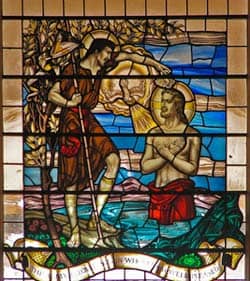 As an evangelical Protestant, I belong to a tradition that strongly affirms the priesthood of all believers. This means, among other things, that I reject the sacerdotal system that characterizes some other forms of the Christian faith.
Sacerdotalism (from the Latin sacerdos, or "priest") is the belief in an established hierarchy between God and the ordinary mass of humankind. The priesthood, in a sacerdotal system, stands as an essential mediator between God and everyone else. This priesthood is seen as a necessary component in worship, receiving communion (or Eucharist), confessing sin, baptism, and other acts in which the grace of God is administered through the rites and sacraments of the church.
This special "caste" of priests is generally rejected by Protestants, who hold traditionally to the doctrine of the "priesthood of all believers" (1 Pet. 2:5). Most Protestants maintain that the only mediator between God and humankind is Christ (1 Tim. 2:5). Advocates of sacerdotalism reference the priesthood established in the Old Testament, yet opponents emphasize the difference between the New Testament church and the theocratic state described in the Old Testament, believing that the sacerdotal system of the ancient Israelites is completely fulfilled in Christ and therefore no longer necessary (Heb. 10:19-20).
The primary symbol of the opening of the priesthood to all believers is the tearing of the temple veil from top to bottom when the work of Christ upon the cross was finished --symbolizing the fulfillment and overshadowing of the old temple system. You and I, as believers, now need no other representative before God than the God-man, Jesus Christ.
Yet what does this mean practically?
It means that ministers -- from deacons and elders to pastors, priests, and bishops -- are no better, more powerful, or more respected before God than others. Those "called" into full-time service are not an elite force of the few and the proud. They are not the special forces of the kingdom. I am not, because of my ordination, any better or more favored by God.
Don't misunderstand me. I am not saying that ordination is unimportant, any more than I would say that medical training is unimportant for a doctor. I am saying that there is no caste system whatsoever in Christianity, properly understood. Caste systems betray one of the most powerful effects of the cross. They fail to recognize Christ as the second Adam. The veil has been rent in two, and we are all now the temple of God. Destroyed together with the temple veil is any semblance of a necessary mediation, even in the most sacred of events, such as baptism and marriage.
Protestants, however, do not always live the truth of the priesthood of all believers in their lives and communities. Many Protestant churches -- perhaps most -- will not allow laypeople to baptize. Only the pastor is allowed to perform the "rite," as though the pastor possesses some special power or status before God.
I have also attended churches that would not allow communion to be administered outside the church. The walls of the building, in this case, formed a kind of sacerdotal architecture. And some churches, as with baptism, will not allow anyone but the clergy or the elders to administer the Lord's table.
This leaves me with a question. Are these practices not representative of a denial of the priesthood of all believers? Shouldn't laypeople be able to baptize, administer the Lord's Table, and (as far as the church is concerned) perform weddings?
Are we not falling back into a form of sacerdotalism? Perhaps we need to decide. Has the curtain really been rent, or not?
C. Michael Patton is founder and President of Reclaiming the Mind Ministries. Patton earned his Th.M. from Dallas Theological Seminary and served as a pastor at Stonebriar Community Church in Frisco, Texas. His blog, Parchment and Pen, is among the most popular in the Christian blogosphere, and his Credo House of Theology and its Theology Program have trained thousands of pastors and laypeople in the fundamentals of Christian theology and biblical exegesis. See a preview of the Theology Program here.
6/1/2010 4:00:00 AM
Rites and Rituals
Evangelical
Ritual
Christianity
Evangelicalism
more at patheos
1

Falling in Love Again: 11 Christian Marriage Practices
2
A Palm Sunday Reflection: Blessed is He Who Comes
3

Ciarán Hinds & Polly Findlay on New Film 'Midwinter Break'
4
About C. Michael Patton
C. Michael Patton, ThM, is President of Reclaiming the Mind/Credo House Ministries. Follow him on Facebook or Twitter, or read his blog at Parchment and Pen.
Patheos Explore the world's faith through different perspectives on religion and spirituality! Patheos has the views of the prevalent religions and spiritualities of the world.
Ad-Free & Subscriber Log-In Subscription Support
- About Us
- 2026 Calendar
- Videos
- Podcasts
- Library of World Religions
- Faith In Media Tracker
- Advertise With Us
- Write for Us
- Privacy Policy
- Terms of Service
- Do Not Sell My Data
- Contact Us
- Radiant Digital
- Manage Newsletter Subscriptions
- Unsubscribe From Notifications
- Sitemap
Copyright 2008-2026, Patheos. All rights reserved.
Subscription Support Ad-Free & Subscriber Log-In
Follow Patheos