
BuddhistCatholicContemplativeEvangelicalGeneral ChristianHinduJewishLatter-day SaintMuslimNew VisionsProgressive Christian
Beliefs
- Buddhist
- Catholic
- Contemplative
- Evangelical
- General Christian
- Hindu
- Jewish
- Latter-day Saint
- More Voices
- Muslim
- New Visions
- Pagan
- Progressive Christian
Topics
- Religion News
- Food and Religion
- Sports and Religion
- Religious Art
- Religious Music and Entertainment
- Religious Events
- History and Religion
- Style and Religion
- Politics and Religion
- Women in Religion
- Recreation Outdoors and Religion
- Business Finance and Religion
- Careers Workplace and Religion
- Education and Religion
- Family Parenting and Religion
- Health Fitness and Religion
- Home and Religion
- Relationships and Religion
- Technology and Religion
- Travel and Religion
Columnists
- Buddhist Columnists
- Business Finance and Religion Columnists
- Careers Workplace and Religion Columnists
- Catholic Columnists
- Contemplative Columnists
- Education and Religion Columnists
- Evangelists Columnists
- Family Parenting and Religion Columnists
- General Christian Columnists
- Health Fitness and Religion Columnists
- Hindu Columnists
- History and Religion Columnists
- Home and Religion Columnists
- Jewish Columnists
- More Voices Columnists
- Latter Day Columnists
- Muslim Columnists
- New Visions Columnists
- Nonreligious Columnists
- Pagan Columnists
- Politics and Religion Columnists
- Progressive Columnists
- Recreation Outdoors and Religion Columnists
- Relationships and Religion Columnists
- Religion News Columnists
- Religious Art Columnists
- Religious Events Columnists
- Religious Music and Entertainment Columnists
- Sports and Religion Columnists
- Style and Religion Columnists
- Technology and Religion Columnists
- Travel and Religion Columnists
- Women in Religion Columnists
Resource Library
- 2026 Calendar
- Library of World Religions
- The 100 Most Holy Places on Earth
- Patheos Answers
- Podcasts
- Videos
- Faith Leaders Database
- Anglican Episcopalian
- Bahai
- Baptist
- Buddhism
- Christianity
- Confucianism
- Eastern Orthodoxy
- Hinduism
- Holiness and Pentecostal
- ISKCON
- Islam
- Judaism
- Lutheran
- Methodist
- The Church of Jesus Christ of Latter-day Saints
- New Age
- Paganism
- Presbytarian and Reformed
- Protestantism
- Religion Behind the Scenes
- Roman Catholic
- Scientology
- Shia Islam
- Sikhism
- Sufism
- Sunni Islam
- Taoism
- Zen
- See all religions
Research Tools
 Ad-Free & Subscriber Log-In Subscription Support
Follow Patheos 

- Trending:
- Advent
- |
- Forgiveness
- |
- Thanksgiving
- |
- Election
- |
- Seasonal Holidays
- |
- Marriage
Transforming Rituals
June 01, 2010 by Bruce Epperly
By Bruce Epperly
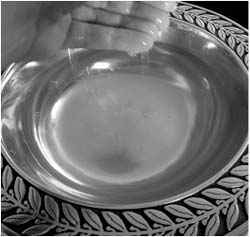 Ecclesiastes 3 proclaims that there is a time for every season under heaven. Between "womb and tomb," to use the language of Erik Erikson, life can be described in terms of "crises," "passages," and "turning points." In every season of change, there is risk, but there is also great adventure. From a faith perspective, the seasons of life are part of God's holy adventure, moving in and through us and our communities. In the spirit of Celtic Christianity, all the seasons of life contain "thin places" where we can experience the sacredness of all things. Rituals abound for the seasons of life, both within and outside of Christianity, which invite us to experience holiness amid life's changes. The goal of rituals is not to return to some primeval perfection, but to awaken us to the call of the future emerging in this holy moment.
My own approach as a spirit-centered progressive Christian is influenced by the insights of process theology, Erik Erikson, Robert Jay Lifton, and James Fowler, all of whom see life as a spiritual adventure that calls us to celebrate the seasons of life with intentionality and care. So, in the following paragraphs, I will briefly describe life-transforming rituals as an invitation to you to explore your own rituals of spiritual transformation.
At the very beginning of life, we are confronted with the question, "Is the universe friendly? Can the world be trusted to respond to my deepest needs? Is God trustworthy amid all the changes of life?" Trust requires a "god with skin," mediated through loving hands, but trust is also nurtured by rituals that enable people and communities to discover that God is faithful through all the seasons of life.
In his most difficult times, when he doubted his own faith and calling, Martin Luther penned "I was baptized" on his study desk. While the ritual of baptism, often described as a sacrament or visible sign of God's grace, is not necessary for salvation, the ritual of baptism reveals the unmerited and ubiquitous grace of God and God's call to constant and ongoing creative transformation. From the first moment of life, baptism announces to the child and her or his family, "You are my beloved child, in whom I am well pleased." In every change of life, God is present: baptism announces that we are loved, not because of what we do but because of God's unconditional and unchanging love for us and for all creation.
Baptism is grace in action, symbolic of God's love, even for those are not baptized as infants or are never baptized at all. Paul's promise, "nothing can separate us from the love of God in Christ Jesus" is universal and all-encompassing in space and time. Baptism as a ritual for an infant and her community is God's "yes" to all creation, for all time!
As childhood emerges from infancy, growing children -- like the youthful Jesus -- are called to grow in "wisdom and stature." In this regard, the church is called to be an ongoing community of ritual, making sacred the totality of life, celebrating achievement and adventure as it invites children to "color outside the lines" in joyous response to an adventurous God. Knowing the reality of shame in early childhood, the church is called to celebrate each child's uniqueness, recalling that God has a personal response to each of God's creations. While there are no explicit "sacramental" rituals for domestic life in the church's tradition, the reality of a growing child calls families to incarnate their own household celebrations of life -- celebrations in which parent and child alike accept grace with gratitude. Rituals of thanksgiving and affirmation -- I am grateful for your life and celebrate your uniqueness -- deepen a child's sense of creativity and freedom. If shame, the sense that "I am not right" and "I don't deserve the earth on which I stand," is one of the challenges in childhood, then constantly verbal and tactile celebrations are essential to proclaim the goodness of our lives and our value to God, regardless of what others think.
In the spirit of the Jewish tradition, families need to create their own Sabbaths of eating, playing, and resting. Paul Tillich once noted that the Celebration of Communion is intended to remind us that all dinner tables are sacramental. Like those who broke bread at Emmaus, we can discover Christ with us in the simplest of family meals.
Adolescence is often a lost season in congregational life. Teenagers, like the prodigal child, must go into "a far off land" to find themselves. Their church's faith story becomes but one of many possible stories or central metaphors for the teenager. Questioning is necessary for adolescent growth. As bodies change, so do our emotions and thoughts. I believe as part of teenage "confirmation" or "baptism" classes, congregations should explore instituting the First American practice of "vision quest" in which a child discovers her or his "true name" and deepest gifts, and finds something to which to give her or his life.
Article Continued On Next Page
Page: 1 of 2
6/1/2010 4:00:00 AM
Rites and Rituals
Community
Faith
Family
Ritual
Christianity
more at patheos
1
2
State Violence and Sacred Resistance
3

Noah Was Never About the Animals
4

Childhood Cancer: The Story of Neveah and Hope
About Bruce Epperly
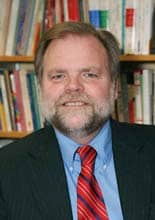
Bruce Epperly is a theologian, spiritual guide, pastor, and author of twenty one books, including Process Theology: A Guide for the Perplexed, Holy Adventure: 41 Days of Audacious Living, and The Center is Everywhere: Celtic Spirituality for the Postmodern Age. He may be reached at [email protected] for lectures, workshops, and retreats.
Patheos Explore the world's faith through different perspectives on religion and spirituality! Patheos has the views of the prevalent religions and spiritualities of the world.
Ad-Free & Subscriber Log-In Subscription Support
- About Us
- 2026 Calendar
- Videos
- Podcasts
- Library of World Religions
- Faith In Media Tracker
- Advertise With Us
- Write for Us
- Privacy Policy
- Terms of Service
- Do Not Sell My Data
- Contact Us
- Radiant Digital
- Manage Newsletter Subscriptions
- Unsubscribe From Notifications
- Sitemap
Copyright 2008-2026, Patheos, part of the Radiant Digital network of media brands. All rights reserved.
Subscription Support Ad-Free & Subscriber Log-In
Follow Patheos