
BuddhistCatholicContemplativeEvangelicalGeneral ChristianHinduJewishLatter-day SaintMuslimNew VisionsProgressive Christian
Beliefs
- Buddhist
- Catholic
- Contemplative
- Evangelical
- General Christian
- Hindu
- Jewish
- Latter-day Saint
- More Voices
- Muslim
- New Visions
- Pagan
- Progressive Christian
Topics
- Religion News
- Food and Religion
- Sports and Religion
- Religious Art
- Religious Music and Entertainment
- Religious Events
- History and Religion
- Style and Religion
- Politics and Religion
- Women in Religion
- Recreation Outdoors and Religion
- Business Finance and Religion
- Careers Workplace and Religion
- Education and Religion
- Family Parenting and Religion
- Health Fitness and Religion
- Home and Religion
- Relationships and Religion
- Technology and Religion
- Travel and Religion
Columnists
- Buddhist Columnists
- Business Finance and Religion Columnists
- Careers Workplace and Religion Columnists
- Catholic Columnists
- Contemplative Columnists
- Education and Religion Columnists
- Evangelists Columnists
- Family Parenting and Religion Columnists
- General Christian Columnists
- Health Fitness and Religion Columnists
- Hindu Columnists
- History and Religion Columnists
- Home and Religion Columnists
- Jewish Columnists
- More Voices Columnists
- Latter Day Columnists
- Muslim Columnists
- New Visions Columnists
- Nonreligious Columnists
- Pagan Columnists
- Politics and Religion Columnists
- Progressive Columnists
- Recreation Outdoors and Religion Columnists
- Relationships and Religion Columnists
- Religion News Columnists
- Religious Art Columnists
- Religious Events Columnists
- Religious Music and Entertainment Columnists
- Sports and Religion Columnists
- Style and Religion Columnists
- Technology and Religion Columnists
- Travel and Religion Columnists
- Women in Religion Columnists
Resource Library
- 2026 Calendar
- Library of World Religions
- The 100 Most Holy Places on Earth
- Patheos Answers
- Podcasts
- Videos
- Faith Leaders Database
- Anglican Episcopalian
- Bahai
- Baptist
- Buddhism
- Christianity
- Confucianism
- Eastern Orthodoxy
- Hinduism
- Holiness and Pentecostal
- ISKCON
- Islam
- Judaism
- Lutheran
- Methodist
- The Church of Jesus Christ of Latter-day Saints
- New Age
- Paganism
- Presbytarian and Reformed
- Protestantism
- Religion Behind the Scenes
- Roman Catholic
- Scientology
- Shia Islam
- Sikhism
- Sufism
- Sunni Islam
- Taoism
- Zen
- See all religions
Research Tools
 Ad-Free & Subscriber Log-In Subscription Support
Follow Patheos 

- Trending:
- Advent
- |
- Forgiveness
- |
- Thanksgiving
- |
- Election
- |
- Seasonal Holidays
- |
- Marriage
Evangelical
The Books That Changed My Life
June 23, 2010
 Marcus Goodyear is Senior Editor for TheHighCalling.org, High Calling blogs, and Faith in the Workplace, as well as the proprietor of the GoodWordEditing blog.
In his fictionalized memoir of the Vietnam War, The Things They Carried, Tim O'Brien explains, "Story-truth is truer sometimes than happening truth." This book more than any other in the past ten years has changed the way I think about stories and truth. Christians too often use stories as a means to an end. Too many of our stories become rhetorical props for sermons and evangelism. They are like commercials for Jesus aimed to turn everyone into happy consumers of Jesus with open wallets ready to tithe.
Tim O'Brien's book has nothing to do with religion and faith on the surface. It is a mixed-up, meta-fictional collection of stories about his time in Vietnam. The main character in his book is named Tim O'Brien, for instance, but the opening pages remind us "The is a work of fiction." Yet we know Tim O'Brien himself went to Vietnam. Surely some facts, some happening truth has worked its way into the novel.
In the end, it doesn't really matter. The stories themselves are so beautiful and challenging and complex that I never really care if they are literally true. They don't need to be. The stories also do not moralize. You'll find no simple anti-war themes or patriotism themes. He explains, "If there's a moral at all, it's like the thread that makes the cloth. You can't tease it out. You can't extract the meaning without unraveling the deeper meaning." Ultimately, I think he breaks his own rule when he concludes: "A true war story, if truly told, makes the stomach believe."
Christians have forgotten how to make the stomach believe. We are clumsy. We rush into unearned imagery and emotion that cheapen our message. Intimacy has to be earned -- whether in stories or relationships. Tim O'Brien helped me rediscover that. In a sense, he earned the right to his simple little moral about how we believe things.
And also, I confess, I love a good war story. And O'Brien tells the best.
Return to Page 1
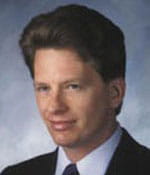 Douglas Groothuis is professor of philosophy at Denver Seminary, and proprietor of the Constructive Curmudgeon blog.
These four books have influenced me in profound ways over the years:
1. The Abolition of Man, by C. S. Lewis
Considered one of Lewis's more difficult and less read works (at least in comparison to his fiction or Mere Christianity), Abolitionhas been indispensible to my intellectual development. I first read it in my sophomore or junior year in college as a philosophy major. It gave me very solid support for the existence of moral values beyond the contingencies of culture.
Technically, it is a work of meta-ethics -- or the metaphysics of ethics. He argues for "the Tao," by which he means the objective basis for moral values that transcends culture and preference. Lewis warned that abandoning this objective standpoint would lead to a culture where people attempt to invent new values and then condition others to accept them through force and propaganda. It is no wonder that I liberally quoted this work in my book against postmodernism, Truth Decay (2000).
While not an apologetic for the biblical God as the basis for eternal values, The Abolition of Man lays that foundation. Its argument for objective moral value should be combined with the moral argument for God found in Book One of Lewis's Mere Christianity. I have read this book at least six times and always benefit from it. In that sense, it is much like Francis Schaffer's work, The God Who is There, which I have read about the same number of times.
2. The God Who Is There, by Francis A. Schaeffer
I first read The God Who Is There by Francis Schaeffer in the fall of 1976, my sophomore year in college -- just a few months after my conversion to Christ. It is not an overstatement to say that it revolutionized my view of Christian faith and endeavor. I had spent the first few troubled months of the Christian life not knowing how to think about the great intellectual issues I had been introduced to in my first year of college. This caused considerable distress of soul. But Schaeffer, the savvy evangelist and apologist, wasn't afraid of the great ideas. In fact, he argued that the Christian worldview is objectively true, rational, and that it offers unique hope and meaning to a post-Christian culture awash in despair and confusion. Schaeffer did not answer all my questions, and I have come to question a few of his judgments (particularly his reading of a few philosophers), but The God Who Is Therehelped spark a grand view of ministry that has never dimmed. We must love the lost, take culture seriously, and outthink the world for Christ!
3. Pensées, byBlaise Pascal
I have been reading Pascal's profound reflections for twenty-five years, and I don't plan on stopping. I find myself quoting him in my writing and speaking frequently. I first picked this volume out of my mother's collection of The Great Books in the summer of 1977. The volume consists of over 900 fragments of a book Pascal never completed, which would have been an apologetic for the Christian faith. Nevertheless, many of the fragments -- some more developed and refined than others -- were so brilliant that Pascal's family published them after his death in 1662. He was only 39. Pascal, a celebrated scientist and mathematician, understood that the Gospel was the only key that could unlock the meaning of the human condition. His reflections on the greatness and misery of humanity are unparalleled in their wisdom and apologetic power. We are great because made in God's image and likeness; but we are miserable because we are fallen. We are deposed royalty in need of the Mediator, Jesus Christ.
4. Purity of Heart is to Will One Thing, by Søren Kierkegaard
Although I cannot agree with much of Kierkegaard's religious philosophy (particularly his fideism), this devotional book was pivotal in my sense of divine calling. Kierkegaard aimed to reform the dry and dead Lutheran orthodoxy of his day by stimulating his readers to rediscover the Christianity of the New Testament and to stand naked as individuals before God Himself. This book summons the reader to consider their lives before the "audit of eternity" and to order all their affairs so as to "will the good in the truth," without excuse and without wavering and against the crowd, if need be. Through reading it, I discovered that God was calling me to engage the life of the mind as a lifelong pursuit. At the time (1977 or 1978), I did not know what shape this commitment would take, but the Lord's will was made known to me through this remarkable and penetrating book.
Return to Page 1
Article Continued On Next Page
Page: 3 of 4
6/23/2010 4:00:00 AM
Evangelical
literature
Christianity
Evangelicalism
more at patheos
1

Trusting God Above Every Headline
2

The Character of God, Enos, & The Family Proclamation
3
‘House of Worship’: Paul Baloche on Songs That Shaped Church
4

Can You Know the Bible and Still Not Be a Disciple?
About
Patheos Explore the world's faith through different perspectives on religion and spirituality! Patheos has the views of the prevalent religions and spiritualities of the world.
Ad-Free & Subscriber Log-In Subscription Support
- About Us
- 2026 Calendar
- Videos
- Podcasts
- Library of World Religions
- Faith In Media Tracker
- Advertise With Us
- Write for Us
- Privacy Policy
- Terms of Service
- Do Not Sell My Data
- Contact Us
- Radiant Digital
- Manage Newsletter Subscriptions
- Unsubscribe From Notifications
- Sitemap
Copyright 2008-2026, Patheos, part of the Radiant Digital network of media brands. All rights reserved.
Subscription Support Ad-Free & Subscriber Log-In
Follow Patheos