
BuddhistCatholicContemplativeEvangelicalGeneral ChristianHinduJewishLatter-day SaintMuslimNew VisionsProgressive Christian
Beliefs
- Buddhist
- Catholic
- Contemplative
- Evangelical
- General Christian
- Hindu
- Jewish
- Latter-day Saint
- More Voices
- Muslim
- New Visions
- Pagan
- Progressive Christian
Topics
- Religion News
- Food and Religion
- Sports and Religion
- Religious Art
- Religious Music and Entertainment
- Religious Events
- History and Religion
- Style and Religion
- Politics and Religion
- Women in Religion
- Recreation Outdoors and Religion
- Business Finance and Religion
- Careers Workplace and Religion
- Education and Religion
- Family Parenting and Religion
- Health Fitness and Religion
- Home and Religion
- Relationships and Religion
- Technology and Religion
- Travel and Religion
Columnists
- Buddhist Columnists
- Business Finance and Religion Columnists
- Careers Workplace and Religion Columnists
- Catholic Columnists
- Contemplative Columnists
- Education and Religion Columnists
- Evangelists Columnists
- Family Parenting and Religion Columnists
- General Christian Columnists
- Health Fitness and Religion Columnists
- Hindu Columnists
- History and Religion Columnists
- Home and Religion Columnists
- Jewish Columnists
- More Voices Columnists
- Latter Day Columnists
- Muslim Columnists
- New Visions Columnists
- Nonreligious Columnists
- Pagan Columnists
- Politics and Religion Columnists
- Progressive Columnists
- Recreation Outdoors and Religion Columnists
- Relationships and Religion Columnists
- Religion News Columnists
- Religious Art Columnists
- Religious Events Columnists
- Religious Music and Entertainment Columnists
- Sports and Religion Columnists
- Style and Religion Columnists
- Technology and Religion Columnists
- Travel and Religion Columnists
- Women in Religion Columnists
Resource Library
- 2026 Calendar
- Library of World Religions
- The 100 Most Holy Places on Earth
- Patheos Answers
- Podcasts
- Videos
- Faith Leaders Database
- Anglican Episcopalian
- Bahai
- Baptist
- Buddhism
- Christianity
- Confucianism
- Eastern Orthodoxy
- Hinduism
- Holiness and Pentecostal
- ISKCON
- Islam
- Judaism
- Lutheran
- Methodist
- The Church of Jesus Christ of Latter-day Saints
- New Age
- Paganism
- Presbytarian and Reformed
- Protestantism
- Religion Behind the Scenes
- Roman Catholic
- Scientology
- Shia Islam
- Sikhism
- Sufism
- Sunni Islam
- Taoism
- Zen
- See all religions
Research Tools
 Ad-Free & Subscriber Log-In Subscription Support
Ad-Free & Subscriber Log-In Subscription Support
Follow Patheos 

- Trending:
- Forgiveness
- |
- Marriage
- |
- Consciousness
- |
- Death Penalty
- |
- Election
- |
- Halloween
Various Paths, One Dharma
May 13, 2010 by Gary Gach
As another example of how simple elements give rise to complexity, Tibetan Buddhism itself can be seen as consisting of four distinct branches (Nyingma, Sakya, Gelug, Kagyu). Of particular interest of late have been the Mahamudra and Dzogchen teachings within Vajrayana, which are resonant with Zen. Vajrayana also includes esoteric practice, requiring initiation, as does the Japanese school Shingon.
But I don't wish to over-complicate the picture lest it lead to spiritual materialism -- shopping for enlightenment. I heartily subscribe to what Joseph Goldstein recently termed One Dharma*. Recall what Yogi Berra suggests: "When you come to a fork in the road, take it!" Seriously, please bear in mind Buddhism isn't really in a book or on a website -- even Patheos. That is, it's nothing you can pull down off of a shelf. (In fact, it's not a thing.) Rather, it's intimacy with your own life: experiencing life genuinely, completely, just as it is. When you're ready to learn more, there are teachers and fellow travelers along the Path.
To open this out, and touch a bit deeper, I'll use my own life as an example. I came to Buddhism through a vision that came to me when I was 6 years old. By age 11, I realized it was best explained by Buddhism. That is, it explains to me my true nature in harmony with the nature of the universe.
My root practice lineage is in the tradition of Ven. Thich Nhat Hanh, which marries a few schools. This is natural, given Vietnam's proximity to both India and China. He's also coined the phrase "engaged Buddhism" -- taking place within a growing, wider movement of engaged spirituality where work on the inner and outer tangle is as one. Plus my teacher's studies in comparative religion nourish a viable, vital interfaith awareness*, as reflected in his widely-read book Living Buddha, Living Christ. Speaking of which, I might mention I'm Jewish. I don't feel I'm betraying my ancestors but rather fulfilling my mitzvot (ethics) through this practice that waters my Jewish roots and gives it new wings.
I also study with Zen priest Dairyu Michael Wenger. Similarly, it's not uncommon today to find students and teachers who've studied in different lineages. A distinct example might be Stephen Batchelor. After he immersed himself in Tibetan Buddhist studies, then studied Korean Zen, he "disrobed" (became a lay practitioner) and teaches a unique, modern Western style he calls Buddhism without beliefs; such Buddhist agnosticism isn't without debate, as seen in current online discussion of his new book Confessions of a Buddhist Atheist.
Remember too, the Buddha wasn't a Buddhist. (Was Jesus a Christian?) And here's a really interesting statistic. Respected pollsters Wuthnow and Cadge discovered that one in eight Americans answered yes when asked if they'd heard any teachings of the Buddha that they take to be of lasting value and influence in their lives. That's interesting. Whether or not you identify as "Buddhist," we're coming to the teachings of the Buddha much like those of Einstein without our having to say we're Einsteinian. (Might you already be Buddhist, and not even know it?)
In the end, the teachings of the Buddha depend on how you put them into practice -- how you walk the Path.
Adapted from a blog posted by the author at the PBS website in conjunction with David Grubin's feature Faces of the Buddha.
For further reading see One Dharma by Joseph Goldstein and Patheos' Public Square articles and resources on interfaith.
Gary Gach manages the Buddhist portal at Patheos. He is also the author of The Complete Idiot's Guide to Buddhism, editor of What Book!?: Buddha Poems from Beat to Hiphop, and translator of three books by the Korean Buddhist poet Ko Un.
Page: 2 of 2
5/13/2010 4:00:00 AM
Sacred Texts
Zen
Buddhism
Theravada Buddhism
Vajrayana Buddhism
Soka Gakkai
Tantra
more at patheos
1

Faith, Hope, and Baseball: An Amish Choice
2

Historical notes about England and Hawaii
3

Easter Hope: Why Jesus Shows Up When We Panic Most
4
The Unknown God Revealed In Christ
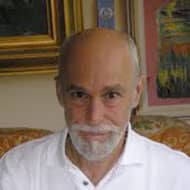
About Gary Gach
Gary Gach is the author of The Complete Idiot's Guide to Buddhism (Nautilus Award) and editor of What Book!? Buddha Poems from Beat to Hiphop (American Book Award). His work has appeared in such magazines and anthologies as AsianArt.com, BuddhaDharma, Harvard Divinity Bulletin, Inquiring Mind, Language for a New Century, The New Yorker, Shambhala Sun, Technicians of the Sacred, Tricycle, Veterans of War Veterans of Peace, Whole Earth Review, and Yoga Journal.
Patheos Explore the world's faith through different perspectives on religion and spirituality! Patheos has the views of the prevalent religions and spiritualities of the world.
Ad-Free & Subscriber Log-In Subscription Support
- About Us
- 2026 Calendar
- Videos
- Podcasts
- Library of World Religions
- Faith In Media Tracker
- Advertise With Us
- Write for Us
- Privacy Policy
- Terms of Service
- Do Not Sell My Data
- Contact Us
- Radiant Digital
- Manage Newsletter Subscriptions
- Unsubscribe From Notifications
- Sitemap
Copyright 2008-2026, Patheos. All rights reserved.
Subscription Support Ad-Free & Subscriber Log-In
Follow Patheos