
BuddhistCatholicContemplativeEvangelicalGeneral ChristianHinduJewishLatter-day SaintMuslimNew VisionsProgressive Christian
Beliefs
- Buddhist
- Catholic
- Contemplative
- Evangelical
- General Christian
- Hindu
- Jewish
- Latter-day Saint
- More Voices
- Muslim
- New Visions
- Pagan
- Progressive Christian
Topics
- Religion News
- Food and Religion
- Sports and Religion
- Religious Art
- Religious Music and Entertainment
- Religious Events
- History and Religion
- Style and Religion
- Politics and Religion
- Women in Religion
- Recreation Outdoors and Religion
- Business Finance and Religion
- Careers Workplace and Religion
- Education and Religion
- Family Parenting and Religion
- Health Fitness and Religion
- Home and Religion
- Relationships and Religion
- Technology and Religion
- Travel and Religion
Columnists
- Buddhist Columnists
- Business Finance and Religion Columnists
- Careers Workplace and Religion Columnists
- Catholic Columnists
- Contemplative Columnists
- Education and Religion Columnists
- Evangelists Columnists
- Family Parenting and Religion Columnists
- General Christian Columnists
- Health Fitness and Religion Columnists
- Hindu Columnists
- History and Religion Columnists
- Home and Religion Columnists
- Jewish Columnists
- More Voices Columnists
- Latter Day Columnists
- Muslim Columnists
- New Visions Columnists
- Nonreligious Columnists
- Pagan Columnists
- Politics and Religion Columnists
- Progressive Columnists
- Recreation Outdoors and Religion Columnists
- Relationships and Religion Columnists
- Religion News Columnists
- Religious Art Columnists
- Religious Events Columnists
- Religious Music and Entertainment Columnists
- Sports and Religion Columnists
- Style and Religion Columnists
- Technology and Religion Columnists
- Travel and Religion Columnists
- Women in Religion Columnists
Resource Library
- 2026 Calendar
- Library of World Religions
- The 100 Most Holy Places on Earth
- Patheos Answers
- Podcasts
- Videos
- Faith Leaders Database
- Anglican Episcopalian
- Bahai
- Baptist
- Buddhism
- Christianity
- Confucianism
- Eastern Orthodoxy
- Hinduism
- Holiness and Pentecostal
- ISKCON
- Islam
- Judaism
- Lutheran
- Methodist
- The Church of Jesus Christ of Latter-day Saints
- New Age
- Paganism
- Presbytarian and Reformed
- Protestantism
- Religion Behind the Scenes
- Roman Catholic
- Scientology
- Shia Islam
- Sikhism
- Sufism
- Sunni Islam
- Taoism
- Zen
- See all religions
Research Tools
 Ad-Free & Subscriber Log-In Subscription Support
Follow Patheos 

- Trending:
- Advent
- |
- Forgiveness
- |
- Thanksgiving
- |
- Election
- |
- Seasonal Holidays
- |
- Marriage
The Story of Sergey Brin
May 20, 2010
The Ten Commandments it's not, but Google does operate with a moral code of sorts: "Don't Be Evil." The maxim is supposed to guide behavior at all levels of the company. When pressed for clarification, Eric Schmidt has famously said, "Evil is whatever Sergey says is evil."
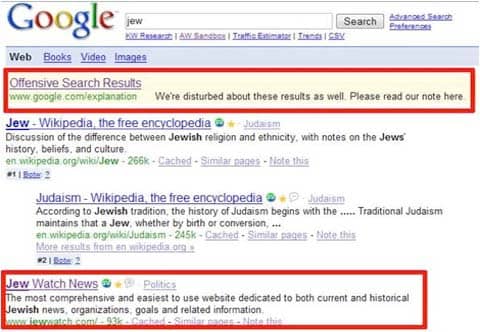
One malevolent practice, in Google's view, is tampering with or otherwise censoring the list of results produced by a Google search. An early test of the Google founders' commitment to providing unfiltered information struck very close to home. The anti-Semitic web site "Jew Watch" appeared prominently in Google results for searches on the term "Jew," prompting some Jewish groups to demand that Google remove the defamatory site from the top of its listings. Google refused. Sergey said at the time, "I certainly am very offended by the site, but the objectivity of our rankings is one of our very important principles." As a compromise, Google displays a warning at the top of questionable pages entitled "Offensive Search Results," which links to a fuller explanation of Google's policy: "Our search results are generated completely objectively and are independent of the beliefs and preferences of those who work at Google."
The most telling measure of Google's moral code has come in China, the world's second largest internet market, where an army of Communist Party bureaucrats actively monitors and censors the internet. During months of intense debate at the Googleplex, Sergey, Larry, and other executives weighed the vast profit potential of launching a China-based service against their opposition to the country's odious human rights abuses. Ever the computer geeks, Schmidt said they actually worked up an "evil scale." To their minds, operating a censored Google site in China was a lesser evil than providing spotty, substandard service from outside the country. The outcome also happened to favor the profit motive. Viewed against the backdrop of Sergey's distaste for authority, the decision to cave in to China's totalitarian leadership seems out of character.
Sergey's public comments on the matter have evolved to reflect this contradiction. While firmly defending the decision at first, he later acknowledged that Google had "compromised" its principles. "Perhaps now the principled approach makes more sense," he allowed in June, but added, "It's not where we chose to go right now."
How Google deals with such thorny matters as accommodating government requests for information is not merely of passing interest. As the world's dominant search engine, used some 300 million times daily, it marshals an immense amount of data about our collective interests, needs, and desires. And that's not all. Because every search typed into Google is stored indefinitely and can often be traced to individual computer users, privacy advocates point out that clever government prosecutors or divorce lawyers could get their hands on our personal digital dossiers. Google's motto may be "Don't Be Evil," but it all depends into whose hands this information falls.
Does any company founded by two Jews, no matter how assimilated, necessarily retain some defining Jewish characteristics? The Google masterminds' penchant for pushing boundaries -- without asking permission -- might as well be called chutzpah. However you label it, it's an attitude that runs deeply through Google and may help explain why the company is embroiled in lawsuits over many of its new projects: the aggressive scanning of library books it doesn't own; display of copyrighted material; and copyright issues connected to its acquisition of YouTube, the online video site whose popularity rests in part on the availability of pirated television and movie clips.
Google's first employee and a number of other early hires were Jewish and, when the initial winter holiday season rolled around, a menorah rather than a Christmas tree graced the lobby. (The next year, there was a tree wrapped in Hanukkah lights.) Google's former chef, Charlie Ayers, cooked up latkes, brisket, tzimmes, and matzah ball soup for Hanukkah meals and turned the Passover seder into a Google tradition. To some, Google's emphasis on academic achievement -- hiring only the best and the brightest and employing hundreds of Ph.D.s -- could be considered Jewish. So, perhaps, could "Don't Be Evil." With its hint of tikkun olam, the Kabbalistic concept of "repairing the world" is evident in the company's commitment to aggressive philanthropy. Sergey and Larry have pledged $1 billion of Google's profits to the company's philanthropic arm, known as Google.org, which will funnel money both to nonprofit charities and companies that deal with global poverty, environmental issues, and renewable energy.
Personal philanthropy is one area where Sergey intends to proceed cautiously. "I take the philosophical view that, aside from some modest stuff now, I am waiting to do the bulk of my philanthropy later, maybe in a few years, when I feel I'm more educated," he says. "I don't think it's something I have had time to become an expert at." Nevertheless, he and his parents do support a few charities. "There are people who helped me and my family out. I do feel responsible to those organizations," he says. One of them is HIAS, the immigrant aid group that helped the Brins come to the United States. Genia serves on its board and heads its project to create a digital record of Jewish immigrant archives.
Sergey's own Jewish sensibility is grounded in his family's experience. "I do somewhat feel like a minority," he says. "Being Jewish, especially in Russia, is one aspect of that. Then, being an immigrant in the U.S. And then, since I was significantly ahead in math in school, being the youngest one in a class. I never felt like a part of the majority. So I think that is part of the Jewish heritage in a way." Today, of course, being a young billionaire, he's again in a class by himself. "I don't feel comfortable being one of the crowd," he reflects. "It's kind of interesting -- I really liked the schools that I went to, but I never rooted for the sports teams. I was never one of the crowd supporting something or not. I like to maintain my independence."
Article Continued On Next Page
Page: 6 of 7
5/20/2010 4:00:00 AM
History
politics
science
Technology
Judaism
more at patheos
1
Chapter 12: The Quest to Confront the System
2

Indian Hindu pilot’s valor in line of duty makes him a hero
3

Six Reasons Why Christians Shouldn't Fear Halloween
4

Called to Work Created to Rest
About
Patheos Explore the world's faith through different perspectives on religion and spirituality! Patheos has the views of the prevalent religions and spiritualities of the world.
Ad-Free & Subscriber Log-In Subscription Support
- About Us
- 2026 Calendar
- Videos
- Podcasts
- Library of World Religions
- Faith In Media Tracker
- Advertise With Us
- Write for Us
- Privacy Policy
- Terms of Service
- Do Not Sell My Data
- Contact Us
- Radiant Digital
- Manage Newsletter Subscriptions
- Unsubscribe From Notifications
- Sitemap
Copyright 2008-2026, Patheos. All rights reserved.
Subscription Support Ad-Free & Subscriber Log-In
Follow Patheos