
BuddhistCatholicContemplativeEvangelicalGeneral ChristianHinduJewishLatter-day SaintMuslimNew VisionsProgressive Christian
Beliefs
- Buddhist
- Catholic
- Contemplative
- Evangelical
- General Christian
- Hindu
- Jewish
- Latter-day Saint
- More Voices
- Muslim
- New Visions
- Pagan
- Progressive Christian
Topics
- Religion News
- Food and Religion
- Sports and Religion
- Religious Art
- Religious Music and Entertainment
- Religious Events
- History and Religion
- Style and Religion
- Politics and Religion
- Women in Religion
- Recreation Outdoors and Religion
- Business Finance and Religion
- Careers Workplace and Religion
- Education and Religion
- Family Parenting and Religion
- Health Fitness and Religion
- Home and Religion
- Relationships and Religion
- Technology and Religion
- Travel and Religion
Columnists
- Buddhist Columnists
- Business Finance and Religion Columnists
- Careers Workplace and Religion Columnists
- Catholic Columnists
- Contemplative Columnists
- Education and Religion Columnists
- Evangelists Columnists
- Family Parenting and Religion Columnists
- General Christian Columnists
- Health Fitness and Religion Columnists
- Hindu Columnists
- History and Religion Columnists
- Home and Religion Columnists
- Jewish Columnists
- More Voices Columnists
- Latter Day Columnists
- Muslim Columnists
- New Visions Columnists
- Nonreligious Columnists
- Pagan Columnists
- Politics and Religion Columnists
- Progressive Columnists
- Recreation Outdoors and Religion Columnists
- Relationships and Religion Columnists
- Religion News Columnists
- Religious Art Columnists
- Religious Events Columnists
- Religious Music and Entertainment Columnists
- Sports and Religion Columnists
- Style and Religion Columnists
- Technology and Religion Columnists
- Travel and Religion Columnists
- Women in Religion Columnists
Resource Library
- 2026 Calendar
- Library of World Religions
- The 100 Most Holy Places on Earth
- Patheos Answers
- Podcasts
- Videos
- Faith Leaders Database
- Anglican Episcopalian
- Bahai
- Baptist
- Buddhism
- Christianity
- Confucianism
- Eastern Orthodoxy
- Hinduism
- Holiness and Pentecostal
- ISKCON
- Islam
- Judaism
- Lutheran
- Methodist
- The Church of Jesus Christ of Latter-day Saints
- New Age
- Paganism
- Presbytarian and Reformed
- Protestantism
- Religion Behind the Scenes
- Roman Catholic
- Scientology
- Shia Islam
- Sikhism
- Sufism
- Sunni Islam
- Taoism
- Zen
- See all religions
Research Tools
 Ad-Free & Subscriber Log-In Subscription Support
Follow Patheos 

- Trending:
- Advent
- |
- Forgiveness
- |
- Thanksgiving
- |
- Election
- |
- Seasonal Holidays
- |
- Marriage
The Story of Sergey Brin
May 20, 2010
Patty Barshay, the school's director, became a friend and mentor to Sergey and his parents. She invited them to a party at her house that first December ("a bunch of Jewish people with nothing to do on Christmas Day") and wound up teaching Genia how to drive. Everywhere they turned, there was so much to take in. "I remember them inviting me over for dinner one day," Barshay says, "and I asked Genia, ‘What kind of meat is this?' She had no idea. They had never seen so much meat" as American supermarkets offer.
When I ask about her former pupil, Barshay lights up, obviously proud of Sergey's achievements. "Sergey wasn't a particularly outgoing child," she says, "but he always had the self-confidence to pursue what he had his mind set on."
He gravitated toward puzzles, maps, and math games that taught multiplication. "I really enjoyed the Montessori method," he tells me. "I could grow at my own pace." He adds that the Montessori environment -- which gives students the freedom to choose activities that suit their interests -- helped foster his creativity.
"He was interested in everything," Barshay says, but adds, "I never thought he was any brighter than anyone else."
One thing the Brins shared with thousands of other families emigrating to the West from the Soviet Union was the discovery that, suddenly, they were free to be Jews.
"Russian Jews lacked the vocabulary to even articulate what they were feeling," says Lenny Gusel, the founder of a San Francisco-based network of Russian-Jewish immigrants; many newcomers he encounters struggle with this fundamental change. "They were considered Jews back home. Here they were considered Russians. Many longed just to assimilate as Americans." Gusel's group, which he calls the "79ers," after the peak year of immigration in the 1970s, and its New York cousin, RJeneration, have attracted hundreds of 20- and 30-something immigrants who grapple with their Jewish identity. "Sergey is the absolute emblem of our group, the number one Russian-Jewish immigrant success story," he says.
The Brins were no different from their fellow immigrants in that being Jewish was an ethnic, not a religious experience. "We felt our Jewishness in different ways, not by keeping kosher or going to synagogue. It is genetic," explains Michael. "We were not very religious. My wife doesn't eat on Yom Kippur; I do." Genia interjects: "We always have a Passover dinner. We have a seder. I have the recipe for gefilte fish from my grandmother."
Religious or not, on arriving in the suburbs of Washington, the Brins were adopted by a synagogue, Mishkan Torah of Greenbelt, Maryland, which helped them acquire furnishings for their home. "We didn't need that much, but we saw how much the community helped other families," Genia says.
Sergey attended Hebrew school at Mishkan Torah for the better part of three years but hated the language instruction and everything else, too. "He was teased there by other kids and he begged us not to send him any more," his mother remembers. "Eventually, it worked." The Conservative congregation turned out to be too religious for the Brins and they drifted. When a three-week trip to Israel awakened 11-year-old Sergey's interest in all things Jewish, the family inquired at another synagogue about restarting studies to prepare for a bar mitzvah. But the rabbi said it would take more than a year to catch up and Sergey, who didn't want to wait past his 13th birthday, abandoned the pursuit.
If there was one Jewish value the Brin family upheld without reservation, Michael says, it was scholarship. Sergey's brother -- who in his younger years was more fond of basketball than homework -- even got the notion that advanced degrees were mandatory for all professions. "Sam once asked us, ‘Is it true that before you play in the N.B.A. you have to get a Ph.D.?'" recalls his dad. To which the professor couldn't resist replying, "Yes, Sam, that's it!"
Sergey attended Eleanor Roosevelt High School, a large public school in Greenbelt. He raced through in three years, amassing a year's worth of college credits that would enable him to finish college in three years as well. At the University of Maryland, he majored in mathematics and computer science and graduated near the top of his class. When he won a prestigious National Science Foundation scholarship for graduate school, he insisted on Stanford. (M.I.T. had rejected him.) Aside from the physical beauty of Stanford's campus, Sergey knew the school's reputation for supporting high-tech entrepreneurs. At the time, though, his focus was squarely on getting his doctorate.
Personable, with an easy smile, Sergey brims with a healthy self-assuredness that at times spills over into arrogance. At Stanford, he was known for his habit of bursting in on professors without knocking. One of his advisers, Rajeev Motwani, recalls, "He was the brash young man. But he was so smart, it just oozed out of him." His abiding interest was computer science, specifically the field of "data mining," or how to extract meaningful patterns from mountains of information. But he also took time out to enjoy Stanford social life and all manner of sports: skiing, rollerblading, gymnastics, even trapeze. His father once remarked, "I asked him if he was taking any advanced courses, and he said, ‘yes, advanced swimming.'"
What came next is Google legend. In the spring of 1995, during a prospective student weekend, Sergey met an opinionated computer science student from the University of Michigan named Larry Page. They talked and argued over the course of two days, each finding the other cocky and obnoxious. They also formed an instant connection, relishing the intellectual combat.
Like Sergey, Larry is the son of high-powered intellects steeped in computer science. His father, Carl Victor Page, a computer science professor at Michigan State University until his death in 1996, received one of the first Ph.D.s awarded in the field. His mother, Gloria, holds a master's degree in computer science and has taught college programming classes. The two young graduate students also shared a Jewish background. Larry's maternal grandfather made aliyah and lived in the desert town of Arad near the Dead Sea, working as a tool and die maker, and his mother was raised Jewish. Larry, however, brought up in the mold of his father, whose religion was technology, does not readily identify as a Jew. He, too, never had a bar mitzvah.
Article Continued On Next Page
Page: 4 of 7
5/20/2010 4:00:00 AM
History
politics
science
Technology
Judaism
more at patheos
1
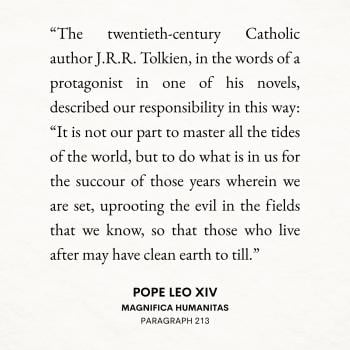
Letting Go of Libido Dominandi: Tolkien and Niebuhr meet Leo
2
Making Space for Eco-Grief—and Hope—in Your Church
3

Church Is Not a Waiting Room: It’s Where Gifts Are Formed
4
About
Patheos Explore the world's faith through different perspectives on religion and spirituality! Patheos has the views of the prevalent religions and spiritualities of the world.
Ad-Free & Subscriber Log-In Subscription Support
- About Us
- 2026 Calendar
- Videos
- Podcasts
- Library of World Religions
- Faith In Media Tracker
- Advertise With Us
- Write for Us
- Privacy Policy
- Terms of Service
- Do Not Sell My Data
- Contact Us
- Radiant Digital
- Manage Newsletter Subscriptions
- Unsubscribe From Notifications
- Sitemap
Copyright 2008-2026, Patheos. All rights reserved.
Subscription Support Ad-Free & Subscriber Log-In
Follow Patheos