
BuddhistCatholicContemplativeEvangelicalGeneral ChristianHinduJewishLatter-day SaintMuslimNew VisionsProgressive Christian
Beliefs
- Buddhist
- Catholic
- Contemplative
- Evangelical
- General Christian
- Hindu
- Jewish
- Latter-day Saint
- More Voices
- Muslim
- New Visions
- Pagan
- Progressive Christian
Topics
- Religion News
- Food and Religion
- Sports and Religion
- Religious Art
- Religious Music and Entertainment
- Religious Events
- History and Religion
- Style and Religion
- Politics and Religion
- Women in Religion
- Recreation Outdoors and Religion
- Business Finance and Religion
- Careers Workplace and Religion
- Education and Religion
- Family Parenting and Religion
- Health Fitness and Religion
- Home and Religion
- Relationships and Religion
- Technology and Religion
- Travel and Religion
Columnists
- Buddhist Columnists
- Business Finance and Religion Columnists
- Careers Workplace and Religion Columnists
- Catholic Columnists
- Contemplative Columnists
- Education and Religion Columnists
- Evangelists Columnists
- Family Parenting and Religion Columnists
- General Christian Columnists
- Health Fitness and Religion Columnists
- Hindu Columnists
- History and Religion Columnists
- Home and Religion Columnists
- Jewish Columnists
- More Voices Columnists
- Latter Day Columnists
- Muslim Columnists
- New Visions Columnists
- Nonreligious Columnists
- Pagan Columnists
- Politics and Religion Columnists
- Progressive Columnists
- Recreation Outdoors and Religion Columnists
- Relationships and Religion Columnists
- Religion News Columnists
- Religious Art Columnists
- Religious Events Columnists
- Religious Music and Entertainment Columnists
- Sports and Religion Columnists
- Style and Religion Columnists
- Technology and Religion Columnists
- Travel and Religion Columnists
- Women in Religion Columnists
Resource Library
- 2026 Calendar
- Library of World Religions
- The 100 Most Holy Places on Earth
- Patheos Answers
- Podcasts
- Videos
- Faith Leaders Database
- Anglican Episcopalian
- Bahai
- Baptist
- Buddhism
- Christianity
- Confucianism
- Eastern Orthodoxy
- Hinduism
- Holiness and Pentecostal
- ISKCON
- Islam
- Judaism
- Lutheran
- Methodist
- The Church of Jesus Christ of Latter-day Saints
- New Age
- Paganism
- Presbytarian and Reformed
- Protestantism
- Religion Behind the Scenes
- Roman Catholic
- Scientology
- Shia Islam
- Sikhism
- Sufism
- Sunni Islam
- Taoism
- Zen
- See all religions
Research Tools
 Ad-Free & Subscriber Log-In Subscription Support
Ad-Free & Subscriber Log-In Subscription Support
Follow Patheos 

- Trending:
- Forgiveness
- |
- Marriage
- |
- Consciousness
- |
- Death Penalty
- |
- Election
- |
- Halloween
Evangelical
Crusades for Christ
May 13, 2010 by Timothy Dalrymple
An Interview with Rodney Stark
By Timothy Dalrymple
Rodney Stark is a prominent and prolific sociologist and historian of religion. His Curriculum Vitae lists 28 books and 144 articles, many of which have reached a broad academic and popular audience. Often controversial, and known as a challenger of conventional wisdom, Stark once described himself as neither religious nor atheistic, but later came to understand himself as an "independent Christian."
After four decades as a professor, Stark is one of America's preeminent scholars of religion, and serves as co-director of the Institute for Studies of Religion at Baylor University.
He spoke by phone with Timothy Dalrymple for Patheos' Evangelical Portal about his latest book, God's Battalions: the Case for the Crusades.
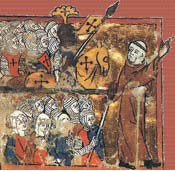 You are well known as a buster of historical myths. Your latest book takes on one of what most Americans would consider a truism: that the Crusades were simply evil and irrational. Why reassess the Crusades?
Because the Crusades are often understood within a larger framework that says that Islam is the gentle faith and Christianity the violent one. Karen Armstrong would have us believe that Muhammad was a pacifist. Take Major Nidal Hassan, the man responsible for the Fort Hood massacre. Had an evangelical Christian of the nutty sort gotten up in front of Army psychiatrists and talked about how much he respected people who shot abortionists, he would have been out of the Army an hour later. But everybody tiptoes around the issue of Islam.
Several months after 9/11, former President Clinton gave a speech at Georgetown University in which he apologized for the Crusades. He said we had much to be sorry about, and we bore some of the guilt for sending those airplanes plunging into the Twin Towers. Now, Clinton isn't a nut. He's not an anti-American. He's just been miseducated. He's been told a whole lot of nonsense about the Crusades.
The notion, for example, that the Crusaders went to get loot and land and riches is made absurd by the survival of hundreds and hundreds of mortgages that have been found in the archives at various monasteries and convents. These people mortgaged away everything they owned in order to get the money to march East. They went at enormous personal cost. Most of them died. They knew there wasn't anything out there in the sand that was going to reward them for going.
The things I write about in this book are no secret among historians of the Crusades. I'm simply bringing their work to a popular audience. I quote those scholars at great length throughout the book. It struck me that the historians of the Crusades had not reached the public, and I would give it a shot.
The Crusades did not arise ex nihilo, but were part of a broader historical and geographical narrative. Can you tell us about that?
The fact is that Islam had been attacking the west for more than 400 years before the Crusades began. Shortly after the death of Muhammad, the armies started marching. They took the Middle East, which was a Christian area beforehand. They took the Holy Land. They took all of North Africa, which had been mostly Christian. They went across the straits and took most of Spain. They took southern Italy. They took Sicily. A Muslim army marched up within 150 miles of Paris before they were turned around and run back out.
The point is that an aggressive, invasive warfare had been going on between Europeans and Islam for hundreds of years. Shortly before the First Crusade, the Normans drove the Muslims out of southern Italy and Sicily. But the Muslims were still in Spain. As a matter of fact, about thirty years before the First Crusade, the pope tried to get a Crusade going to Spain, which was about half-reclaimed at the time. And that presents an interesting contrast. Spain was close; you didn't have to march 2500 miles; and there were riches to be had in Spain. Yet nobody went. The reason nobody went, and then thirty years later they all went, if you will, is because nobody believed that Jesus had walked around in Spain.
It really was a religious Crusade. If you don't believe it, all you have to do is look at the mortgages, documented by Riley-Smith, where the people taking out the mortgages go on at length about why they're borrowing the money in order to go. It was about Jesus.
Article Continued On Next Page
Page: 1 of 4
5/13/2010 4:00:00 AM
Evangelical
War
Christianity
Evangelicalism
more at patheos
1
Miracle Mike and the Headless Church
2
Goblinposting in the Name of Shared Values
3
The Philosophical Basis of Woke Academia
4
Whatever Happened to the Young, Restless and Reformed?

About Timothy Dalrymple
Timothy Dalrymple is the CEO and Chief Creative Officer of Polymath Innovations, a strategic storytelling agency that advances the good with visionary organizations and brands. He leads a unique team of communicators from around North America and across the creative spectrum, serving mission-driven businesses and nonprofits who need a partner to amplify their voice and good works. Once a world-class gymnast whose career ended with a broken neck, Tim channeled his passions for faith and storytelling into his role as VP of Business Development for Patheos, helping to launch and grow the network into the world's largest religion website. He holds a Ph.D. in Religion from Harvard's Graduate School of Arts and Sciences. Tim blogs at Philosophical Fragments.
Patheos Explore the world's faith through different perspectives on religion and spirituality! Patheos has the views of the prevalent religions and spiritualities of the world.
Ad-Free & Subscriber Log-In Subscription Support
- About Us
- 2026 Calendar
- Videos
- Podcasts
- Library of World Religions
- Faith In Media Tracker
- Advertise With Us
- Write for Us
- Privacy Policy
- Terms of Service
- Do Not Sell My Data
- Contact Us
- Radiant Digital
- Manage Newsletter Subscriptions
- Unsubscribe From Notifications
- Sitemap
Copyright 2008-2026, Patheos. All rights reserved.
Subscription Support Ad-Free & Subscriber Log-In
Follow Patheos