
BuddhistCatholicContemplativeEvangelicalGeneral ChristianHinduJewishLatter-day SaintMuslimNew VisionsProgressive Christian
Beliefs
- Buddhist
- Catholic
- Contemplative
- Evangelical
- General Christian
- Hindu
- Jewish
- Latter-day Saint
- More Voices
- Muslim
- New Visions
- Pagan
- Progressive Christian
Topics
- Religion News
- Food and Religion
- Sports and Religion
- Religious Art
- Religious Music and Entertainment
- Religious Events
- History and Religion
- Style and Religion
- Politics and Religion
- Women in Religion
- Recreation Outdoors and Religion
- Business Finance and Religion
- Careers Workplace and Religion
- Education and Religion
- Family Parenting and Religion
- Health Fitness and Religion
- Home and Religion
- Relationships and Religion
- Technology and Religion
- Travel and Religion
Columnists
- Buddhist Columnists
- Business Finance and Religion Columnists
- Careers Workplace and Religion Columnists
- Catholic Columnists
- Contemplative Columnists
- Education and Religion Columnists
- Evangelists Columnists
- Family Parenting and Religion Columnists
- General Christian Columnists
- Health Fitness and Religion Columnists
- Hindu Columnists
- History and Religion Columnists
- Home and Religion Columnists
- Jewish Columnists
- More Voices Columnists
- Latter Day Columnists
- Muslim Columnists
- New Visions Columnists
- Nonreligious Columnists
- Pagan Columnists
- Politics and Religion Columnists
- Progressive Columnists
- Recreation Outdoors and Religion Columnists
- Relationships and Religion Columnists
- Religion News Columnists
- Religious Art Columnists
- Religious Events Columnists
- Religious Music and Entertainment Columnists
- Sports and Religion Columnists
- Style and Religion Columnists
- Technology and Religion Columnists
- Travel and Religion Columnists
- Women in Religion Columnists
Resource Library
- 2026 Calendar
- Library of World Religions
- The 100 Most Holy Places on Earth
- Patheos Answers
- Podcasts
- Videos
- Faith Leaders Database
- Anglican Episcopalian
- Bahai
- Baptist
- Buddhism
- Christianity
- Confucianism
- Eastern Orthodoxy
- Hinduism
- Holiness and Pentecostal
- ISKCON
- Islam
- Judaism
- Lutheran
- Methodist
- The Church of Jesus Christ of Latter-day Saints
- New Age
- Paganism
- Presbytarian and Reformed
- Protestantism
- Religion Behind the Scenes
- Roman Catholic
- Scientology
- Shia Islam
- Sikhism
- Sufism
- Sunni Islam
- Taoism
- Zen
- See all religions
Research Tools
 Ad-Free & Subscriber Log-In Subscription Support
Ad-Free & Subscriber Log-In Subscription Support
Follow Patheos 

- Trending:
- Forgiveness
- |
- Marriage
- |
- Consciousness
- |
- Death Penalty
- |
- Election
- |
- Halloween
Evangelical
Undercover Atheist
April 02, 2010 by Timothy Dalrymple
In articles and interviews, you are now positioned before the media as an interpreter of evangelicals to secular progressives. Yet evangelicals can speak for themselves. Why is it important for secular audiences to hear from you?
Because there's a difference between defending yourself and being defended by someone who is disinclined to sympathize with you. It's easy to defend ourselves and say, "I have a good reason for this, trust me." Yet, for me to enter an evangelical church, given my personal background and my disinclination to sympathize with fundamentalist religion, and with proselytizing, and with mixing politics together with faith-given my aversion to those things, a sympathetic portrayal of certain practices is perhaps more persuasive.
I also think that my account is perhaps more palatable to people like me than a defense from the inside.
Many evangelicals would regard Thomas Road Baptist Church as being on the fundamentalist fringe of evangelicalism-not representative of mainstream evangelicalism, and certainly not (as the subtitle avers) at "the Heart of the Evangelical Church." A skeptic might say that you chose Thomas Road in order to present an exaggerated or sensationalized portrait of "evangelicals." Why did you choose Thomas Road Baptist Church?
Thomas Road is historically an important church, because it was the seat of the Moral Majority. Jerry Falwell was such an important figure in the public face of evangelical Christianity in the 1980s and into the 1990s. It's also the sister church to Liberty University, which seems like a critical institution even in the current phase of evangelical Christianity. Those things drew me to Thomas Road Baptist.
I also thought that it was a church about to go through a transition. It was clear that Jerry Falwell was nearing the end of his life. I could not have known that he was going to die while I was there, but it was clear they were going to have to figure out how to take this church that was mired in an old model of evangelical Christianity, a televangelist model centered around one very charismatic figure, and push that through to a more member-centered model. So, even though I recognized that Thomas Road is not the most representative church as far as what is going on in conservative evangelical churches, it seemed like it was the nexus point for many different issues I was interested in.
As it happened, it did become this kind of interesting case study for a church in transition. They are figuring out how to deal with the emerging church. There are unresolved attitudes toward it. You hear, on the one hand, plenty of people at Thomas Road singing the praises of a Rick Warren, talking about adapting to the changing religious climate. Then you have a lot of people like Donny, in the book, who say "I'm not afraid of being marginalized or called a fundamentalist. I adhere to these principles whether or not people like them." So I think looking at a church that has those competing attitudes is worthwhile.
A woman who attended a book signing last night asked, in a heated tone, "Don't you know that there is such a thing as a progresssive evangelical Christian?" Of course I know that. Yet that's not really what this book is about. This book is about conservative evangelical Christians who are very invested in socially conservative issues, who have done a lot to influence politics in our country. That was the impetus for the book, so that's what the book is about.
One way in which conservative evangelicals often feel caricatured - not only by secular media but by progressive evangelicals - is when they are described as caring about only twi issues: abortion and gay marriage, as though they do not care about serving the needy or other issues here and around the world. Having spent a good amount of time now amongst very conservative evangelicals, how would you respond to that characterization?
I don't think that characterization is true. My experience at Thomas Road was that they weren't central issues for the congregation.
I think the reason that impression formed is because those two issues feel so insoluble. Especially abortion. I don't think that either side will ever budge on those issues. It's a litmus test on both sides. Secular progressives always say, "Evangelicals only vote on abortion, and that's so wrong." But no secular progressive I know would vote for an anti-abortion candidate. It's the same on both sides.
I don't think that gay marriage and gay rights are ultimately going to be insoluble issues. Those are civil rights issues, and standing against them is a losing battle. But the reason that secular progressives characterize conservative Christians as obsessed with those issues is because the secular progressives find it so hard to relate to evangelicals' stances on them.
Article Continued On Next Page
Page: 2 of 4
4/2/2010 4:00:00 AM
Evangelical
Christianity
Judaism
Evangelicalism
Atheism
more at patheos
1

The Not Yet Is Coming: The Holy Tension of Is
2

17 Church Fathers on Purgatory (Esp. 1 Cor 3:10-15)
3
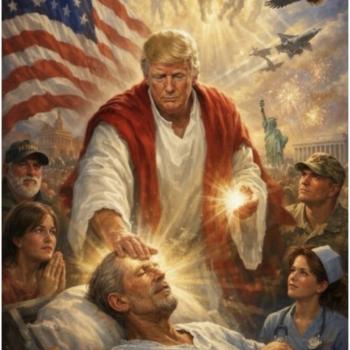
Trump Posts Blasphemous Image then Deletes it
4
The Reparations Debate: Bridging or Widening Divides?

About Timothy Dalrymple
Timothy Dalrymple is the CEO and Chief Creative Officer of Polymath Innovations, a strategic storytelling agency that advances the good with visionary organizations and brands. He leads a unique team of communicators from around North America and across the creative spectrum, serving mission-driven businesses and nonprofits who need a partner to amplify their voice and good works. Once a world-class gymnast whose career ended with a broken neck, Tim channeled his passions for faith and storytelling into his role as VP of Business Development for Patheos, helping to launch and grow the network into the world's largest religion website. He holds a Ph.D. in Religion from Harvard's Graduate School of Arts and Sciences. Tim blogs at Philosophical Fragments.
Patheos Explore the world's faith through different perspectives on religion and spirituality! Patheos has the views of the prevalent religions and spiritualities of the world.
Ad-Free & Subscriber Log-In Subscription Support
- About Us
- 2026 Calendar
- Videos
- Podcasts
- Library of World Religions
- Faith In Media Tracker
- Advertise With Us
- Write for Us
- Privacy Policy
- Terms of Service
- Do Not Sell My Data
- Contact Us
- Radiant Digital
- Manage Newsletter Subscriptions
- Unsubscribe From Notifications
- Sitemap
Copyright 2008-2026, Patheos. All rights reserved.
Subscription Support Ad-Free & Subscriber Log-In
Follow Patheos