
BuddhistCatholicContemplativeEvangelicalGeneral ChristianHinduJewishLatter-day SaintMuslimNew VisionsProgressive Christian
Beliefs
- Buddhist
- Catholic
- Contemplative
- Evangelical
- General Christian
- Hindu
- Jewish
- Latter-day Saint
- More Voices
- Muslim
- New Visions
- Pagan
- Progressive Christian
Topics
- Religion News
- Food and Religion
- Sports and Religion
- Religious Art
- Religious Music and Entertainment
- Religious Events
- History and Religion
- Style and Religion
- Politics and Religion
- Women in Religion
- Recreation Outdoors and Religion
- Business Finance and Religion
- Careers Workplace and Religion
- Education and Religion
- Family Parenting and Religion
- Health Fitness and Religion
- Home and Religion
- Relationships and Religion
- Technology and Religion
- Travel and Religion
Columnists
- Buddhist Columnists
- Business Finance and Religion Columnists
- Careers Workplace and Religion Columnists
- Catholic Columnists
- Contemplative Columnists
- Education and Religion Columnists
- Evangelists Columnists
- Family Parenting and Religion Columnists
- General Christian Columnists
- Health Fitness and Religion Columnists
- Hindu Columnists
- History and Religion Columnists
- Home and Religion Columnists
- Jewish Columnists
- More Voices Columnists
- Latter Day Columnists
- Muslim Columnists
- New Visions Columnists
- Nonreligious Columnists
- Pagan Columnists
- Politics and Religion Columnists
- Progressive Columnists
- Recreation Outdoors and Religion Columnists
- Relationships and Religion Columnists
- Religion News Columnists
- Religious Art Columnists
- Religious Events Columnists
- Religious Music and Entertainment Columnists
- Sports and Religion Columnists
- Style and Religion Columnists
- Technology and Religion Columnists
- Travel and Religion Columnists
- Women in Religion Columnists
Resource Library
- 2026 Calendar
- Library of World Religions
- The 100 Most Holy Places on Earth
- Patheos Answers
- Podcasts
- Videos
- Faith Leaders Database
- Anglican Episcopalian
- Bahai
- Baptist
- Buddhism
- Christianity
- Confucianism
- Eastern Orthodoxy
- Hinduism
- Holiness and Pentecostal
- ISKCON
- Islam
- Judaism
- Lutheran
- Methodist
- The Church of Jesus Christ of Latter-day Saints
- New Age
- Paganism
- Presbytarian and Reformed
- Protestantism
- Religion Behind the Scenes
- Roman Catholic
- Scientology
- Shia Islam
- Sikhism
- Sufism
- Sunni Islam
- Taoism
- Zen
- See all religions
Research Tools
 Ad-Free & Subscriber Log-In Subscription Support
Follow Patheos 

- Trending:
- Advent
- |
- Forgiveness
- |
- Thanksgiving
- |
- Election
- |
- Seasonal Holidays
- |
- Marriage
Latter-day Saint
Mormon Trinitarianism: Not So Heretical
March 24, 2010
I think that ultimately the place with the largest ramifications is our rejection of creation ex nihilo.
Anyway, I wish to turn to a brief discussion of some theological positions of Orson Pratt so as to highlight the possible Trinitarian reading of Mormon theology. Now let me say up front I find Pratt rather naïve in his philosophy here. Further, Brigham Young felt Pratt was extremely wrong. However we tend to reject a lot of Young's own thinking, which was opposed to Pratt's, typically instead following Pratt.
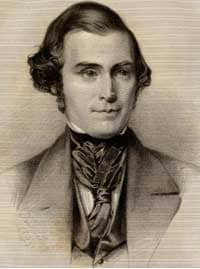 I don't want to go through all of Orson Pratt's theology. That's far too complex for a post like this and largely beside the point. Rather I wish to address some basics of the Trinity and how one can find them in Orson Pratt's thought, albeit in a rather idiosyncratic form. Also please note that I do not intend to defend Orson Pratt's theology. While he had many interesting ideas ultimately he was very philosophically naïve in his writings.
Let me start by briefly restating the orthodox doctrine of the Trinity. It is the idea of three persons in One God and One God in three persons. The persons are not reducible to one another; that is, they aren't different modes of one individual or person. Further the divine nature is what the three persons share. This divine nature is in some sense a robustness shared by the three that goes beyond merely behaving in a certain way. Now that may be an overly simplified definition but it'll do for now.
Pratt's theology was focused on the idea that there were divine attributes that exist somewhat independently of any person. His ideas were expressed in a form that seems fanciful to us. Pratt felt that what we call the Spirit (as opposed to the personage of the Holy Ghost) was a fluid that filled the universe and interpenetrated all things. Thus this Spirit was in and through all things. Further Pratt saw this fluid as free and in a sense sentient. This Spirit freely had all the attributes of "godness." When any person obeyed the Spirit and reconciled himself to it, he came to have a divine nature and they were One.
Thus the Father, the Son, and the Holy Ghost were all individual persons. Yet they were in harmony with each other and this fluid. This fluid was what enabled them to communicate with all things in the universe and also know all things in the universe. Further there was a unity such that all of them were One.
Now this ends up being the Trinity. Yes, it is cast into a very (to me) fanciful view of materialism, one that I think is demonstrably false. And yes, nearly all Trinitarians reject materialism, so they would reject Orson Pratt's theology. I'd just say that the doctrine of the Trinity proper never addresses whether God's ousia (his substance or nature) is material or not. All the thinkers in Christian history since at least Augustine definitely saw the ousia in more Platonic terms, as an immaterial substance. Further they all would have seen both the Father and the Holy Ghost as immaterial, and would see much more of Jesus as immaterial than Mormons do. But I think those are views due to additional doctrines rather than the Trinity itself.
So if Orson Pratt can be seen to have a theology of the Trinity, should we really say the Trinity is incompatible with Mormonism, especially considering the theological influence of Orson Pratt within the LDS Church?
Clark Goblestudied physics and philosophy at BYU, worked as a computer programmer and now makes award-winning chocolate. A modern renaissance man. His personal blog is Mormon Metaphysics.
Page: 2 of 2
3/24/2010 4:00:00 AM
Mormon
Sacred Texts
Christianity
Mormonism
more at patheos
1

Could you go an entire life without a word of praise?
2

The Author of Salvation or Destruction
3
Chrysostom vs. Faith Alone (vs. Lutheran Will Weedon)
4

At 68, Death Made Me More Alive: A Zen Reflection
About
Patheos Explore the world's faith through different perspectives on religion and spirituality! Patheos has the views of the prevalent religions and spiritualities of the world.
Ad-Free & Subscriber Log-In Subscription Support
- About Us
- 2026 Calendar
- Videos
- Podcasts
- Library of World Religions
- Faith In Media Tracker
- Advertise With Us
- Write for Us
- Privacy Policy
- Terms of Service
- Do Not Sell My Data
- Contact Us
- Radiant Digital
- Manage Newsletter Subscriptions
- Unsubscribe From Notifications
- Sitemap
Copyright 2008-2026, Patheos, part of the Radiant Digital network of media brands. All rights reserved.
Subscription Support Ad-Free & Subscriber Log-In
Follow Patheos