
BuddhistCatholicContemplativeEvangelicalGeneral ChristianHinduJewishLatter-day SaintMuslimNew VisionsProgressive Christian
Beliefs
- Buddhist
- Catholic
- Contemplative
- Evangelical
- General Christian
- Hindu
- Jewish
- Latter-day Saint
- More Voices
- Muslim
- New Visions
- Pagan
- Progressive Christian
Topics
- Religion News
- Food and Religion
- Sports and Religion
- Religious Art
- Religious Music and Entertainment
- Religious Events
- History and Religion
- Style and Religion
- Politics and Religion
- Women in Religion
- Recreation Outdoors and Religion
- Business Finance and Religion
- Careers Workplace and Religion
- Education and Religion
- Family Parenting and Religion
- Health Fitness and Religion
- Home and Religion
- Relationships and Religion
- Technology and Religion
- Travel and Religion
Columnists
- Buddhist Columnists
- Business Finance and Religion Columnists
- Careers Workplace and Religion Columnists
- Catholic Columnists
- Contemplative Columnists
- Education and Religion Columnists
- Evangelists Columnists
- Family Parenting and Religion Columnists
- General Christian Columnists
- Health Fitness and Religion Columnists
- Hindu Columnists
- History and Religion Columnists
- Home and Religion Columnists
- Jewish Columnists
- More Voices Columnists
- Latter Day Columnists
- Muslim Columnists
- New Visions Columnists
- Nonreligious Columnists
- Pagan Columnists
- Politics and Religion Columnists
- Progressive Columnists
- Recreation Outdoors and Religion Columnists
- Relationships and Religion Columnists
- Religion News Columnists
- Religious Art Columnists
- Religious Events Columnists
- Religious Music and Entertainment Columnists
- Sports and Religion Columnists
- Style and Religion Columnists
- Technology and Religion Columnists
- Travel and Religion Columnists
- Women in Religion Columnists
Resource Library
- 2026 Calendar
- Library of World Religions
- The 100 Most Holy Places on Earth
- Patheos Answers
- Podcasts
- Videos
- Faith Leaders Database
- Anglican Episcopalian
- Bahai
- Baptist
- Buddhism
- Christianity
- Confucianism
- Eastern Orthodoxy
- Hinduism
- Holiness and Pentecostal
- ISKCON
- Islam
- Judaism
- Lutheran
- Methodist
- The Church of Jesus Christ of Latter-day Saints
- New Age
- Paganism
- Presbytarian and Reformed
- Protestantism
- Religion Behind the Scenes
- Roman Catholic
- Scientology
- Shia Islam
- Sikhism
- Sufism
- Sunni Islam
- Taoism
- Zen
- See all religions
Research Tools
 Ad-Free & Subscriber Log-In Subscription Support
Ad-Free & Subscriber Log-In Subscription Support
Follow Patheos 

- Trending:
- Forgiveness
- |
- Marriage
- |
- Consciousness
- |
- Death Penalty
- |
- Election
- |
- Halloween
Evangelical
You Will Call, I Will Answer: An Interview with William Stuntz
February 02, 2010 by Timothy Dalrymple
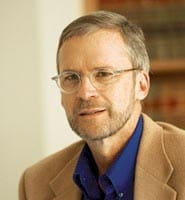 William Stuntz is a professor at Harvard Law School who has published broadly, from the Harvard Law Review to The Weekly Standard to First Things and Christianity Today. He has co-authored textbooks on criminal procedure and his Fighting Crime: Race, Crime and Democracy in America is forthcoming this year from Harvard University Press.
For all his accomplishments, Stuntz is a dearly beloved husband, father, friend, and teacher.
Yet two events in the past ten years have dramatically transformed Stuntz's life. The first came on a fateful drive on New Years Eve, 1999. Stuntz and his family were returning to Virginia from a vacation in New England when a tire burst. While attempting to change the tire, Stuntz felt an eruption of pain in his back. He put down his tools and called for help.
Help came for the car, but there would be no help for the chronic pain that began that night. Two surgeries failed to stem the tide of pain as it rose higher and higher for six years. He has likened the condition to having a blaring alarm clock taped to one's ear, with no way to lower the volume. The pain is constant and severe and will be with him for the remainder of his life.
The remainder of his life, however, would be shorter than anyone had imagined. In February of 2008, a large tumor was found in his body. Soon his doctors found numerous tumors. His cancer has metastasized and spread through his body to other organs, and he is not expected to live more than a year. He is 52.
At his office at Harvard Law School, he spoke with Patheos' Timothy Dalrymple.
Have you ever, in Christian circles, been blamed for your fate? Have you ever been told that your pain or your cancer would go away if you prayed with faith?
Yes, I have. No one has ever said straight out that I would be healed if my faith were stronger, and I think the comments that I am about to tell you about were all or almost all entirely well meaning. It's a different kind of phenomenon than the blaming I have found in doctors and nurses toward chronic pain patients. But the implication is the same.
I hear a lot of people talk about suffering in two ways. Suffering is the discipline of a loving Father -- or suffering exists solely so that God can be glorified as He removes it. Both imply some kind of blame on the part of the one who is suffering. If suffering is discipline, then I must have done something wrong to deserve discipline. If suffering exists so that God can remove it, then why has He not removed it? I must not be praying in the right way.
I do not think that my suffering is God's discipline. It's not that I am under the illusion that I deserve better than life has given me. I do not believe that. I have never believed that. But I don't believe the discipline story is consistent with a God who is eager to bless.
Yet those sorts of statements, that I would be healed if I prayed with sufficient faith, really cut me to the quick. They hurt, in part, because I was not praying for healing from my pain. After a while -- and not a very long while -- I simply could not bring myself to pray for healing anymore. Multiple times in the last decade, certainly when I was going in for my two surgeries, I had hoped and even expected that the pain would be taken away or at least diminished dramatically. For a few months, both times, the pain did go away. Then it came back -- and came back worse than before. The dashed hopes were almost unbearable. They were worse than if the pain had simply continued the whole time.
With the cancer, because of my experience with my back, I've never been able to bring myself to pray to be healed. I can deal with hurting all the time. I can deal with terminal cancer. What I cannot deal with is having the prospect that it will all be taken away dangling right before me. That, I think, is beyond my capacity.
There is a tendency that's especially strong in Calvinist circles to read Romans 8:28, "All things work together for the good," as though it says that "All things are good." I heard some of that, and that hurt me too. I am not blaming anyone else; I am sure this is more my fault than anyone else's. These are honest opinions, if (I think) probably misguided, and they were delivered by completely well-meaning people. But hearing repeatedly that suffering is discipline from a loving Father, and that my circumstances are all gift -- no curses, they are all blessings -- made me feel sometimes as though God were coming after me with a baseball bat.
Article Continued On Next Page
Page: 1 of 4
2/2/2010 5:00:00 AM
Afterlife
Evangelical
Death
Christianity
Evangelicalism
more at patheos
1

Lessons of Mercy and Patience in This Sunday's Readings
2
GFA World ‘Epicenter’ for Faith-Based Healthcare in Africa
3

The Call For Peace Amidst Unjust Warfare In Iran
4

Faith Is falling Into The Arms Of Jesus Come What May

About Timothy Dalrymple
Timothy Dalrymple is the CEO and Chief Creative Officer of Polymath Innovations, a strategic storytelling agency that advances the good with visionary organizations and brands. He leads a unique team of communicators from around North America and across the creative spectrum, serving mission-driven businesses and nonprofits who need a partner to amplify their voice and good works. Once a world-class gymnast whose career ended with a broken neck, Tim channeled his passions for faith and storytelling into his role as VP of Business Development for Patheos, helping to launch and grow the network into the world's largest religion website. He holds a Ph.D. in Religion from Harvard's Graduate School of Arts and Sciences. Tim blogs at Philosophical Fragments.
Patheos Explore the world's faith through different perspectives on religion and spirituality! Patheos has the views of the prevalent religions and spiritualities of the world.
Ad-Free & Subscriber Log-In Subscription Support
- About Us
- 2026 Calendar
- Videos
- Podcasts
- Library of World Religions
- Faith In Media Tracker
- Advertise With Us
- Write for Us
- Privacy Policy
- Terms of Service
- Do Not Sell My Data
- Contact Us
- Radiant Digital
- Manage Newsletter Subscriptions
- Unsubscribe From Notifications
- Sitemap
Copyright 2008-2026, Patheos. All rights reserved.
Subscription Support Ad-Free & Subscriber Log-In
Follow Patheos