
BuddhistCatholicContemplativeEvangelicalGeneral ChristianHinduJewishLatter-day SaintMuslimNew VisionsProgressive Christian
Beliefs
- Buddhist
- Catholic
- Contemplative
- Evangelical
- General Christian
- Hindu
- Jewish
- Latter-day Saint
- More Voices
- Muslim
- New Visions
- Pagan
- Progressive Christian
Topics
- Religion News
- Food and Religion
- Sports and Religion
- Religious Art
- Religious Music and Entertainment
- Religious Events
- History and Religion
- Style and Religion
- Politics and Religion
- Women in Religion
- Recreation Outdoors and Religion
- Business Finance and Religion
- Careers Workplace and Religion
- Education and Religion
- Family Parenting and Religion
- Health Fitness and Religion
- Home and Religion
- Relationships and Religion
- Technology and Religion
- Travel and Religion
Columnists
- Buddhist Columnists
- Business Finance and Religion Columnists
- Careers Workplace and Religion Columnists
- Catholic Columnists
- Contemplative Columnists
- Education and Religion Columnists
- Evangelists Columnists
- Family Parenting and Religion Columnists
- General Christian Columnists
- Health Fitness and Religion Columnists
- Hindu Columnists
- History and Religion Columnists
- Home and Religion Columnists
- Jewish Columnists
- More Voices Columnists
- Latter Day Columnists
- Muslim Columnists
- New Visions Columnists
- Nonreligious Columnists
- Pagan Columnists
- Politics and Religion Columnists
- Progressive Columnists
- Recreation Outdoors and Religion Columnists
- Relationships and Religion Columnists
- Religion News Columnists
- Religious Art Columnists
- Religious Events Columnists
- Religious Music and Entertainment Columnists
- Sports and Religion Columnists
- Style and Religion Columnists
- Technology and Religion Columnists
- Travel and Religion Columnists
- Women in Religion Columnists
Resource Library
- 2026 Calendar
- Library of World Religions
- The 100 Most Holy Places on Earth
- Patheos Answers
- Podcasts
- Videos
- Faith Leaders Database
- Anglican Episcopalian
- Bahai
- Baptist
- Buddhism
- Christianity
- Confucianism
- Eastern Orthodoxy
- Hinduism
- Holiness and Pentecostal
- ISKCON
- Islam
- Judaism
- Lutheran
- Methodist
- The Church of Jesus Christ of Latter-day Saints
- New Age
- Paganism
- Presbytarian and Reformed
- Protestantism
- Religion Behind the Scenes
- Roman Catholic
- Scientology
- Shia Islam
- Sikhism
- Sufism
- Sunni Islam
- Taoism
- Zen
- See all religions
Research Tools
 Ad-Free & Subscriber Log-In Subscription Support
Ad-Free & Subscriber Log-In Subscription Support
Follow Patheos 

- Trending:
- Forgiveness
- |
- Marriage
- |
- Consciousness
- |
- Death Penalty
- |
- Election
- |
- Halloween
Evangelical
A Day of Dust, Ashes and Hope
February 18, 2010 by Mark Roberts
 Genesis 3:19:
By the sweat of your brow
will you have food to eat
until you return to the ground
from which you were made.
For you were made from dust,
and to dust you will return.
Yesterday was Ash Wednesday, a day many Christians set aside as a special day. It is a day to remember our humanness and mortality. It is a day to begin the season of Lent, a period of reflection, penitence, and preparation for Easter.
Some Christians do not recognize Ash Wednesday or Lent, which is just fine. Nothing in Scripture requires acknowledgement of these special days. In fact, I grew up with almost no awareness of either Ash Wednesday or Lent, even though I was raised in a strong Christian family and church. Ash Wednesday and Lent were for my Catholic friends, or so I thought.
But, almost two decades ago, I found myself as the senior pastor of a Presbyterian church that did recognize Ash Wednesday and Lent. In fact, Irvine Presbyterian Church sponsored an Ash Wednesday service, complete with the imposition of ashes (placing ashes on people's foreheads). So I quickly had to learn something about this holy day, since I was expected to lead the service.
I discovered that there is a wide array of Ash Wednesday traditions and practices. But the central meaning of these has to do with our humanness, mortality, weakness, and fallenness. When church leaders place ashes on people's foreheads, they usually say something like, "From dust you were made, and to dust you will return." This is a quotation from Genesis 3:19, a verse where God delivered to Adam the bad news of what his sin had brought about. Whereas Adam once enjoyed the reality of deathless life in God's perfect creation, now his body would die. In time, he would return to the dust from which he was made.
This was bad news for Adam. And it is bad news for us. Like Adam, we have come from dust, and to dust we will return. Throughout our lives, our dusty bodies remind us of our mortality when they get sick, or when they work imperfectly, or when they age, or when they stop working altogether. Often, our bodies are the instruments of sin, rather than of God-honoring work and worship.
Of course many good things come from our bodies, including new human life, fulfilling work, loving embraces, and acts of charity. The inherent goodness of our bodies has not been obliterated by sin, though it has been tarnished and twisted.
So Ash Wednesday begins with bad news. It invites us into a time of extended contemplation and contrition, as we consider during Lent just how much we need One to save us from our sin.
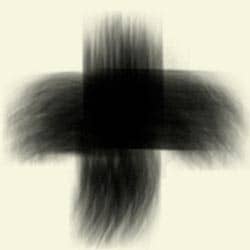
But Ash Wednesday also signifies hope. The ashes that are imposed on our heads form the shape of a cross. Sometimes these crosses are obvious, sometimes more subtle. But the very stuff that symbolizes our mortality and sin also alludes to that which will set us free. It reminds us that God has entered into our human condition in order to break the power of sin and welcome us into the fullness of his life.
Yet Ash Wednesday is not Good Friday. It is not a day to focus on the cross so much as a time to begin to realize just how much we need the cross.
This will be my eighteenth year recognizing Ash Wednesday. Though I no longer lead the services at Irvine Presbyterian Church, I do participate in an Ash Wednesday service at my new church in Boerne, Texas. Like millions of Christians throughout the world, I am reminded of my mortality. I have come from dust, and to dust I shall return. Thanks be to God, this is not the end of the story, but just the beginning, because God himself entered into my dustiness in Jesus Christ.
Questions for Reflection
How have you experienced Ash Wednesday in your life, if at all? How have you been reminded of your mortality, your "dustiness"? Do you think it's a good thing for Christians to focus on our mortality? Why or why not?
Prayer
Gracious God, you created this world as a thing of beauty and perfection. Indeed, you made human beings in your own image. Yet we have tarnished that image through our sin. We have corrupted both ourselves and our world. We are mortals who will die. We are sinners in need of a savior.
O Lord, I experience my "dustiness" in so many different ways. Usually I try to ignore it, or I complain about it. But, today, I am letting the fact of my mortality sink in. I am reminded of how much I need to be saved and set free. I am reminded of how much I need you!
As we begin the season of Lent, may this be, indeed, a time for me to grow in my relationship with you. May I be unafraid to look at myself honestly, especially at those parts of my life that are all too "dusty." May I turn to you in this season in a special way, so that I might be prepared to celebrate the amazing news of Good Friday and Easter.
All praise be to you, O God, because you have not abandoned me in my mortality. All praise be to you for the hope that you give. Amen.
2/18/2010 5:00:00 AM
Evangelical
Devotionals
Christianity
Evangelicalism
more at patheos
1

2

Trump's Gaza Reconstruction Plan Is on Track
3

Chasing Your Adult Child Can Backfire
4


About Mark Roberts
Mark D. Roberts is Senior Director and Scholar-in-Residence for Laity Lodge, a retreat and renewal ministry in Texas. He blogs at Patheos and writes daily devotionals at www.thehighcalling.org, and he can also be followed through Twitter and Facebook.
Patheos Explore the world's faith through different perspectives on religion and spirituality! Patheos has the views of the prevalent religions and spiritualities of the world.
Ad-Free & Subscriber Log-In Subscription Support
- About Us
- 2026 Calendar
- Videos
- Podcasts
- Library of World Religions
- Faith In Media Tracker
- Advertise With Us
- Write for Us
- Privacy Policy
- Terms of Service
- Do Not Sell My Data
- Contact Us
- Radiant Digital
- Manage Newsletter Subscriptions
- Unsubscribe From Notifications
- Sitemap
Copyright 2008-2026, Patheos. All rights reserved.
Subscription Support Ad-Free & Subscriber Log-In
Follow Patheos