
BuddhistCatholicContemplativeEvangelicalGeneral ChristianHinduJewishLatter-day SaintMuslimNew VisionsProgressive Christian
Beliefs
- Buddhist
- Catholic
- Contemplative
- Evangelical
- General Christian
- Hindu
- Jewish
- Latter-day Saint
- More Voices
- Muslim
- New Visions
- Pagan
- Progressive Christian
Topics
- Religion News
- Food and Religion
- Sports and Religion
- Religious Art
- Religious Music and Entertainment
- Religious Events
- History and Religion
- Style and Religion
- Politics and Religion
- Women in Religion
- Recreation Outdoors and Religion
- Business Finance and Religion
- Careers Workplace and Religion
- Education and Religion
- Family Parenting and Religion
- Health Fitness and Religion
- Home and Religion
- Relationships and Religion
- Technology and Religion
- Travel and Religion
Columnists
- Buddhist Columnists
- Business Finance and Religion Columnists
- Careers Workplace and Religion Columnists
- Catholic Columnists
- Contemplative Columnists
- Education and Religion Columnists
- Evangelists Columnists
- Family Parenting and Religion Columnists
- General Christian Columnists
- Health Fitness and Religion Columnists
- Hindu Columnists
- History and Religion Columnists
- Home and Religion Columnists
- Jewish Columnists
- More Voices Columnists
- Latter Day Columnists
- Muslim Columnists
- New Visions Columnists
- Nonreligious Columnists
- Pagan Columnists
- Politics and Religion Columnists
- Progressive Columnists
- Recreation Outdoors and Religion Columnists
- Relationships and Religion Columnists
- Religion News Columnists
- Religious Art Columnists
- Religious Events Columnists
- Religious Music and Entertainment Columnists
- Sports and Religion Columnists
- Style and Religion Columnists
- Technology and Religion Columnists
- Travel and Religion Columnists
- Women in Religion Columnists
Resource Library
- 2026 Calendar
- Library of World Religions
- The 100 Most Holy Places on Earth
- Patheos Answers
- Podcasts
- Videos
- Faith Leaders Database
- Anglican Episcopalian
- Bahai
- Baptist
- Buddhism
- Christianity
- Confucianism
- Eastern Orthodoxy
- Hinduism
- Holiness and Pentecostal
- ISKCON
- Islam
- Judaism
- Lutheran
- Methodist
- The Church of Jesus Christ of Latter-day Saints
- New Age
- Paganism
- Presbytarian and Reformed
- Protestantism
- Religion Behind the Scenes
- Roman Catholic
- Scientology
- Shia Islam
- Sikhism
- Sufism
- Sunni Islam
- Taoism
- Zen
- See all religions
Research Tools
 Ad-Free & Subscriber Log-In Subscription Support
Ad-Free & Subscriber Log-In Subscription Support
Follow Patheos 

- Trending:
- Forgiveness
- |
- Marriage
- |
- Consciousness
- |
- Death Penalty
- |
- Election
- |
- Halloween
Buddhism and Abortion
August 06, 2009
 By Damien Keown
The Buddhist belief in rebirth introduces a new dimension to the abortion debate. For one thing, it puts the question “When does life begin?” in an entirely new light. For Buddhism, life is a continuum with no discernible starting point. Birth and death are like a revolving door through which an individual passes again and again. But does belief in rebirth increase or reduce the seriousness of abortion? It may be thought that it reduces it, since all that has been done is to postpone rebirth to a later time—the child that was to have been born simply arrives later. Traditional sources, however, do not take this view, and regard the intentional killing of a human being at any stage of life as wrong, regardless of the fact that he or she will be born again.
Although in one sense life is a continuum, Buddhism also believes that each life as an embodied individual has a clear beginning and end. From the earliest times Buddhist sources have been quite clear that individual human life begins at conception, a view widely shared in contemporary Buddhist societies. The ancient authorities, of course, had an imperfect knowledge of embryology, particularly concerning conception, but their understanding of fetal development as a gradual process with a definite starting point was not very different from that of modern science. Interpreting the traditional teachings in the light of modern scientific discoveries such as ovulation, the view of most traditional Buddhists today is that fertilization is the point at which individual human life commences. As a consequence of this they regard abortion as contrary to the First Precept.
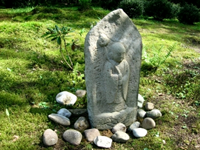
Paradoxically, despite the clear anti-abortion position in textual sources, in Buddhist countries abortions are common. In Thailand (where abortion is illegal) there are something like 27 abortions per 1,000 women of childbearing age, which compares with 24 in the United States. Abortion rates have also been extremely high in Japan and South Korea. In Japan, an efficient (and profitable) abortion industry has emerged to deal with the problem of unwanted pregnancies, and a special ritual known as the mizuko kuyo memorial service has evolved. Although only ever resorted to by a minority of women who had abortions or miscarriages, the ritual became extremely popular in the 1960s and 70s, since which time its popularity has declined. The mizuko kuyo service is generally a simple one in which a small figure of the bodhisattva Jizo represents the departed child. Jizo is a popular bodhisattva in Japan who is regarded as the protector of young children, and statues and shrines to him are found throughout Japan. He is shown dressed in the robes of a monk carrying a staff with six rings on it, which jingle like a child’s rattle.
The majority of Buddhist organisations in Japan do not endorse mizuko kuyo, regarding it as a modern innovation based on questionable theology and lacking any basis in the sutras. One of the largest Buddhist organisations in Japan, the Jodo Shinshu, actively opposes the rite for this reason, pointing out that according to orthodox Buddhist teachings a ritual cannot wipe away the bad karma caused by an abortion. The more unscrupulous temples in Japan have also sometimes exploited the ritual commercially, promoting the idea of tatari, or retribution from departed spirits. Undoubtedly, many temples saw the ritual simply as a money-making scheme and ruthlessly exploited vulnerable women.
Opposition on the part of the Jodo Shinshu and others, however, has not taken a political form, and Japanese Buddhists have not campaigned to change the law on abortion or sought to influence the practice of the medical profession. Japan has not seen the kinds of attacks on abortion clinics and their personnel which have taken place in the United States. This approach is in line with the non-judgemental stance that Buddhism traditionally adopts on moral issues. Buddhism is also renowned for its benevolence, toleration and compassion. It recognises that the pressures and complexities of daily life can cloud judgment and lead people to make wrong choices. The appropriate response in these cases, however, is compassion and understanding rather than vociferous condemnation.
Article Continued On Next Page
Page: 1 of 2
8/6/2009 4:00:00 AM
Abortion
Adoption
Ethics
Society
Buddhism
more at patheos
1

The Kingdom of God is Taken by Violence
2

Recovering Moral Vision Between Shame and Shamelessness
3

From Ledger to Love: The Evolution of the Divine Image
4

War, Hatred, and Holy Days: Finding Faith in the Chaos
About
Patheos Explore the world's faith through different perspectives on religion and spirituality! Patheos has the views of the prevalent religions and spiritualities of the world.
Ad-Free & Subscriber Log-In Subscription Support
- About Us
- 2026 Calendar
- Videos
- Podcasts
- Library of World Religions
- Faith In Media Tracker
- Advertise With Us
- Write for Us
- Privacy Policy
- Terms of Service
- Do Not Sell My Data
- Contact Us
- Radiant Digital
- Manage Newsletter Subscriptions
- Unsubscribe From Notifications
- Sitemap
Copyright 2008-2026, Patheos. All rights reserved.
Subscription Support Ad-Free & Subscriber Log-In
Follow Patheos