
BuddhistCatholicContemplativeEvangelicalGeneral ChristianHinduJewishLatter-day SaintMuslimNew VisionsProgressive Christian
Beliefs
- Buddhist
- Catholic
- Contemplative
- Evangelical
- General Christian
- Hindu
- Jewish
- Latter-day Saint
- More Voices
- Muslim
- New Visions
- Pagan
- Progressive Christian
Topics
- Religion News
- Food and Religion
- Sports and Religion
- Religious Art
- Religious Music and Entertainment
- Religious Events
- History and Religion
- Style and Religion
- Politics and Religion
- Women in Religion
- Recreation Outdoors and Religion
- Business Finance and Religion
- Careers Workplace and Religion
- Education and Religion
- Family Parenting and Religion
- Health Fitness and Religion
- Home and Religion
- Relationships and Religion
- Technology and Religion
- Travel and Religion
Columnists
- Buddhist Columnists
- Business Finance and Religion Columnists
- Careers Workplace and Religion Columnists
- Catholic Columnists
- Contemplative Columnists
- Education and Religion Columnists
- Evangelists Columnists
- Family Parenting and Religion Columnists
- General Christian Columnists
- Health Fitness and Religion Columnists
- Hindu Columnists
- History and Religion Columnists
- Home and Religion Columnists
- Jewish Columnists
- More Voices Columnists
- Latter Day Columnists
- Muslim Columnists
- New Visions Columnists
- Nonreligious Columnists
- Pagan Columnists
- Politics and Religion Columnists
- Progressive Columnists
- Recreation Outdoors and Religion Columnists
- Relationships and Religion Columnists
- Religion News Columnists
- Religious Art Columnists
- Religious Events Columnists
- Religious Music and Entertainment Columnists
- Sports and Religion Columnists
- Style and Religion Columnists
- Technology and Religion Columnists
- Travel and Religion Columnists
- Women in Religion Columnists
Resource Library
- 2026 Calendar
- Library of World Religions
- The 100 Most Holy Places on Earth
- Patheos Answers
- Podcasts
- Videos
- Faith Leaders Database
- Anglican Episcopalian
- Bahai
- Baptist
- Buddhism
- Christianity
- Confucianism
- Eastern Orthodoxy
- Hinduism
- Holiness and Pentecostal
- ISKCON
- Islam
- Judaism
- Lutheran
- Methodist
- The Church of Jesus Christ of Latter-day Saints
- New Age
- Paganism
- Presbytarian and Reformed
- Protestantism
- Religion Behind the Scenes
- Roman Catholic
- Scientology
- Shia Islam
- Sikhism
- Sufism
- Sunni Islam
- Taoism
- Zen
- See all religions
Research Tools
 Ad-Free & Subscriber Log-In Subscription Support
Follow Patheos 

- Trending:
- Advent
- |
- Forgiveness
- |
- Thanksgiving
- |
- Election
- |
- Seasonal Holidays
- |
- Marriage
Progressive Christian
The Lone Ranger's Missing Virtue
July 11, 2013 by Frederick Schmidt
I love films. I enjoy seeing the interplay of media come together in the best of them: the script, the music, the acting, and the visual elements. It's all there. When my schedule doesn't allow me to read for enjoyment, they tell a story in a compact period of time.
I also have wide-ranging interests. I enjoy existentially and intellectually challenging movies, but I can be drawn into science fiction and action films. In fact, truth be told, I can turn the critical apparatus off and just enjoy a film as long as it isn't ham-fisted, unendurably stupid, or filled with bathroom humor and pratfalls.
Lately, though, I've been increasingly troubled by what appear to be trends in the film industry:
- A lack of historical perspective that allows for slipshod "mashups" of events that do not belong in the same plot line..
- Gratuitous violence—implied or explicit—that no longer confines itself to movies that scream, "adult only."
- Action scenes that violate all concept of what it means to be vulnerable and human, suggesting that the body can endure abuse that, in fact, it cannot endure.
- A blending of comedy and real-life tragedy that trivializes the latter and moves from tragedy to tragedy as if none of it has enduring consequences.
- A penchant for secular apocalypse that feeds a lack of moral responsibility for the world around us.
All five trends have been on display this summer: Paramount's "World War Z" covered most of the bases. Disney's "The Lone Ranger" bowed to most of them as well. Neither is hardly new in advancing these trends and, judging from the previews, there are more to come.
I write about this with some fear and trepidation, because it seems to me that—for as long as I can remember—critiquing the social messages of the films we make and view has been the stock in trade of columns of this kind. The criticisms seem to do little to advance the conversation and they feel like the complaints of prudes who have little to do but "mom" our culture. But I think that we are in a very different place than we once were.
As far as mainstream movie making is concerned, for decades the conversation was about what we could put on the screen. Those days are gone. The absolute prohibitions have eroded in the face of the sexual revolution and the explorations of violence long ago passed any definable boundary. Now the questions are, "Why and to what end?"
Of course, the answer to that question can't be given in simple black and white terms. That is why the old complaints about what could or couldn't be put on the screen were so easily dismissed. For every bald, blatant indulgence in pornography there was a storyline that justified dealing more explicitly with sex or violence. What both sides missed in the early debates and what is completely missing now is any sense of chastity, that ancient and often misunderstood spiritual virtue. Chastity is not about abstinence, whatever dictionaries may suggest. It is about a restrained, wise, and thoughtful use of our bodies and our art that honors the lives that we have been given and the world in which we live.
The problem with a lot of film making today is not any individual trend that I've listed above. It is, instead, the near complete absence of that kind of thoughtful restraint. The movies we are making now scream at us, either in over-preening self-sufficiency or in spectacular, world-ending self-immolation. It's often not clear why a particular moment of sexual abuse or destructive violence appears in a film apart from its shock value and the fact that it is now technologically possible to portray it.
What is also disturbing is the attitude of some filmmakers and actors in all of this. Far too many resolutely refuse to reflect on the boundaries surrounding their work and they take refuge in the notion that they are "just entertainers." And, yet, the United States has no larger concentration of self-appointed social architects than does Hollywood, California. It is nothing short of hypocrisy for actors, filmmakers, and the people who finance them to tell us how to live and, at the same time, make a fortune by making movies about the consequence-free destruction of life, limb, and planet.
Integrity, if not chastity, ought to force the worst abusers of their art to surrender their claims to do one or the other. If they refuse to exercise better judgment in the execution of their craft, then perhaps those of us who go to the movies will need to help them. That certainly appears to be the trend with the audience's response to "The Lone Ranger." The film will never recover the investment made in it (at least at the box office) and rightly so. After a lackluster opening, one of the film's makers mused that it's hard to know what went wrong with a movie that was so conscientiously designed to appeal to viewers of all ages.
Article Continued On Next Page
Page: 1 of 2
12/2/2022 9:10:34 PM
Progressive Christian
The Spiritual Landscape
Progressive Christianity
Christianity
more at patheos
1
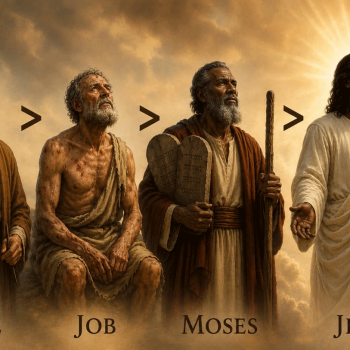
Why Most Christians are Really Paulians and Jobians
2

How Should We ‘Use’ Early Christians?
3

Ella Langley’s Dandelion Review: Top of the Country
4

Mrs. Harris goes to Paris... and on to heaven

About Frederick Schmidt
Frederick W. Schmidt is the author of The Dave Test: A Raw Look at Real Life in Hard Times (Abingdon Press: 2013) and several other books, including A Still Small Voice: Women, Ordination and the Church (Syracuse University Press, 1998), The Changing Face of God (Morehouse, 2000), When Suffering Persists (Morehouse, 2001), in Italian translation: Sofferenza, All ricerca di una riposta (Torino: Claudiana, 2004), What God Wants for Your Life (Harper, 2005), Conversations with Scripture: Revelation (Morehouse, 2005) and Conversations with Scripture: Luke (Morehouse, 2009). He holds the Rueben P. Job Chair in Spiritual Formation at Garrett-Evangelical Theological Seminary in Evanston, IL, and directs the Job Institute for Spiritual formation. He is an Episcopal Priest, spiritual director, retreat facilitator, conference leader, writer, and Consulting Editor at Church Publishing in New York. He and his wife, Natalie live in Chicago, Illinois. He can also be reached at: http://frederickwschmidt.com/
Patheos Explore the world's faith through different perspectives on religion and spirituality! Patheos has the views of the prevalent religions and spiritualities of the world.
Ad-Free & Subscriber Log-In Subscription Support
- About Us
- 2026 Calendar
- Videos
- Podcasts
- Library of World Religions
- Faith In Media Tracker
- Advertise With Us
- Write for Us
- Privacy Policy
- Terms of Service
- Do Not Sell My Data
- Contact Us
- Radiant Digital
- Manage Newsletter Subscriptions
- Unsubscribe From Notifications
- Sitemap
Copyright 2008-2026, Patheos, part of the Radiant Digital network of media brands. All rights reserved.
Subscription Support Ad-Free & Subscriber Log-In
Follow Patheos