
BuddhistCatholicContemplativeEvangelicalGeneral ChristianHinduJewishLatter-day SaintMuslimNew VisionsProgressive Christian
Beliefs
- Buddhist
- Catholic
- Contemplative
- Evangelical
- General Christian
- Hindu
- Jewish
- Latter-day Saint
- More Voices
- Muslim
- New Visions
- Pagan
- Progressive Christian
Topics
- Religion News
- Food and Religion
- Sports and Religion
- Religious Art
- Religious Music and Entertainment
- Religious Events
- History and Religion
- Style and Religion
- Politics and Religion
- Women in Religion
- Recreation Outdoors and Religion
- Business Finance and Religion
- Careers Workplace and Religion
- Education and Religion
- Family Parenting and Religion
- Health Fitness and Religion
- Home and Religion
- Relationships and Religion
- Technology and Religion
- Travel and Religion
Columnists
- Buddhist Columnists
- Business Finance and Religion Columnists
- Careers Workplace and Religion Columnists
- Catholic Columnists
- Contemplative Columnists
- Education and Religion Columnists
- Evangelists Columnists
- Family Parenting and Religion Columnists
- General Christian Columnists
- Health Fitness and Religion Columnists
- Hindu Columnists
- History and Religion Columnists
- Home and Religion Columnists
- Jewish Columnists
- More Voices Columnists
- Latter Day Columnists
- Muslim Columnists
- New Visions Columnists
- Nonreligious Columnists
- Pagan Columnists
- Politics and Religion Columnists
- Progressive Columnists
- Recreation Outdoors and Religion Columnists
- Relationships and Religion Columnists
- Religion News Columnists
- Religious Art Columnists
- Religious Events Columnists
- Religious Music and Entertainment Columnists
- Sports and Religion Columnists
- Style and Religion Columnists
- Technology and Religion Columnists
- Travel and Religion Columnists
- Women in Religion Columnists
Resource Library
- 2026 Calendar
- Library of World Religions
- The 100 Most Holy Places on Earth
- Patheos Answers
- Podcasts
- Videos
- Faith Leaders Database
- Anglican Episcopalian
- Bahai
- Baptist
- Buddhism
- Christianity
- Confucianism
- Eastern Orthodoxy
- Hinduism
- Holiness and Pentecostal
- ISKCON
- Islam
- Judaism
- Lutheran
- Methodist
- The Church of Jesus Christ of Latter-day Saints
- New Age
- Paganism
- Presbytarian and Reformed
- Protestantism
- Religion Behind the Scenes
- Roman Catholic
- Scientology
- Shia Islam
- Sikhism
- Sufism
- Sunni Islam
- Taoism
- Zen
- See all religions
Research Tools
 Ad-Free & Subscriber Log-In Subscription Support
Ad-Free & Subscriber Log-In Subscription Support
Follow Patheos 

- Trending:
- Forgiveness
- |
- Marriage
- |
- Consciousness
- |
- Death Penalty
- |
- Election
- |
- Halloween
Progressive Christian
The Journey Is Not the Thing
November 19, 2012 by Jonathan Fitzgerald
Years ago, over my first college Christmas break, I was chatting with one of my new school friends over instant messenger. I don't remember much of the conversation; it was probably a lot of "how's your break going so far," and so on. But I do remember that out of nowhere it seemed, with the kind of surprising abruptness that any sentence can have when chatting online, he asked, "So, how's your walk?"
This is a funny phrase, to be sure, but I knew exactly what he meant. Amidst the small talk we'd been carrying on, he suddenly asked the deepest of questions. He was looking for a status report on my life-long faith journey. And I had no idea how to answer him.
I thought of this story recently as I was reading Matt Litton's book Holy Nomad: The Rugged Road to Joy. Litton picks up the popular metaphor of the Christian faith as a journey, but goes further to actually work out what that means for our lives. A journeyer, a nomad to use Litton's vocabulary, is always on the move. Maybe this seems obvious, but that's not actually how most of us think of our faith journeys. It's certainly not how my friend was thinking about it or he wouldn't have asked for a snap update in the midst of a shallow online conversation.
That kind of question, asked in that way, ignores the crucial fact of the journey that I was still on it, still moving. And my answer to him that day reflected that truth. I answered in the only way I could think to: "How's my walk? Well, I'm still walking."
But even once we recognize that being on a faith journey means that we necessarily keep moving, the next question, and a question Litton gives considerable attention to, is where are we coming from, and perhaps even more importantly, where are we going?
To answer this, Litton has to distinguish between popular culture's conception of a nomad and the kind of biblical nomad he's characterizing. Nomads in popular culture—he offers us Caine from "Kung Fu," Mad Max, and Kerouac, among others—are typically running from something just as much as they're running toward something. But this is "the first in a long line of differences between society's conception of a nomad," and Litton's characterization.
And then Litton gets to the crucial difference between the popular conception of a nomad and the biblical model he sets forth. In the popular mind, the nomad's journey is the thing. It's journeying for the sake of the journey. Not so for the Holy Nomad, writes Litton. The road is not what makes journeying special, but the various destinations along the way.
This brought to mind another college memory, a kind of capstone experience to that question asked years earlier. When I was a senior, I decided to spend my spring break traveling across the country via Amtrak train. The rest of my friends were heading to Florida, and (no offense to any Floridians reading) I really don't like Florida all that much. And, of course, being twenty-one years old, my decision to see the country via the rails was in no small way inspired by my extensive reading of Beat writers.
I thought, incorrectly, that just being out there, on the train, and watching the scenery fly by outside my window would be the most amazing part of my trip. I imagined all the writing I'd do from my seat (I couldn't afford a sleeper cabin), taking breaks in the smoking car, eating dinner in the bar car. It seemed perfect.
Until I actually got on the train. The seats were uncomfortable and I was surrounded, for most of the trip, by screaming children whose parents gave up on trying to keep them seated. The smoking car was filled with old, paranoid types who opted for the train not for the romance but because, two years after 9/11/2001, they still didn't trust air travel. I couldn't sleep. I couldn't write. The journey was certainly not the thing.
But when I planned the trip, I scheduled stop-overs in Chicago and Denver, before reaching San Francisco where I'd meet a friend and stay for a few nights before getting back on the train and heading straight back to Boston. These stops were where the magic of the journey happened. In Chicago I shared a meal with a friend and his family and watched as that city prepared for its famous St. Patrick's Day celebration, which I missed by a matter of hours. In Denver, I was given a free room in a beautiful old bed and breakfast in a neighborhood located just a short walk from downtown (my parents, not happy with my plan to "figure it out when I get there" used their connections as inn owners to secure this). And in San Francisco, I was so happy to have arrived that I cancelled my train trip home, stayed on a bit longer, drove with my friend down the coast and, at the last possible moment before school resumed, finally flew back to Boston.
Article Continued On Next Page
Page: 1 of 2
12/2/2022 9:10:34 PM
Progressive Christian
Spirituality
Book Club
In Progress
Journey
Progressive Christianity
Sacred Texts
Christianity
more at patheos
1

The Fall of the American Gideon
2

Break the Negative Patterns That Keep You in a Rut
3
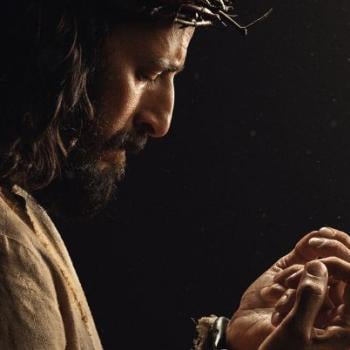
WATCH: New 'The Chosen' Trailer Depicts Final Hours of Jesus
4

Trump's Desperate Moves Before Mid-Term Election Are Hurting

About Jonathan Fitzgerald
Jonathan D. Fitzgerald is the managing editor of Patrolmag.com, and writes on the various manifestations of Christianity in culture. Follow him on Twitter or at his website, www.jonathandfitzgerald.com.
Patheos Explore the world's faith through different perspectives on religion and spirituality! Patheos has the views of the prevalent religions and spiritualities of the world.
Ad-Free & Subscriber Log-In Subscription Support
- About Us
- 2026 Calendar
- Videos
- Podcasts
- Library of World Religions
- Faith In Media Tracker
- Advertise With Us
- Write for Us
- Privacy Policy
- Terms of Service
- Do Not Sell My Data
- Contact Us
- Radiant Digital
- Manage Newsletter Subscriptions
- Unsubscribe From Notifications
- Sitemap
Copyright 2008-2026, Patheos. All rights reserved.
Subscription Support Ad-Free & Subscriber Log-In
Follow Patheos