
BuddhistCatholicContemplativeEvangelicalGeneral ChristianHinduJewishLatter-day SaintMuslimNew VisionsProgressive Christian
Beliefs
- Buddhist
- Catholic
- Contemplative
- Evangelical
- General Christian
- Hindu
- Jewish
- Latter-day Saint
- More Voices
- Muslim
- New Visions
- Pagan
- Progressive Christian
Topics
- Religion News
- Food and Religion
- Sports and Religion
- Religious Art
- Religious Music and Entertainment
- Religious Events
- History and Religion
- Style and Religion
- Politics and Religion
- Women in Religion
- Recreation Outdoors and Religion
- Business Finance and Religion
- Careers Workplace and Religion
- Education and Religion
- Family Parenting and Religion
- Health Fitness and Religion
- Home and Religion
- Relationships and Religion
- Technology and Religion
- Travel and Religion
Columnists
- Buddhist Columnists
- Business Finance and Religion Columnists
- Careers Workplace and Religion Columnists
- Catholic Columnists
- Contemplative Columnists
- Education and Religion Columnists
- Evangelists Columnists
- Family Parenting and Religion Columnists
- General Christian Columnists
- Health Fitness and Religion Columnists
- Hindu Columnists
- History and Religion Columnists
- Home and Religion Columnists
- Jewish Columnists
- More Voices Columnists
- Latter Day Columnists
- Muslim Columnists
- New Visions Columnists
- Nonreligious Columnists
- Pagan Columnists
- Politics and Religion Columnists
- Progressive Columnists
- Recreation Outdoors and Religion Columnists
- Relationships and Religion Columnists
- Religion News Columnists
- Religious Art Columnists
- Religious Events Columnists
- Religious Music and Entertainment Columnists
- Sports and Religion Columnists
- Style and Religion Columnists
- Technology and Religion Columnists
- Travel and Religion Columnists
- Women in Religion Columnists
Resource Library
- 2026 Calendar
- Library of World Religions
- The 100 Most Holy Places on Earth
- Patheos Answers
- Podcasts
- Videos
- Faith Leaders Database
- Anglican Episcopalian
- Bahai
- Baptist
- Buddhism
- Christianity
- Confucianism
- Eastern Orthodoxy
- Hinduism
- Holiness and Pentecostal
- ISKCON
- Islam
- Judaism
- Lutheran
- Methodist
- The Church of Jesus Christ of Latter-day Saints
- New Age
- Paganism
- Presbytarian and Reformed
- Protestantism
- Religion Behind the Scenes
- Roman Catholic
- Scientology
- Shia Islam
- Sikhism
- Sufism
- Sunni Islam
- Taoism
- Zen
- See all religions
Research Tools
 Ad-Free & Subscriber Log-In Subscription Support
Ad-Free & Subscriber Log-In Subscription Support
Follow Patheos 

- Trending:
- Forgiveness
- |
- Marriage
- |
- Consciousness
- |
- Death Penalty
- |
- Election
- |
- Halloween
Progressive Christian
Inspiring Hope: Top Spirituality & Culture Picks 2012
December 18, 2012 by Greg Garrett
Mumford and Sons, Babel
It entered the charts at Number One in the States, Britain, and Canada, and while it didn't chart a new musical direction for the popular folkies from London, it didn't need to. By turns rousing and musing, Babel explores love, life, and faith; and while it's hard to tease out a coherent theological vision—Rolling Stone's Will Hermes writes that "Babel is full of all manner of religious shoptalk, with Biblical metaphors swirling like detritus in a Christopher Nolan film"—the individual moments and the whole offer powerful lessons. Lead singer Marcus Mumford, the son of prominent British evangelical Christians, has written another set of songs informed by the language of spirit, songs about sin, repentance, forgiveness, and redemption, and whether we hear them as secular or spiritual songs, they offer us wisdom. In "Holland Road," perhaps a story about a break up, the Mumfords offer us haunting lines about loss and hope:
But I'll still believe, though there's cracks you'll see,
When I'm on my knees, I'll still believe,
And when I've hit the ground, neither lost nor found,
If you'll believe in me, I'll still believe
In the first single, "I Will Wait," we don't know whether it is a girl or God referenced in the line "Well you forgave and I won't forget," but in a sense, it doesn't matter. As has been said of U2, you can hear these as love songs to a human being, or to a Supreme Being. The band invites us to spiritual encounter, whether in the title track ("Cause I know my weakness, know my voice/I'll believe in grace and choice") or in songs like "Ghosts that We Knew," which asks "Give me hope in the darkness that I will see the light." Hope in the darkness is a huge thing to proffer; this band does so in music that engages and uplifts, and I am grateful.
Peyton Manning/Robert Griffin III
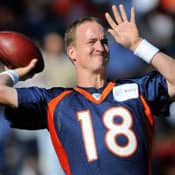
Pro football is the most popular sport in America, and despite a year littered with debris—a tragic murder/suicide, a scandal centered on a bounty program run by the New Orleans Saints targeting opposing quarterbacks, and a continuing stream of bad news about concussions and their long term health effects—two of the most compelling storylines in the NFL are Peyton Manning's Denver comeback from neck surgery and the ascendancy of the Washington Redskin's Robert Griffin III. Manning, long an iconic figure in the game, missed the entire 2011 season and was released by the Colts, who feared he might never return or might be substantially diminished if he did. All Manning has done with his new team, the Broncos, is to lead them to dramatic victories, a division title, and to what The Sporting News calls "the best season of his illustrious Hall of Fame career." Meanwhile, as of this writing, Griffin's jersey is the most-purchased in America, and the press coverage is never-ending, both within and outside the Beltway. A few games ago, when it looked as though the Redskins were completely out of the playoff picture, Griffin urged his teammates to believe that they could achieve something memorable together—and despite the odds, they have ridden Griffin and a newly-tenacious defense into playoff contention. When weighed against all the storylines of greed, violence, and dysfunction in our culture in particular and in sports in particular, these two players offer inspiration through their embodiment of hard work and hope.
:::page break:::
Page: 2 of 2
12/2/2022 9:10:33 PM
Progressive Christian
Faithful Citizenship
Media
Movies
Music
Pop Culture
Progressive Christianity
Spirituality
Sports
Christianity
more at patheos
1

Some notes on the archaeology of the Bible
2
What does it mean to be “dead to the Law”?
3

My Engagements With World Religions: Reflections (Two)
4

You Are Enough – The Spiritual Practice of You

About Greg Garrett
Greg Garrett is (according to BBC Radio) one of America's leading voices on religion and culture. He is the author or co-author of over twenty books of fiction, theology, cultural criticism, and spiritual autobiography. His most recent books are The Prodigal, written with the legendary Brennan Manning, Entertaining Judgment: The Afterlife in Popular Imagination, and My Church Is Not Dying: Episcopalians in the 21st Century. A contributor to Patheos since 2010, Greg also writes for the Huffington Post, Salon.com, OnFaith, The Tablet, Reform, and other web and print publications in the US and UK.
Patheos Explore the world's faith through different perspectives on religion and spirituality! Patheos has the views of the prevalent religions and spiritualities of the world.
Ad-Free & Subscriber Log-In Subscription Support
- About Us
- 2026 Calendar
- Videos
- Podcasts
- Library of World Religions
- Faith In Media Tracker
- Advertise With Us
- Write for Us
- Privacy Policy
- Terms of Service
- Do Not Sell My Data
- Contact Us
- Radiant Digital
- Manage Newsletter Subscriptions
- Unsubscribe From Notifications
- Sitemap
Copyright 2008-2026, Patheos. All rights reserved.
Subscription Support Ad-Free & Subscriber Log-In
Follow Patheos