
BuddhistCatholicContemplativeEvangelicalGeneral ChristianHinduJewishLatter-day SaintMuslimNew VisionsProgressive Christian
Beliefs
- Buddhist
- Catholic
- Contemplative
- Evangelical
- General Christian
- Hindu
- Jewish
- Latter-day Saint
- More Voices
- Muslim
- New Visions
- Pagan
- Progressive Christian
Topics
- Religion News
- Food and Religion
- Sports and Religion
- Religious Art
- Religious Music and Entertainment
- Religious Events
- History and Religion
- Style and Religion
- Politics and Religion
- Women in Religion
- Recreation Outdoors and Religion
- Business Finance and Religion
- Careers Workplace and Religion
- Education and Religion
- Family Parenting and Religion
- Health Fitness and Religion
- Home and Religion
- Relationships and Religion
- Technology and Religion
- Travel and Religion
Columnists
- Buddhist Columnists
- Business Finance and Religion Columnists
- Careers Workplace and Religion Columnists
- Catholic Columnists
- Contemplative Columnists
- Education and Religion Columnists
- Evangelists Columnists
- Family Parenting and Religion Columnists
- General Christian Columnists
- Health Fitness and Religion Columnists
- Hindu Columnists
- History and Religion Columnists
- Home and Religion Columnists
- Jewish Columnists
- More Voices Columnists
- Latter Day Columnists
- Muslim Columnists
- New Visions Columnists
- Nonreligious Columnists
- Pagan Columnists
- Politics and Religion Columnists
- Progressive Columnists
- Recreation Outdoors and Religion Columnists
- Relationships and Religion Columnists
- Religion News Columnists
- Religious Art Columnists
- Religious Events Columnists
- Religious Music and Entertainment Columnists
- Sports and Religion Columnists
- Style and Religion Columnists
- Technology and Religion Columnists
- Travel and Religion Columnists
- Women in Religion Columnists
Resource Library
- 2026 Calendar
- Library of World Religions
- The 100 Most Holy Places on Earth
- Patheos Answers
- Podcasts
- Videos
- Faith Leaders Database
- Anglican Episcopalian
- Bahai
- Baptist
- Buddhism
- Christianity
- Confucianism
- Eastern Orthodoxy
- Hinduism
- Holiness and Pentecostal
- ISKCON
- Islam
- Judaism
- Lutheran
- Methodist
- The Church of Jesus Christ of Latter-day Saints
- New Age
- Paganism
- Presbytarian and Reformed
- Protestantism
- Religion Behind the Scenes
- Roman Catholic
- Scientology
- Shia Islam
- Sikhism
- Sufism
- Sunni Islam
- Taoism
- Zen
- See all religions
Research Tools
 Ad-Free & Subscriber Log-In Subscription Support
Follow Patheos 

- Trending:
- Advent
- |
- Forgiveness
- |
- Thanksgiving
- |
- Election
- |
- Seasonal Holidays
- |
- Marriage
Progressive Christian
The Eternal Promise: Reflections on Jeremiah 33:14-16
November 27, 2012 by John Holbert
Lectionary Reflections
Jeremiah 33:14-16
December 2, 2012
Happy New Year! Yes, yes, I know that we all celebrate the New Year on January 1, but because we are Christians, and because we still attend church on Sunday, our New Year begins on the first Sunday in Advent. Once again we prepare ourselves for the coming of the one we call Messiah. Once again we await the start of something that actually started a very long time ago. In fact, we Christians believe that that "something" was promised from the very foundations of the universe. That something is basically that God is with us, always has been, always will be, and is calling us to live in a certain way.
The Hebrew Bible majors in the promises of God—from the very beginning when all things created were called "very good" (Gen. 1:31), to the promise of the continuation of the earth after the flood (Gen. 8:22), to the promise of a future to Abram and the rest of the patriarchs and matriarchs of Israel, right down to the promise that the struggling exilic remnant of the nation would still be "a light to the nations" (Is. 49:6). From beginning to end, the Hebrew Bible makes promises for all the creation.
Advent is the season of promise par excellence. We wait. We anticipate the birth of Jesus, but we do so in the light of the promises we have heard from the Hebrew Bible. On this first Sunday of Advent, we hear the promise of Jeremiah. No one is better to be believed as a maker and holder of promises than this amazing Judean prophet. He was called to speak YHWH's difficult word from a very early age, having been raised in the retired preacher's home of Anathoth. For the next nearly fifty years he faithfully preached that word in the face of unimaginable hardships and pain.
He remained friendless, without family, spending time in prison, being tossed into pits and wells, verbally and physically abused by those who did not care for what he had to say. Yet, he stayed the course, telling the people of Israel that they had turned from the ways that YHWH had laid out for them. They had rejected the cause of the widow, the orphan, and the stranger. They had chosen other gods, more congenial to the lifestyles they preferred to lead. As a result, thundered Jeremiah, they would find themselves abandoned by their God and would be exiled into a foreign land, away from everything they had known and trusted. Their land would be conquered, their temple razed, their priests silenced, their king descended from the great David removed and rendered impotent, and they would find themselves in a place not their own, hundreds of miles from their promised land.
And Jeremiah proved to be all too correct. Twice, in 597 B.C.E. and 587 B.C.E., the forces of Babylon came to Jerusalem, besieged the city, and assaulted the sacred land. The latter attack left the city in ruins and the king literally blinded, when Nebuchadnezzar, finally tired of the recalcitrant Israelites and their refusal to act as the servants he thought they were, surrounded the city, starved the inhabitants, and captured the fleeing Zedekiah, last king of Jerusalem, near Jericho. The Babylonian first murdered the Israelite king's sons, along with many major leaders of the king's court, and then blinded the king, perhaps to help him well remember these horrors in the perpetual darkness of the rest of his life (Jer. 39:5-7).
But Jeremiah, because he knew his promising YHWH too well, could not leave his words in this slough of despair. God's final words for Jeremiah are never darkness or hopelessness or doom. Again and again Jeremiah followed predictions of disaster with intimations of a better future. At the very beginning of his prophetic vocation, Jeremiah is told in summary that his work will include "plucking up, pulling down, destroying and overthrowing" as well as "building and planting" (Jer. 1:10). When YHWH directs him to go to the potter's house to observe the actions of the potter, he sees that the clay under the skillful artisan's hands can be shaped, destroyed, then shaped again. So it is with YHWH, he says (Jer. 18:1-8). During the final siege of Jerusalem, when the Babylonian armies are poised to take the city, Jeremiah, of all things, purchases a field for future use, claiming by that act YHWH was not through with the city yet, despite all appearances to the contrary (Jer. 32).
And in today's passage the prophet is at it again. He begins in characteristic fashion. "Without a doubt, the days are coming, says YHWH, when I will raise up the good word that I spoke to the house of Israel and the house of Judah." The NRSV translates—instead of "raise up the good word"—"fulfill the promise," a reading that is less translation than paraphrase. Still, it bears the basic meaning of the phrase, but perhaps does not capture the near physicality of the Hebrew. "Raise up the good word" contrasts sharply with many of the "evil words" that Jeremiah has been speaking to his people. And what is that good word?
Article Continued On Next Page
Page: 1 of 2
12/2/2022 9:10:32 PM
Progressive Christian
Opening The Old Testament
Advent
Bible Study
Justice
Peace
Progressive Christianity
Sacred Texts
Christianity
Protestantism
more at patheos
1

2

If God Knows Everything, Why Do We Need to Pray?
3

‘The Mosquito Bowl’: Peter Berg on War and Brotherhood
4
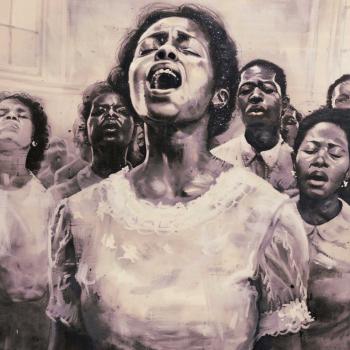
This Is My Song: How Black Artists Changed American Music

About John Holbert
John C. Holbert is the Lois Craddock Perkins Professor Emeritus of Homiletics at Perkins School of Theology in Dallas, TX.
Patheos Explore the world's faith through different perspectives on religion and spirituality! Patheos has the views of the prevalent religions and spiritualities of the world.
Ad-Free & Subscriber Log-In Subscription Support
- About Us
- 2026 Calendar
- Videos
- Podcasts
- Library of World Religions
- Faith In Media Tracker
- Advertise With Us
- Write for Us
- Privacy Policy
- Terms of Service
- Do Not Sell My Data
- Contact Us
- Radiant Digital
- Manage Newsletter Subscriptions
- Unsubscribe From Notifications
- Sitemap
Copyright 2008-2026, Patheos, part of the Radiant Digital network of media brands. All rights reserved.
Subscription Support Ad-Free & Subscriber Log-In
Follow Patheos