
BuddhistCatholicContemplativeEvangelicalGeneral ChristianHinduJewishLatter-day SaintMuslimNew VisionsProgressive Christian
Beliefs
- Buddhist
- Catholic
- Contemplative
- Evangelical
- General Christian
- Hindu
- Jewish
- Latter-day Saint
- More Voices
- Muslim
- New Visions
- Pagan
- Progressive Christian
Topics
- Religion News
- Food and Religion
- Sports and Religion
- Religious Art
- Religious Music and Entertainment
- Religious Events
- History and Religion
- Style and Religion
- Politics and Religion
- Women in Religion
- Recreation Outdoors and Religion
- Business Finance and Religion
- Careers Workplace and Religion
- Education and Religion
- Family Parenting and Religion
- Health Fitness and Religion
- Home and Religion
- Relationships and Religion
- Technology and Religion
- Travel and Religion
Columnists
- Buddhist Columnists
- Business Finance and Religion Columnists
- Careers Workplace and Religion Columnists
- Catholic Columnists
- Contemplative Columnists
- Education and Religion Columnists
- Evangelists Columnists
- Family Parenting and Religion Columnists
- General Christian Columnists
- Health Fitness and Religion Columnists
- Hindu Columnists
- History and Religion Columnists
- Home and Religion Columnists
- Jewish Columnists
- More Voices Columnists
- Latter Day Columnists
- Muslim Columnists
- New Visions Columnists
- Nonreligious Columnists
- Pagan Columnists
- Politics and Religion Columnists
- Progressive Columnists
- Recreation Outdoors and Religion Columnists
- Relationships and Religion Columnists
- Religion News Columnists
- Religious Art Columnists
- Religious Events Columnists
- Religious Music and Entertainment Columnists
- Sports and Religion Columnists
- Style and Religion Columnists
- Technology and Religion Columnists
- Travel and Religion Columnists
- Women in Religion Columnists
Resource Library
- 2026 Calendar
- Library of World Religions
- The 100 Most Holy Places on Earth
- Patheos Answers
- Podcasts
- Videos
- Faith Leaders Database
- Anglican Episcopalian
- Bahai
- Baptist
- Buddhism
- Christianity
- Confucianism
- Eastern Orthodoxy
- Hinduism
- Holiness and Pentecostal
- ISKCON
- Islam
- Judaism
- Lutheran
- Methodist
- The Church of Jesus Christ of Latter-day Saints
- New Age
- Paganism
- Presbytarian and Reformed
- Protestantism
- Religion Behind the Scenes
- Roman Catholic
- Scientology
- Shia Islam
- Sikhism
- Sufism
- Sunni Islam
- Taoism
- Zen
- See all religions
Research Tools
 Ad-Free & Subscriber Log-In Subscription Support
Follow Patheos 

- Trending:
- Advent
- |
- Forgiveness
- |
- Thanksgiving
- |
- Election
- |
- Seasonal Holidays
- |
- Marriage
Progressive Christian
Awakening Beyond Belief
May 13, 2012 by Frederick Schmidt
Are we in a fourth great awakening? That's a matter of interpretation.
Some contend that we are. Of course to make that argument, those who do, describe it as an awakening beyond belief. It's all about Christianity after religion:
- Spiritual awareness without an evangelical or evangelistic dimension
- A much bigger movement without theological content (the code-word used here is "dogmatism")
- A movement that is experiential, practice-centered, interfaith, and interreligious
How is this trend different from the rest of American history—before and after the high-tide denominationalism of the '50s and '60s? I'm at a loss to say.
It is certainly a phenomenon that is fueled by online interaction and a technological interface that makes it "feel" more like one giant conversation. And, to be sure, the infrastructure of that conversation itself involves more people than earlier awakenings.
But in a number of other ways—which some of its advocates admit—this is hardly the same kind of awakening as we have had in the past. It is not just lacking an evangelical or evangelistic focus. It also lacks a single, communal focus of any kind. It is broad-based, but it is not (per capita) on the scale of past awakenings. And it eschews theology in favor of experience.
Fair enough. To a point, this is good news. Don't despair. People are on the move spiritually. They are exploring. They are engaged. Drop the gloom and doom. Grieve the '60s and get on with it already.
But it is also fair to infer that that the contemporary phenomenon is nothing more than the same divergent, spiritual exploration that has always been the American norm—this time on electronic steroids. And minimization of a theological focus in favor of an experiential focus may describe the way things are unfolding, but that's hardly good news. To say anything about our spiritual experience is to say something theological and the fact that those experiences are private, individualistic, and eclectic simply underlines the problem.
In that regard, those who now want to call this a fourth great awakening are simply repackaging what Elizabeth Lesser described some time ago as the "new" American spirituality—the invitation, as Lesser describes it, "to string a necklace all your own"—a world in which you are your own best spiritual authority. It is, nonetheless, a world in which there are theological assumptions at work. They are simply unacknowledged.
When we realize that is what is in the offing, it also becomes clear that the fourth American spiritual awakening (if that is what it is) is different from the first three in another way. It is no longer an awakening to something outside of ourselves. It is an awakening to ourselves—to our own choices—to our own freedom—to the God of our own making—the Tower of Babel—with Wifi. What a let down.
So, what do we do? Circle the wagons? Call in the casuists? Lay down the law? No, that's what made the Tower so attractive to begin with.
What we can do, however, is be passionate about introducing others to the Christ—to a relationship—to a living journey—a journey that begins now and continues into the future. But to do that, you do need to name God and find people to help you on the way.
The Christian pilgrimage is about a love affair. And if you say to your lover, "I really love you. I want to be with you. I would sacrifice my life for you. But I'm not really sure about you and I only, kind of, sort of, want to love you with a respectable measure of intellectual reserve . . ." Well, what do you think are the odds that torrid love affair will get off the ground?
Pitting fundamentalism against an experiential journey into God presents us with a false dichotomy. There is no awakening beyond belief; and there is no belief worth subscribing to that is not attended by an awakening.
12/2/2022 9:10:30 PM
Progressive Christian
The Spiritual Landscape
Experience
Faith
History
Progressive Christianity
Christianity
more at patheos
1

Will God Raise Us as We Are or as We See Ourselves?
2

The Rough Music of the Digital Age
3

Are We Complicit in Others' Suffering?
4
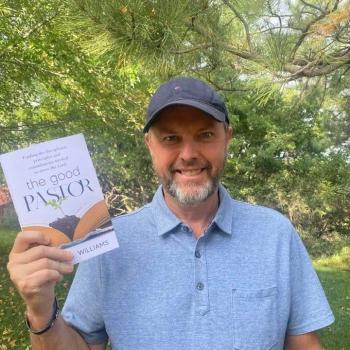
The Good Pastor: Providing Care & Correction For God's Sheep

About Frederick Schmidt
Frederick W. Schmidt is the author of The Dave Test: A Raw Look at Real Life in Hard Times (Abingdon Press: 2013) and several other books, including A Still Small Voice: Women, Ordination and the Church (Syracuse University Press, 1998), The Changing Face of God (Morehouse, 2000), When Suffering Persists (Morehouse, 2001), in Italian translation: Sofferenza, All ricerca di una riposta (Torino: Claudiana, 2004), What God Wants for Your Life (Harper, 2005), Conversations with Scripture: Revelation (Morehouse, 2005) and Conversations with Scripture: Luke (Morehouse, 2009). He holds the Rueben P. Job Chair in Spiritual Formation at Garrett-Evangelical Theological Seminary in Evanston, IL, and directs the Job Institute for Spiritual formation. He is an Episcopal Priest, spiritual director, retreat facilitator, conference leader, writer, and Consulting Editor at Church Publishing in New York. He and his wife, Natalie live in Chicago, Illinois. He can also be reached at: http://frederickwschmidt.com/
Patheos Explore the world's faith through different perspectives on religion and spirituality! Patheos has the views of the prevalent religions and spiritualities of the world.
Ad-Free & Subscriber Log-In Subscription Support
- About Us
- 2026 Calendar
- Videos
- Podcasts
- Library of World Religions
- Faith In Media Tracker
- Advertise With Us
- Write for Us
- Privacy Policy
- Terms of Service
- Do Not Sell My Data
- Contact Us
- Radiant Digital
- Manage Newsletter Subscriptions
- Unsubscribe From Notifications
- Sitemap
Copyright 2008-2026, Patheos, part of the Radiant Digital network of media brands. All rights reserved.
Subscription Support Ad-Free & Subscriber Log-In
Follow Patheos