
BuddhistCatholicContemplativeEvangelicalGeneral ChristianHinduJewishLatter-day SaintMuslimNew VisionsProgressive Christian
Beliefs
- Buddhist
- Catholic
- Contemplative
- Evangelical
- General Christian
- Hindu
- Jewish
- Latter-day Saint
- More Voices
- Muslim
- New Visions
- Pagan
- Progressive Christian
Topics
- Religion News
- Food and Religion
- Sports and Religion
- Religious Art
- Religious Music and Entertainment
- Religious Events
- History and Religion
- Style and Religion
- Politics and Religion
- Women in Religion
- Recreation Outdoors and Religion
- Business Finance and Religion
- Careers Workplace and Religion
- Education and Religion
- Family Parenting and Religion
- Health Fitness and Religion
- Home and Religion
- Relationships and Religion
- Technology and Religion
- Travel and Religion
Columnists
- Buddhist Columnists
- Business Finance and Religion Columnists
- Careers Workplace and Religion Columnists
- Catholic Columnists
- Contemplative Columnists
- Education and Religion Columnists
- Evangelists Columnists
- Family Parenting and Religion Columnists
- General Christian Columnists
- Health Fitness and Religion Columnists
- Hindu Columnists
- History and Religion Columnists
- Home and Religion Columnists
- Jewish Columnists
- More Voices Columnists
- Latter Day Columnists
- Muslim Columnists
- New Visions Columnists
- Nonreligious Columnists
- Pagan Columnists
- Politics and Religion Columnists
- Progressive Columnists
- Recreation Outdoors and Religion Columnists
- Relationships and Religion Columnists
- Religion News Columnists
- Religious Art Columnists
- Religious Events Columnists
- Religious Music and Entertainment Columnists
- Sports and Religion Columnists
- Style and Religion Columnists
- Technology and Religion Columnists
- Travel and Religion Columnists
- Women in Religion Columnists
Resource Library
- 2026 Calendar
- Library of World Religions
- The 100 Most Holy Places on Earth
- Patheos Answers
- Podcasts
- Videos
- Faith Leaders Database
- Anglican Episcopalian
- Bahai
- Baptist
- Buddhism
- Christianity
- Confucianism
- Eastern Orthodoxy
- Hinduism
- Holiness and Pentecostal
- ISKCON
- Islam
- Judaism
- Lutheran
- Methodist
- The Church of Jesus Christ of Latter-day Saints
- New Age
- Paganism
- Presbytarian and Reformed
- Protestantism
- Religion Behind the Scenes
- Roman Catholic
- Scientology
- Shia Islam
- Sikhism
- Sufism
- Sunni Islam
- Taoism
- Zen
- See all religions
Research Tools
 Ad-Free & Subscriber Log-In Subscription Support
Follow Patheos 

- Trending:
- Advent
- |
- Forgiveness
- |
- Thanksgiving
- |
- Election
- |
- Seasonal Holidays
- |
- Marriage
Progressive Christian
An Invitation to Abundant Life? Reflections on Isaiah 55:1-9
February 24, 2016 by John Holbert
Lectionary Reflections
Isaiah 55:1-9
February 28, 2016
3rd Sunday in Lent
I am intrigued by the titles in italics that appear above chapters or parts of chapters in my NRSV Bible. These are hardly part of the Bible's text (though I have had a person or two imagine that they were!), and have obviously been supplied by the editors/translators who put this version together.
The one that appears above Isaiah 55, the entire chapter, is "An Invitation to Abundant Life." That appears innocuous enough. Surely, that phrase could be placed over any number of Bible passages; the Bible fairly majors in invitations to abundant life, does it not? But as I read the passage for today, I must ask whether that is finally what II-Isaiah, that grand poet of the Babylonian exile of Israel, has in mind with this final oracle of his prophecy. It could be said, and I hope to say it, that something quite different is in the prophet's pen than calling his hearers to some sort of abundant life, whatever the editors meant by that complex phrase.
I assume that the verse that has called forth the word "invitation" in the title is Isaiah 55:6-7, which is without doubt some kind of invitation for the readers/hearers to do something. "Seek YHWH when YHWH is to be found; call YHWH while YHWH is close. Let the wicked abandon their ways, and the evil their schemes and return to YHWH who will offer them womb-love, to our God, for that God will pardon vastly." Of course, this verse has quite often been used as a call to worship in more than a few services that I have been part of, and as such a call it is certainly a fitting invitation to worship God.
Still, I wonder if the next verses are not more significant in the thinking of the prophet. Here are verses 9 and 10: "Surely, my thoughts are not your thoughts, nor are your ways my ways, says YHWH. Just as the skies are higher than the earth, so are my ways higher than your ways and my thoughts higher than your thoughts." When juxtaposed with verses 6-7, these verses offer a kind of contradiction to the invitation to seek YHWH. In fact, verses 9 and 10 imply that you may seek YHWH, but the chances of actually finding YHWH are slim and none, because YHWH dwells in a place you cannot know and thinks in ways you cannot finally fathom.
If that is so, then the earlier verses take on a rather different cast. The passage begins with those marvelous lines that many have by heart: "Ho, all who thirst come to the waters; even you without silver, come buy and eat. Come, buy wine and milk without silver, with no price!" This sounds for all the world like a free cafeteria, where the food is plentiful and the drink inexhaustible, both to be had freely, because there are no price tags to be found. The backdrop for such a saying may be the difficulty that the exiles are having finding the basic necessities of life, food and drink. Yet, Isaiah 55:2 implies that the Israelite exiles in Babylon have in reality wasted their money on "that which is not bread" and have worked for "that which does not satisfy." Perhaps rather than an actual lack of food and drink, the prophet may be speaking metaphorically, referring to their lusting after idols, which were easily available in Babylon, and which Isaiah has made such rich and unforgettable fun of back in chapter 44. If that is what he means, then Isaiah's hearers have not been seeking YHWH at all but rather some kind of pale substitute like Marduk, city god of Babylon.
Whether Isaiah speaks literally or metaphorically, he then demands that the exiles "incline your ear, and come to me; listen that you may live" (Is. 55:3a). YHWH then promises them an "everlasting covenant," as it was manifested in YHWH's "unbreakable love for David," who YHWH made "a witness to the peoples, a leader and commander for the peoples" (Is. 55:3b-4). This is perhaps a reference to 2 Samuel 7, that chapter in the midst of the long David saga wherein David is not allowed to build a temple for YHWH, but is instead given an "eternal covenant," suggesting that YHWH will be with David and his descendants for all time. Those of us who know the David story in all of its sordid details roll our eyes when we read about YHWH's eternal covenant with such a rascal, yet by the time of the exile, some 400 years after David's death, it may be that Israel's second king's raunchy nature has receded in the minds of the people and has been replaced with a memory of his great abilities as leader and commander. In their exile, the displaced Israelites are much in need of a God-chosen leader!
But now follows some odd statements about what will happen when Israel in fact returns to YHWH. "Without a doubt, nations you do not know you will call; indeed, nations that do not know you will run to you, for the sake of YHWH, your God, the Holy One of Israel, who has glorified you" (Is. 55:5). This is a decidedly peculiar picture of the work of the exiles of Israel. They are in exile, far from their homeland, a place they will inhabit for two full generations. Indeed, more than a few of them have no memory of Israel at all, having been born in Babylon, having been raised there, having witnessed a Babylonian way of life from their youth. Now Isaiah tells them that they will summon nations they have never heard of, while equally unknown peoples will run toward them, because YHWH has glorified the exiles. But just how are these exiles glorious? How are they to call unknown people, and why will other unknowns stream toward them? And for what purpose?
Article Continued On Next Page
Page: 1 of 2
2/24/2016 5:00:00 AM
Sacred Texts
Preachers
Progressive Christian
Opening The Old Testament
Lent
Progressive Christianity
Christianity
Protestantism
more at patheos
1

Marriage is a Journey of Many Steps
2

A Wedding Banquet and Participating in Justice
3
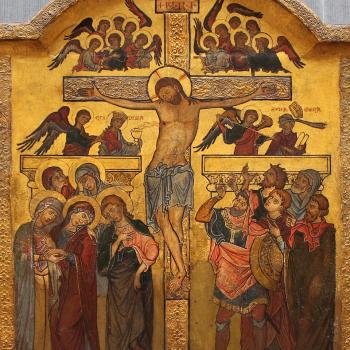
Reflections For Holy Friday 2026: The New Covenant*
4

What Matt. 21:23-32 Teaches About Integrity In An Election

About John Holbert
John C. Holbert is the Lois Craddock Perkins Professor Emeritus of Homiletics at Perkins School of Theology in Dallas, TX.
Patheos Explore the world's faith through different perspectives on religion and spirituality! Patheos has the views of the prevalent religions and spiritualities of the world.
Ad-Free & Subscriber Log-In Subscription Support
- About Us
- 2026 Calendar
- Videos
- Podcasts
- Library of World Religions
- Faith In Media Tracker
- Advertise With Us
- Write for Us
- Privacy Policy
- Terms of Service
- Do Not Sell My Data
- Contact Us
- Radiant Digital
- Manage Newsletter Subscriptions
- Unsubscribe From Notifications
- Sitemap
Copyright 2008-2026, Patheos, part of the Radiant Digital network of media brands. All rights reserved.
Subscription Support Ad-Free & Subscriber Log-In
Follow Patheos