
BuddhistCatholicContemplativeEvangelicalGeneral ChristianHinduJewishLatter-day SaintMuslimNew VisionsProgressive Christian
Beliefs
- Buddhist
- Catholic
- Contemplative
- Evangelical
- General Christian
- Hindu
- Jewish
- Latter-day Saint
- More Voices
- Muslim
- New Visions
- Pagan
- Progressive Christian
Topics
- Religion News
- Food and Religion
- Sports and Religion
- Religious Art
- Religious Music and Entertainment
- Religious Events
- History and Religion
- Style and Religion
- Politics and Religion
- Women in Religion
- Recreation Outdoors and Religion
- Business Finance and Religion
- Careers Workplace and Religion
- Education and Religion
- Family Parenting and Religion
- Health Fitness and Religion
- Home and Religion
- Relationships and Religion
- Technology and Religion
- Travel and Religion
Columnists
- Buddhist Columnists
- Business Finance and Religion Columnists
- Careers Workplace and Religion Columnists
- Catholic Columnists
- Contemplative Columnists
- Education and Religion Columnists
- Evangelists Columnists
- Family Parenting and Religion Columnists
- General Christian Columnists
- Health Fitness and Religion Columnists
- Hindu Columnists
- History and Religion Columnists
- Home and Religion Columnists
- Jewish Columnists
- More Voices Columnists
- Latter Day Columnists
- Muslim Columnists
- New Visions Columnists
- Nonreligious Columnists
- Pagan Columnists
- Politics and Religion Columnists
- Progressive Columnists
- Recreation Outdoors and Religion Columnists
- Relationships and Religion Columnists
- Religion News Columnists
- Religious Art Columnists
- Religious Events Columnists
- Religious Music and Entertainment Columnists
- Sports and Religion Columnists
- Style and Religion Columnists
- Technology and Religion Columnists
- Travel and Religion Columnists
- Women in Religion Columnists
Resource Library
- 2026 Calendar
- Library of World Religions
- The 100 Most Holy Places on Earth
- Patheos Answers
- Podcasts
- Videos
- Faith Leaders Database
- Anglican Episcopalian
- Bahai
- Baptist
- Buddhism
- Christianity
- Confucianism
- Eastern Orthodoxy
- Hinduism
- Holiness and Pentecostal
- ISKCON
- Islam
- Judaism
- Lutheran
- Methodist
- The Church of Jesus Christ of Latter-day Saints
- New Age
- Paganism
- Presbytarian and Reformed
- Protestantism
- Religion Behind the Scenes
- Roman Catholic
- Scientology
- Shia Islam
- Sikhism
- Sufism
- Sunni Islam
- Taoism
- Zen
- See all religions
Research Tools
 Ad-Free & Subscriber Log-In Subscription Support
Ad-Free & Subscriber Log-In Subscription Support
Follow Patheos 

- Trending:
- Forgiveness
- |
- Marriage
- |
- Consciousness
- |
- Death Penalty
- |
- Election
- |
- Halloween
Progressive Christian
Why the Inklings Still Matter in 2015: An Interview with Carol and Philip Zaleski on <em>The Fellowship</em>
July 01, 2015 by Greg Garrett
Religiously, they were far from homogeneous: Tolkien was a devout Catholic, Lewis an ecumenically-minded Anglican, Barfield an Anthroposophist, Williams an Anglican mage. That they could find common ground, or make common cause, despite undeniable tensions and disagreements, is an encouragement to those who care about ecumenism.
As writers, they were not always paragons of style; cloying elements, false archaisms, labored allegories mar even the best works of these writers. They were great storytellers, but not great poets. As human beings, they had their foibles, too; Charles Williams was particularly (and paradoxically) strange. But their closets, as far as we could peer into them, were relatively skeleton-free; they were impressively decent men, for the most part free of excessive vanity and literary pretentiousness; they were faithful lovers, generous to strangers, honorable friends. It may make for less sensational copy, but there is something cheering for a biographer in writing about a 20th-century literary coterie that did not go in for massively destructive patterns of behavior.
Alister McGrath has recently argued that World War I, which we're currently commemorating, should be seen as much more central to the Lewis legacy than is usually done. You've noted how 20 percent of Oxford students who served in the Great War lost their lives. What's your impression about how the war and its aftermath shaped the project of the Inklings?
We agree with Alister McGrath's assessment. Lewis has remarkably little to say in his memoir Surprised by Joy about his experience at the front, but we know that it haunted his dreams. The profound extent to which Tolkien was shaped by his war experience is well known, thanks to John Garth's Tolkien and the Great War and Janet Brennan Croft's War and the Works of J.R.R. Tolkien. Not only their own harrowing wartime experiences, but the loss of intimate friends scarred Lewis and Tolkien permanently and redirected the course of both their lives. Indeed all the Inklings, and their whole generation, suffered wounds from the two world wars that Americans, as we think back to those times, may not fully appreciate. The tremendous losses made the prospect of fellowship (in particular, male camaraderie) all the more inviting.
During World War II, when Lewis and Tolkien were too old for active duty, their main wartime service was to tell stories: stories that fully acknowledged the terrors of our world, but also held out hope. Lewis became famous during these years for telling the Christian story ("mere Christianity") in a series of instructive and consoling talks on the BBC Radio. For these Christian authors, war was just one more piece of evidence that we live in a world whose original beauty and goodness have been marred by malice and violence — a world under siege, a fallen world, yet not a forsaken one. This is the great underlying theme of their various literary works.
You write that "those who delight in mythology and fantasy already have one foot in a spiritual cosmos." What are some of your findings about how the Inklings unleashed the power of imagination with the hope of approaching something transcendent?
We read, Lewis once said, because "we seek an enlargement of our being. We want to be more than ourselves. . . . We want to see with other eyes, to imagine with other imaginations, to feel with other hearts, as well as with our own." All literature offers us this gift — it takes us out of ourselves — but mythopoeic literature has a particular power to make spiritual realities imaginatively plausible. That doesn't mean that religious people need or wish to live in a dream world, lulled by compensatory fantasies. Far from it! If the Inklings succeeded as writers it was because they wedded realism to hope and fantasy to reason.
The book is as much about the friendship or fellowship of these great writers and thinkers as it is their individual works. How did they shape each other? Can you think of any similar circumstances where a group of writers have been so powerfully shaped by each other?
Friendship is a major theme of this book, as the title suggests, though we are equally interested in the individual trajectories and idiosyncrasies of each author. They were not always together, and not always on good terms. And there were many other influences shaping their lives — family, professional colleagues, literary and academic rivalries, and extra-Inkling friends.
The main way in which the Inklings shaped one another was simple encouragement. As Lewis puts it in The Four Loves, "The typical expression of opening Friendship would be something like, 'What? You too? I thought I was the only one'." The Inklings were able to say this sort of thing to one another, and to defend one another against the vitriol of some critics; such fellowship was vital to their literary productivity and to their mental health.
Article Continued On Next Page
Page: 2 of 3
7/1/2015 4:00:00 AM
Progressive Christian
Faithful Citizenship
C.S. Lewis
Charles Williams
History
Inklings
J.R.R. Tolkien
literature
Owen Barfield
Progressive Christianity
Christianity
Protestantism
more at patheos
1

How to Fill the Hole Religion Left Behind
2

Trinity Sunday - Lectionary Commentary for May 31, 2026
3
The Gospel That Broke the Fourth Wall
4
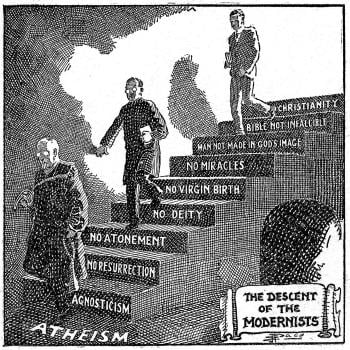
Whatever Happened to Theological Modernism?

About Greg Garrett
Greg Garrett is (according to BBC Radio) one of America's leading voices on religion and culture. He is the author or co-author of over twenty books of fiction, theology, cultural criticism, and spiritual autobiography. His most recent books are The Prodigal, written with the legendary Brennan Manning, Entertaining Judgment: The Afterlife in Popular Imagination, and My Church Is Not Dying: Episcopalians in the 21st Century. A contributor to Patheos since 2010, Greg also writes for the Huffington Post, Salon.com, OnFaith, The Tablet, Reform, and other web and print publications in the US and UK.
Patheos Explore the world's faith through different perspectives on religion and spirituality! Patheos has the views of the prevalent religions and spiritualities of the world.
Ad-Free & Subscriber Log-In Subscription Support
- About Us
- 2026 Calendar
- Videos
- Podcasts
- Library of World Religions
- Faith In Media Tracker
- Advertise With Us
- Write for Us
- Privacy Policy
- Terms of Service
- Do Not Sell My Data
- Contact Us
- Radiant Digital
- Manage Newsletter Subscriptions
- Unsubscribe From Notifications
- Sitemap
Copyright 2008-2026, Patheos. All rights reserved.
Subscription Support Ad-Free & Subscriber Log-In
Follow Patheos