
BuddhistCatholicContemplativeEvangelicalGeneral ChristianHinduJewishLatter-day SaintMuslimNew VisionsProgressive Christian
Beliefs
- Buddhist
- Catholic
- Contemplative
- Evangelical
- General Christian
- Hindu
- Jewish
- Latter-day Saint
- More Voices
- Muslim
- New Visions
- Pagan
- Progressive Christian
Topics
- Religion News
- Food and Religion
- Sports and Religion
- Religious Art
- Religious Music and Entertainment
- Religious Events
- History and Religion
- Style and Religion
- Politics and Religion
- Women in Religion
- Recreation Outdoors and Religion
- Business Finance and Religion
- Careers Workplace and Religion
- Education and Religion
- Family Parenting and Religion
- Health Fitness and Religion
- Home and Religion
- Relationships and Religion
- Technology and Religion
- Travel and Religion
Columnists
- Buddhist Columnists
- Business Finance and Religion Columnists
- Careers Workplace and Religion Columnists
- Catholic Columnists
- Contemplative Columnists
- Education and Religion Columnists
- Evangelists Columnists
- Family Parenting and Religion Columnists
- General Christian Columnists
- Health Fitness and Religion Columnists
- Hindu Columnists
- History and Religion Columnists
- Home and Religion Columnists
- Jewish Columnists
- More Voices Columnists
- Latter Day Columnists
- Muslim Columnists
- New Visions Columnists
- Nonreligious Columnists
- Pagan Columnists
- Politics and Religion Columnists
- Progressive Columnists
- Recreation Outdoors and Religion Columnists
- Relationships and Religion Columnists
- Religion News Columnists
- Religious Art Columnists
- Religious Events Columnists
- Religious Music and Entertainment Columnists
- Sports and Religion Columnists
- Style and Religion Columnists
- Technology and Religion Columnists
- Travel and Religion Columnists
- Women in Religion Columnists
Resource Library
- 2026 Calendar
- Library of World Religions
- The 100 Most Holy Places on Earth
- Patheos Answers
- Podcasts
- Videos
- Faith Leaders Database
- Anglican Episcopalian
- Bahai
- Baptist
- Buddhism
- Christianity
- Confucianism
- Eastern Orthodoxy
- Hinduism
- Holiness and Pentecostal
- ISKCON
- Islam
- Judaism
- Lutheran
- Methodist
- The Church of Jesus Christ of Latter-day Saints
- New Age
- Paganism
- Presbytarian and Reformed
- Protestantism
- Religion Behind the Scenes
- Roman Catholic
- Scientology
- Shia Islam
- Sikhism
- Sufism
- Sunni Islam
- Taoism
- Zen
- See all religions
Research Tools
 Ad-Free & Subscriber Log-In Subscription Support
Ad-Free & Subscriber Log-In Subscription Support
Follow Patheos 

- Trending:
- Forgiveness
- |
- Marriage
- |
- Consciousness
- |
- Death Penalty
- |
- Election
- |
- Halloween
Progressive Christian
Why I Am (Still) An Episcopalian
July 31, 2015 by Greg Garrett
I'm deeply committed to my faith, not because of what I imagine I can bring to it, but because of what it brings out in me. I am not Episcopalian because it seems to me be the only way to pursue a spiritual life, but because the Anglican tradition is the best way for a spiritual life to pursue me.
I'm not Episcopalian because I think I'm a smart person — although this tradition, which values intellectual exploration and the asking of questions makes use of my reason in ways other traditions did not. Great thinkers from Thomas Cranmer to Rowan Williams offer encouragement that I too can know God in some fashion through the use of my intellect.
I'm not Episcopalian because I'm an artistic person — although this tradition loves beauty, boasts such creators as C.S. Lewis, R.S. Thomas, Ralph Vaughn Williams, Barbara Brown Taylor, and P.D. James, and honors that side of me that creates as being a reflection of God's own creativity. I'm not seen as an anomaly in this tradition, but as someone in the mainstream of Christian imagination.
I am not Episcopalian because I care about the Bible — but I value how every three years we do a grand tour of the scriptures, how scripture is read or sung in all of our services, and how our exposition of scripture is not centered on the favorite passages of our preachers, but on the lectionary. Every week, God is allowed to speak into our lives through scripture that the Spirit has ordained we read, not through the strained vision of someone's pet theological peeve.
I am not Episcopalian because I strive to be a compassionate person — although I decided to be confirmed an Episcopalian because I appreciated the brave early stance Episcopalians took on the inclusion of gay and lesbians in the life of the Church, the powerful witness for peace and justice of Episcopalians like Presiding Bishop John Hines in the 1960s, and the many ways I saw Episcopalians involved in feeding the hungry, caring for the sick, and loving the least of these. I discovered that I could be a faithful progressive Christian in this tradition where service was a necessary adjunct to faith.
I am not Episcopalian because I imagine we're ever going to be on top of the culture again — but I am encouraged by the fact that the Episcopal Church has come out on the far side of many of the Culture War questions still dividing other Christian denominations and causing those outside the Church to consider Christians prejudiced, homophobic, paranoid, or fixated on morality at the expense of justice. The recent election of the dynamic preacher — and our first African-American presiding bishop — Michael Curry even makes me believe we might have a major role in addressing one of the crucial questions of our time, race in America.
I'm not Episcopalian because I think the Church needs me — but I am Episcopalian because a faithful community from this tradition saved me, and I know many others could tell similar stories. God spoke to me in the words, love, and actions of Episcopalians when I had no hope and the future seemed, at best, impossible. As much as I love the great gifts of common worship, love of beauty, and thoughtful exploration handed down to us from the Anglican tradition, I am Episcopalian — still — because in the faces of other Episcopalians, I saw — and see — the Face of God.
For that, for this life I did not expect to continue living, for the joy I find now, I thank God.
And because of that, I will love and serve God through the Episcopal Church for as long as I am allowed to walk this planet.
7/31/2015 4:00:00 AM
Progressive Christian
Faithful Citizenship
Episcopalianism
Progressive Christianity
Christianity
Protestantism
more at patheos
1

Elijah's Healing: Ancient Biopsychosocial-spiritual Example
2
Your Story Isn’t Over: It’s Being Redeemed
3

4
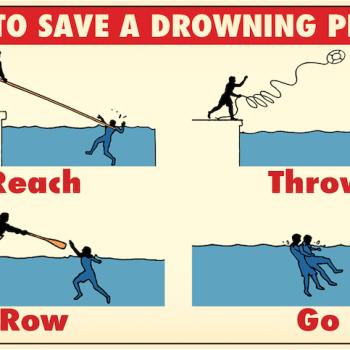
Reach, Throw, Row, Go (revisited)

About Greg Garrett
Greg Garrett is (according to BBC Radio) one of America's leading voices on religion and culture. He is the author or co-author of over twenty books of fiction, theology, cultural criticism, and spiritual autobiography. His most recent books are The Prodigal, written with the legendary Brennan Manning, Entertaining Judgment: The Afterlife in Popular Imagination, and My Church Is Not Dying: Episcopalians in the 21st Century. A contributor to Patheos since 2010, Greg also writes for the Huffington Post, Salon.com, OnFaith, The Tablet, Reform, and other web and print publications in the US and UK.
Patheos Explore the world's faith through different perspectives on religion and spirituality! Patheos has the views of the prevalent religions and spiritualities of the world.
Ad-Free & Subscriber Log-In Subscription Support
- About Us
- 2026 Calendar
- Videos
- Podcasts
- Library of World Religions
- Faith In Media Tracker
- Advertise With Us
- Write for Us
- Privacy Policy
- Terms of Service
- Do Not Sell My Data
- Contact Us
- Radiant Digital
- Manage Newsletter Subscriptions
- Unsubscribe From Notifications
- Sitemap
Copyright 2008-2026, Patheos. All rights reserved.
Subscription Support Ad-Free & Subscriber Log-In
Follow Patheos