
BuddhistCatholicContemplativeEvangelicalGeneral ChristianHinduJewishLatter-day SaintMuslimNew VisionsProgressive Christian
Beliefs
- Buddhist
- Catholic
- Contemplative
- Evangelical
- General Christian
- Hindu
- Jewish
- Latter-day Saint
- More Voices
- Muslim
- New Visions
- Pagan
- Progressive Christian
Topics
- Religion News
- Food and Religion
- Sports and Religion
- Religious Art
- Religious Music and Entertainment
- Religious Events
- History and Religion
- Style and Religion
- Politics and Religion
- Women in Religion
- Recreation Outdoors and Religion
- Business Finance and Religion
- Careers Workplace and Religion
- Education and Religion
- Family Parenting and Religion
- Health Fitness and Religion
- Home and Religion
- Relationships and Religion
- Technology and Religion
- Travel and Religion
Columnists
- Buddhist Columnists
- Business Finance and Religion Columnists
- Careers Workplace and Religion Columnists
- Catholic Columnists
- Contemplative Columnists
- Education and Religion Columnists
- Evangelists Columnists
- Family Parenting and Religion Columnists
- General Christian Columnists
- Health Fitness and Religion Columnists
- Hindu Columnists
- History and Religion Columnists
- Home and Religion Columnists
- Jewish Columnists
- More Voices Columnists
- Latter Day Columnists
- Muslim Columnists
- New Visions Columnists
- Nonreligious Columnists
- Pagan Columnists
- Politics and Religion Columnists
- Progressive Columnists
- Recreation Outdoors and Religion Columnists
- Relationships and Religion Columnists
- Religion News Columnists
- Religious Art Columnists
- Religious Events Columnists
- Religious Music and Entertainment Columnists
- Sports and Religion Columnists
- Style and Religion Columnists
- Technology and Religion Columnists
- Travel and Religion Columnists
- Women in Religion Columnists
Resource Library
- 2026 Calendar
- Library of World Religions
- The 100 Most Holy Places on Earth
- Patheos Answers
- Podcasts
- Videos
- Faith Leaders Database
- Anglican Episcopalian
- Bahai
- Baptist
- Buddhism
- Christianity
- Confucianism
- Eastern Orthodoxy
- Hinduism
- Holiness and Pentecostal
- ISKCON
- Islam
- Judaism
- Lutheran
- Methodist
- The Church of Jesus Christ of Latter-day Saints
- New Age
- Paganism
- Presbytarian and Reformed
- Protestantism
- Religion Behind the Scenes
- Roman Catholic
- Scientology
- Shia Islam
- Sikhism
- Sufism
- Sunni Islam
- Taoism
- Zen
- See all religions
Research Tools
 Ad-Free & Subscriber Log-In Subscription Support
Follow Patheos 

- Trending:
- Advent
- |
- Forgiveness
- |
- Thanksgiving
- |
- Election
- |
- Seasonal Holidays
- |
- Marriage
Progressive Christian
Beyond Inclusion
March 12, 2014 by Frederick Schmidt
During a speaking engagement last weekend I was fortunate to spend an evening with young adults, all of whom were under forty, talking about what it is going to take to reach a new generation of people like them. They were concerned about how they could talk to people who have no tradition of church life and faith. Some of the ideas we surfaced together included:
Find them where they are. Don't expect to see them walk through the door.
Invite them. Don't wait for the clergy to do it. Make a direct, personal invitation.
Start with their lives and felt spiritual needs. That isn't enough, but it's where a lot of faith development begins.
But the adults I was talking with were also clear about what matters most if the church is going to survive. As far as they were concerned there was one major imperative:
Don't compromise the essentials. The Episcopal Church has nothing to offer if it doesn't offer a faith grounded the Triune God rooted in an ancient liturgy and the creeds of the church.
Their observations speak to the situation in which we find ourselves. Evidence of declining membership in mainline congregations continues to be in the news and continues to be the topic of conversation. As it does, clergy continue to experiment with a variety of approaches to church life that will entice people to walk through the front door or, at a minimum, connect with people outside the church's doors.
"Ashes to go" attempts to carry the church's liturgical practice out to the street. Another parish has received a good deal of attention for having stripped its building of any distinctively Christian symbolism. And countless other churches continue to connect with the political causes of the day, asserting the continued relevance of the church.
There is no evidence that these efforts are making a difference. Beyond a few cosmetic changes the new efforts revolve around the same strategies that have dominated mainline behavior now in one form or another for the better part of sixty years: Lower the visible barriers to participation. Emphasize inclusion and eliminate any approach to the practice of the church that might visually or experientially look somehow exclusive.
Why isn't it working? There are a lot of reasons. One of the best and most recent explanations can be found in David Kinnaman's You Lost Me, but research can't get at all of them.
For one thing, to say to those outside the church, "we welcome you," does not provide a convincing reason for accepting the invitation. In fact, the assumption that people would want to join our churches, if only they knew that they could, is itself naïve and patronizing. Many Christians, of all ethnic groups and ages, have formed communities that have evolved their own approach to worship and they prefer it to what mainline congregations offer. The reason current models haven't worked, then, is that those that were expected to participate are simply "not in the market," to coin a phrase.
But many others (particularly those who don't attend church) simply haven't been given a good reason for participating. Much of what mainline congregations offer is a non-starter. Social engagement for theological reasons is difficult to justify, if you don't already have spiritual and theological commitments of some kind. Why wrap a theological rationale around political activity when there are ample reasons for social engagement that are intrinsic to the enterprise and easier to defend?
But there is a deeper problem as well: We have been so fixed on the effort to be inclusive, that we have forgotten that the language and practice that shapes our lives as a church also defines what it means to belong. This simple sociological principle is true of any organization and it can't be ignored. So, while there is definitely a tension to be negotiated between the rites of passage that make for belonging and behavior that is uninviting, the erasure of the boundaries that make for the church's life also effectively erase the reason for belonging to it at all.
Which brings me back to my dinner conversation a few nights ago: There are ways in which we can reach out to those who never attend church. They might work. They might not. But whatever we do, we can't abandon the practice and convictions that make the sacred space we call home.
3/12/2014 4:00:00 AM
Progressive Christian
The Spiritual Landscape
Inclusivity
Progressive Christianity
Christianity
Protestantism
Evangelicalism
more at patheos
1

Sarvastivada: An Extinct Buddhist Sect That's Still With Us
2
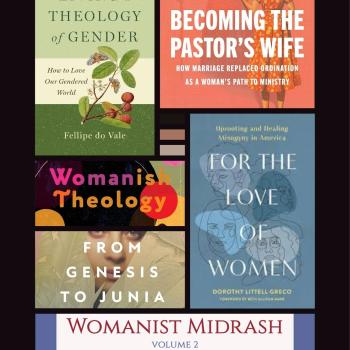
Updating the Readings: Recent Books on Women and the Church
3
Yes, Max Miller, She Would Have Made You Empanadas
4
Independent Thinking Isn’t What You Think

About Frederick Schmidt
Frederick W. Schmidt is the author of The Dave Test: A Raw Look at Real Life in Hard Times (Abingdon Press: 2013) and several other books, including A Still Small Voice: Women, Ordination and the Church (Syracuse University Press, 1998), The Changing Face of God (Morehouse, 2000), When Suffering Persists (Morehouse, 2001), in Italian translation: Sofferenza, All ricerca di una riposta (Torino: Claudiana, 2004), What God Wants for Your Life (Harper, 2005), Conversations with Scripture: Revelation (Morehouse, 2005) and Conversations with Scripture: Luke (Morehouse, 2009). He holds the Rueben P. Job Chair in Spiritual Formation at Garrett-Evangelical Theological Seminary in Evanston, IL, and directs the Job Institute for Spiritual formation. He is an Episcopal Priest, spiritual director, retreat facilitator, conference leader, writer, and Consulting Editor at Church Publishing in New York. He and his wife, Natalie live in Chicago, Illinois. He can also be reached at: http://frederickwschmidt.com/
Patheos Explore the world's faith through different perspectives on religion and spirituality! Patheos has the views of the prevalent religions and spiritualities of the world.
Ad-Free & Subscriber Log-In Subscription Support
- About Us
- 2026 Calendar
- Videos
- Podcasts
- Library of World Religions
- Faith In Media Tracker
- Advertise With Us
- Write for Us
- Privacy Policy
- Terms of Service
- Do Not Sell My Data
- Contact Us
- Radiant Digital
- Manage Newsletter Subscriptions
- Unsubscribe From Notifications
- Sitemap
Copyright 2008-2026, Patheos, part of the Radiant Digital network of media brands. All rights reserved.
Subscription Support Ad-Free & Subscriber Log-In
Follow Patheos