
BuddhistCatholicContemplativeEvangelicalGeneral ChristianHinduJewishLatter-day SaintMuslimNew VisionsProgressive Christian
Beliefs
- Buddhist
- Catholic
- Contemplative
- Evangelical
- General Christian
- Hindu
- Jewish
- Latter-day Saint
- More Voices
- Muslim
- New Visions
- Pagan
- Progressive Christian
Topics
- Religion News
- Food and Religion
- Sports and Religion
- Religious Art
- Religious Music and Entertainment
- Religious Events
- History and Religion
- Style and Religion
- Politics and Religion
- Women in Religion
- Recreation Outdoors and Religion
- Business Finance and Religion
- Careers Workplace and Religion
- Education and Religion
- Family Parenting and Religion
- Health Fitness and Religion
- Home and Religion
- Relationships and Religion
- Technology and Religion
- Travel and Religion
Columnists
- Buddhist Columnists
- Business Finance and Religion Columnists
- Careers Workplace and Religion Columnists
- Catholic Columnists
- Contemplative Columnists
- Education and Religion Columnists
- Evangelists Columnists
- Family Parenting and Religion Columnists
- General Christian Columnists
- Health Fitness and Religion Columnists
- Hindu Columnists
- History and Religion Columnists
- Home and Religion Columnists
- Jewish Columnists
- More Voices Columnists
- Latter Day Columnists
- Muslim Columnists
- New Visions Columnists
- Nonreligious Columnists
- Pagan Columnists
- Politics and Religion Columnists
- Progressive Columnists
- Recreation Outdoors and Religion Columnists
- Relationships and Religion Columnists
- Religion News Columnists
- Religious Art Columnists
- Religious Events Columnists
- Religious Music and Entertainment Columnists
- Sports and Religion Columnists
- Style and Religion Columnists
- Technology and Religion Columnists
- Travel and Religion Columnists
- Women in Religion Columnists
Resource Library
- 2026 Calendar
- Library of World Religions
- The 100 Most Holy Places on Earth
- Patheos Answers
- Podcasts
- Videos
- Faith Leaders Database
- Anglican Episcopalian
- Bahai
- Baptist
- Buddhism
- Christianity
- Confucianism
- Eastern Orthodoxy
- Hinduism
- Holiness and Pentecostal
- ISKCON
- Islam
- Judaism
- Lutheran
- Methodist
- The Church of Jesus Christ of Latter-day Saints
- New Age
- Paganism
- Presbytarian and Reformed
- Protestantism
- Religion Behind the Scenes
- Roman Catholic
- Scientology
- Shia Islam
- Sikhism
- Sufism
- Sunni Islam
- Taoism
- Zen
- See all religions
Research Tools
 Ad-Free & Subscriber Log-In Subscription Support
Follow Patheos 

- Trending:
- Advent
- |
- Forgiveness
- |
- Thanksgiving
- |
- Election
- |
- Seasonal Holidays
- |
- Marriage
Progressive Christian
Spiritual AND Religious? Yes! Reason #2
February 04, 2013 by Frederick Schmidt
That said, there is no good cause or great purpose that has not been betrayed by predators, hypocrites, and charlatans. We can respond by cutting ourselves off from religion because there are those who have betrayed our beliefs. There is a certain definitive clarity about a choice of that kind. But truth be told, if we were consistent in our logic, then there is not a single aspiration, hope, or high ideal that we would not smother in cynicism.
The prophets didn't criticize priests for being priests. They criticized them for failing to be priestly enough. Jesus cleansed the Temple, not because he wanted to do away with the Temple, but because the Temple was not serving the purposes for which it was built.
It is easy to contemplate dealing with the failings of religion by rejecting religion outright. But Pol Pot, Idi Amin, and Josef Stalin represent examples of cruel and corrupt leaders who were equally destructive, but lacking in religious conviction of any kind.
In other words, the problem doesn't lie with religion, per se, but with us—with our level of dedication and consistency. So, running from religion can be momentarily satisfying, but it hardly fixes anything.
The real problem, of course, is that if religion didn't exist, spiritual people would need to invent religion or something a lot like it—and they do, all the time.
The word "religion" is not a prescriptive term. Uttering it doesn't bring anything into existence. It describes something that already exists. And what already exists are the understandings of God, the patterns of our prayers, the ways in which we live and worship—repeated over and over again, captured and refined in language and behavior that we call "religion."
Why the patterns? Why religion? Religion exists because it is the only way that spirituality gets traction in people's lives and in history.
Without it, we could not discuss common experiences of God. We could not communicate with one another. And it would not be possible to pass those understandings along from generation to generation.
When ancient Christians began worshipping and living in the way that they did, they didn't say, "Let's found a different religion." In fact, they described what they believed and what they were doing as a "new way."
Conversely, a radically personal, private faith could not be passed along at all. The descriptions we gave would be nonsense, and its content would have no bearing on the lives of others.
So, when we reject "religion" in favor of "spirituality" we might be cutting ourselves off from things that are worth rejecting—things like abuse, hypocrisy, or leaden, self-serving bureaucracy. But we are also cutting ourselves off from the rich history of a spiritual way that cannot be captured and transmitted in any other form.
It's a bit like cutting yourself off from your family because you are sick to death of your crazy uncle and his abusive behavior. It can be satisfying, freeing, and cathartic. It can end-run the need to discriminate between the authentic, extemporaneous, life-giving relationships your family offers and those that are hypocritical, rote, and abusive. But it's still a matter of cutting yourself off from the relationships that gave and give you life.
In time, as you wander more deeply into a faith that is private and personal, you will find yourself asking, "How do I explain this experience to someone else?" or "How do I find help in understanding it?" And suddenly, you will be talking about "religion."
Page: 2 of 2
2/4/2013 5:00:00 AM
Progressive Christian
Community
History
Progressive Christianity
Ritual
Christianity
more at patheos
1

Commencement into a Hard World, But With Hope
2
3

Civilizational India (Bharat): Beyond the Western Optics
4
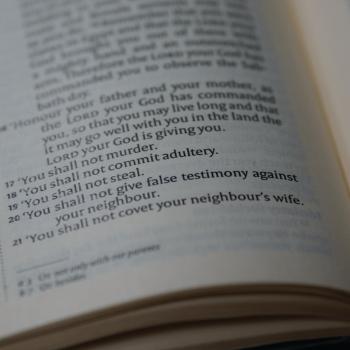
Are Christians still under the Ten Commandments?

About Frederick Schmidt
Frederick W. Schmidt is the author of The Dave Test: A Raw Look at Real Life in Hard Times (Abingdon Press: 2013) and several other books, including A Still Small Voice: Women, Ordination and the Church (Syracuse University Press, 1998), The Changing Face of God (Morehouse, 2000), When Suffering Persists (Morehouse, 2001), in Italian translation: Sofferenza, All ricerca di una riposta (Torino: Claudiana, 2004), What God Wants for Your Life (Harper, 2005), Conversations with Scripture: Revelation (Morehouse, 2005) and Conversations with Scripture: Luke (Morehouse, 2009). He holds the Rueben P. Job Chair in Spiritual Formation at Garrett-Evangelical Theological Seminary in Evanston, IL, and directs the Job Institute for Spiritual formation. He is an Episcopal Priest, spiritual director, retreat facilitator, conference leader, writer, and Consulting Editor at Church Publishing in New York. He and his wife, Natalie live in Chicago, Illinois. He can also be reached at: http://frederickwschmidt.com/
Patheos Explore the world's faith through different perspectives on religion and spirituality! Patheos has the views of the prevalent religions and spiritualities of the world.
Ad-Free & Subscriber Log-In Subscription Support
- About Us
- 2026 Calendar
- Videos
- Podcasts
- Library of World Religions
- Faith In Media Tracker
- Advertise With Us
- Write for Us
- Privacy Policy
- Terms of Service
- Do Not Sell My Data
- Contact Us
- Radiant Digital
- Manage Newsletter Subscriptions
- Unsubscribe From Notifications
- Sitemap
Copyright 2008-2026, Patheos, part of the Radiant Digital network of media brands. All rights reserved.
Subscription Support Ad-Free & Subscriber Log-In
Follow Patheos