
BuddhistCatholicContemplativeEvangelicalGeneral ChristianHinduJewishLatter-day SaintMuslimNew VisionsProgressive Christian
Beliefs
- Buddhist
- Catholic
- Contemplative
- Evangelical
- General Christian
- Hindu
- Jewish
- Latter-day Saint
- More Voices
- Muslim
- New Visions
- Pagan
- Progressive Christian
Topics
- Religion News
- Food and Religion
- Sports and Religion
- Religious Art
- Religious Music and Entertainment
- Religious Events
- History and Religion
- Style and Religion
- Politics and Religion
- Women in Religion
- Recreation Outdoors and Religion
- Business Finance and Religion
- Careers Workplace and Religion
- Education and Religion
- Family Parenting and Religion
- Health Fitness and Religion
- Home and Religion
- Relationships and Religion
- Technology and Religion
- Travel and Religion
Columnists
- Buddhist Columnists
- Business Finance and Religion Columnists
- Careers Workplace and Religion Columnists
- Catholic Columnists
- Contemplative Columnists
- Education and Religion Columnists
- Evangelists Columnists
- Family Parenting and Religion Columnists
- General Christian Columnists
- Health Fitness and Religion Columnists
- Hindu Columnists
- History and Religion Columnists
- Home and Religion Columnists
- Jewish Columnists
- More Voices Columnists
- Latter Day Columnists
- Muslim Columnists
- New Visions Columnists
- Nonreligious Columnists
- Pagan Columnists
- Politics and Religion Columnists
- Progressive Columnists
- Recreation Outdoors and Religion Columnists
- Relationships and Religion Columnists
- Religion News Columnists
- Religious Art Columnists
- Religious Events Columnists
- Religious Music and Entertainment Columnists
- Sports and Religion Columnists
- Style and Religion Columnists
- Technology and Religion Columnists
- Travel and Religion Columnists
- Women in Religion Columnists
Resource Library
- 2026 Calendar
- Library of World Religions
- The 100 Most Holy Places on Earth
- Patheos Answers
- Podcasts
- Videos
- Faith Leaders Database
- Anglican Episcopalian
- Bahai
- Baptist
- Buddhism
- Christianity
- Confucianism
- Eastern Orthodoxy
- Hinduism
- Holiness and Pentecostal
- ISKCON
- Islam
- Judaism
- Lutheran
- Methodist
- The Church of Jesus Christ of Latter-day Saints
- New Age
- Paganism
- Presbytarian and Reformed
- Protestantism
- Religion Behind the Scenes
- Roman Catholic
- Scientology
- Shia Islam
- Sikhism
- Sufism
- Sunni Islam
- Taoism
- Zen
- See all religions
Research Tools
 Ad-Free & Subscriber Log-In Subscription Support
Ad-Free & Subscriber Log-In Subscription Support
Follow Patheos 

- Trending:
- Forgiveness
- |
- Marriage
- |
- Consciousness
- |
- Death Penalty
- |
- Election
- |
- Halloween
Progressive Christian
Accepting: Reflections on Advent
December 09, 2012 by Monica Coleman
I was not a young mother, but I was a young minister. On the later edge of my teenage years, I felt a call to ordained ministry. No bushes burned and no angels descended. There were no declarations saying that I was highly favored or part of a grand regal legacy. I had no ideations of marriage or children in my immediate future. I was no Mary.
Yet like Mary, I felt that circumstances, a heart for God and a message delivered by holy beings in human form were telling me that I had to do something for and with God's people. And, like Mary, I was terrified.
When it came to ordained ministry, I was afraid of public speaking. I was afraid of the sexism and ageism in the church. I was afraid of what it would mean for the plans I had already laid out for my career. I was afraid of what my parents and friends would say. I was afraid of what it would do to my dating life. High class problems, admittedly.
Christian traditions often imagine that Mary was afraid of what God's calling would mean for her reputation. She was afraid of what it might mean to be pregnant so young, so unmarried and while so sexually inexperienced. These same things scare many pregnant girls and women today.
Pregnancy brings embodied fears. Will the baby be healthy? Will I be healthy? What if there are complications with the birth? The baby will have so many needs. Can I manage them all? During my pregnancy, I was simultaneously amazed at what my body could do—grow an entire human being and supporting ecosystem—while also dismayed at how little control I had over the outcome.
Like many expectant parents, I had many hopes for my unborn child. Some hopes were high: that the baby will have more opportunities than me, a solid education, a legacy of which to feel proud, less tragedy, a world that is kinder to gendered, racial and sexual minorities. Other hopes were basic: that all of the baby's needs are met, that every organ and limb works as it should, to only know safety and love. While I know that some of these are unrealistic, I was sure I'd bend over backwards to make them happen. At the end of the day, there was nothing I could do to guarantee how my child would turn out. I have never felt more vulnerable in the world.
So I am amazed that Mary could sing what we now call The Magnificat. How does she move from having a fear that an angel must allay to saying things like, "All generations will call me blessed"? How does she make the transition from the uncertainty of pregnancy to the assurance of a ministry that will not be forgotten?
I've been a minister longer than I've been a mother, so I return there for an answer.
Four or five years into my career in ministry, I stopped trying. I stopped trying to preach like those around me. I stopped trying to look or dress like I thought preachers should. I stopped worrying about what others thought of me. I concluded that God didn't want me to be like other ministers; God wanted me to be me. That was why God called me.
I imagine that Mary got the same kind of revelation. At some point in her pregnancy, she woke up and realized that she had a ministry. She could no more determine Jesus' path in life than any expectant mother can predict the life her child will lead. She could not control what others would think of her. But she was also more than a cog in a large cosmic plan. Rather, she had something to do with and for God's people. God didn't need her to be extra-holy or super-prayerful. God called her to be her. That Advent lesson is both worthy of praise and remembering for generations to come.
12/9/2012 5:00:00 AM
Progressive Christian
Women In Spirit and Flesh
Advent
Progressive Christianity
Christianity
more at patheos
1
"Nephi and Isaiah on the Nations"
2
Why I Continue Sharing My Jewish Voice At Patheos
3
50 Unanswerable NT Passages Against "Faith Alone"
4

Anchored In Hope - Know God's Love When Family Disappoints
About Monica Coleman
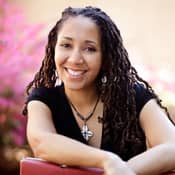
Monica A. Coleman is Associate Professor of Constructive Theology and African American Religions and Co-Director for Process Studies at Claremont School of Theology and Claremont Lincoln University. An ordained elder in the African Methodist Episcopal Church, Coleman has earned degrees at Harvard University, Vanderbilt University and Claremont Graduate University.
Patheos Explore the world's faith through different perspectives on religion and spirituality! Patheos has the views of the prevalent religions and spiritualities of the world.
Ad-Free & Subscriber Log-In Subscription Support
- About Us
- 2026 Calendar
- Videos
- Podcasts
- Library of World Religions
- Faith In Media Tracker
- Advertise With Us
- Write for Us
- Privacy Policy
- Terms of Service
- Do Not Sell My Data
- Contact Us
- Radiant Digital
- Manage Newsletter Subscriptions
- Unsubscribe From Notifications
- Sitemap
Copyright 2008-2026, Patheos. All rights reserved.
Subscription Support Ad-Free & Subscriber Log-In
Follow Patheos