
BuddhistCatholicContemplativeEvangelicalGeneral ChristianHinduJewishLatter-day SaintMuslimNew VisionsProgressive Christian
Beliefs
- Buddhist
- Catholic
- Contemplative
- Evangelical
- General Christian
- Hindu
- Jewish
- Latter-day Saint
- More Voices
- Muslim
- New Visions
- Pagan
- Progressive Christian
Topics
- Religion News
- Food and Religion
- Sports and Religion
- Religious Art
- Religious Music and Entertainment
- Religious Events
- History and Religion
- Style and Religion
- Politics and Religion
- Women in Religion
- Recreation Outdoors and Religion
- Business Finance and Religion
- Careers Workplace and Religion
- Education and Religion
- Family Parenting and Religion
- Health Fitness and Religion
- Home and Religion
- Relationships and Religion
- Technology and Religion
- Travel and Religion
Columnists
- Buddhist Columnists
- Business Finance and Religion Columnists
- Careers Workplace and Religion Columnists
- Catholic Columnists
- Contemplative Columnists
- Education and Religion Columnists
- Evangelists Columnists
- Family Parenting and Religion Columnists
- General Christian Columnists
- Health Fitness and Religion Columnists
- Hindu Columnists
- History and Religion Columnists
- Home and Religion Columnists
- Jewish Columnists
- More Voices Columnists
- Latter Day Columnists
- Muslim Columnists
- New Visions Columnists
- Nonreligious Columnists
- Pagan Columnists
- Politics and Religion Columnists
- Progressive Columnists
- Recreation Outdoors and Religion Columnists
- Relationships and Religion Columnists
- Religion News Columnists
- Religious Art Columnists
- Religious Events Columnists
- Religious Music and Entertainment Columnists
- Sports and Religion Columnists
- Style and Religion Columnists
- Technology and Religion Columnists
- Travel and Religion Columnists
- Women in Religion Columnists
Resource Library
- 2026 Calendar
- Library of World Religions
- The 100 Most Holy Places on Earth
- Patheos Answers
- Podcasts
- Videos
- Faith Leaders Database
- Anglican Episcopalian
- Bahai
- Baptist
- Buddhism
- Christianity
- Confucianism
- Eastern Orthodoxy
- Hinduism
- Holiness and Pentecostal
- ISKCON
- Islam
- Judaism
- Lutheran
- Methodist
- The Church of Jesus Christ of Latter-day Saints
- New Age
- Paganism
- Presbytarian and Reformed
- Protestantism
- Religion Behind the Scenes
- Roman Catholic
- Scientology
- Shia Islam
- Sikhism
- Sufism
- Sunni Islam
- Taoism
- Zen
- See all religions
Research Tools
 Ad-Free & Subscriber Log-In Subscription Support
Ad-Free & Subscriber Log-In Subscription Support
Follow Patheos 

- Trending:
- Forgiveness
- |
- Marriage
- |
- Consciousness
- |
- Death Penalty
- |
- Election
- |
- Halloween
Pagan
The Pathology of Modernity: Individualism v. Individuality
August 02, 2012 by Gus diZerega
[The Indians] had no right to a country merely because they were born here and then acted like savages. The white man did not conquer this country. And you're a racist if you object . . . You believe that if someone is born in a magnificent country and doesn't know what to do with it, he still has a property right to it. He does not. . . . What were [the Indians] fighting for, in opposing the white man on this continent? For their wish to continue a primitive existence; for their 'right' to keep part of the earth untouched—to keep everybody out so they could live like animals or cavemen. Any European who brought with him an element of civilization had the right to take over this continent . . .
What Rand taught about native Americans could be applied to any who disagreed with her views; and though many might rebel at such a blunt statement, they incorporated elements of her perspective and poisoned their own understanding of what it is to be a person. Today we are reaping the unpleasant results of her Nietzschean nihilism reinforcing what was most blind in our cultural individualism, inherited from Protestantism.
Along the way many Americans forgot what it meant to be a member of society rather than just being out for themselves. It is symbolic that Americans are allowing the right wing, aided by cynical 'liberals', to destroy the most visible benign public institution that symbolizes us all as a people: the Post Office.
"I Am Because We Are."
Individualists like to brag of their competence. There is an irony here. The claim of individual competence is closer to the truth in hunting and gathering societies than today. A 12th-century American Indian, dropped into a wilderness, would manage much more successfully by himself than a 20th-century businessman, or even a typical farmer. And yet . . .
And yet these men and women, whose lives depended to a much greater extent than ours on their own personal abilities, were acutely aware they were part of a community, their tribe. From what we know of their lives, ostracism was the greatest punishment. Nor were these people simply interchangeable. Over and over those who have lived among hunter-gatherers have written about their individuality and resourcefulness. The drivel about Indians as collectivistic savages promoted by Ayn Rand and other poseurs of modern 'individualism' was never remotely true.
It is we moderns who are utterly dependent on a society that no human being can understand except abstractly. Those who know how a computer works are unlikely to know how the ingredients to build one are produced from the earth. And those who know parts of that do not know how to build an automobile, or raise wheat in large amounts, and on and on. The division of labor, and the division of knowledge, extends farther now than at any other time. Regarding most things we encounter in our world, we know how to push buttons or pay someone for knowing what we do not in order to help us.
This world expands the realm of choice and so the potential for individuality to flower, but it does so by immersing us within a society we do not understand, did not create, and currently are undermining, in no small part because of the poison of 'individualism' pushing aside genuine respect for individuality. Our individuality grows with our deepening dependence on a society in which our own sphere of competence is a smaller and smaller element of the whole.
There is a Pagan African proverb that I think gets it right: "I am because we are."
Individuality, the "I," is very real, but it is real in a way analogous to how a photon is a particle. Ask certain questions in an experiment and we get results suggesting photons are particles. Other questions suggest they are waves. In fact we cannot visualize what a photon is. And this is without even bringing in quantum entanglement.
Individuals are at least as complex and paradoxical as photons. Individualism is an ideology as wrong headed as believing that photons are only particles, despite the evidence to the contrary.
The worship of individualism explains why even honest people can believe they have accomplished everything that they are on their own merits. It blinds them to the social context that empowered their actions and gave them opportunities they had the insight to see. An American individual is as much a product of the American social ecosystem as a buffalo or coyote is a part of its natural ecosystem. And of course the American social ecosystem depends on the natural ecosystem on which it depends.
But individualism is blind to both the social and the natural ecosystem. As this society becomes more individualistic it becomes less and less capable of maintaining the social and natural ecosystems that make it possible. Hence our society's autistic relationship to the wider world, human and natural alike, and the autistic relationship of all too many Americans to their own society.
Article Continued On Next Page
Page: 2 of 3
12/2/2022 9:09:58 PM
Pagan
Pointedly Pagan
Business
History
Individualism
Mitt Romney
politics
Paganism
more at patheos
1

The Gospel of the Kingdom is Now Hate Speech
2
Talking Donkeys and Myth: How Catholics Read the Bible
3

Dialogue on Eternal Security / Absolute Assurance
4
About Gus diZerega
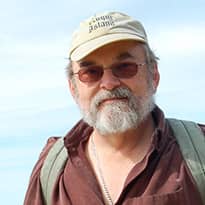
Gus diZerega is a Gardnerian Elder with over 25 years practice, including six years close study with a Brazilian shaman. He has been active in interfaith work off and on for most of those 25 years as well. He has conducted workshops and given presentations on healing, shamanism, ecology and politics at Pagan gatherings in the United States and Canada. Follow Gus on Facebook. Gus blogs at Pointedly Pagan
Patheos Explore the world's faith through different perspectives on religion and spirituality! Patheos has the views of the prevalent religions and spiritualities of the world.
Ad-Free & Subscriber Log-In Subscription Support
- About Us
- 2026 Calendar
- Videos
- Podcasts
- Library of World Religions
- Faith In Media Tracker
- Advertise With Us
- Write for Us
- Privacy Policy
- Terms of Service
- Do Not Sell My Data
- Contact Us
- Radiant Digital
- Manage Newsletter Subscriptions
- Unsubscribe From Notifications
- Sitemap
Copyright 2008-2026, Patheos. All rights reserved.
Subscription Support Ad-Free & Subscriber Log-In
Follow Patheos