
BuddhistCatholicContemplativeEvangelicalGeneral ChristianHinduJewishLatter-day SaintMuslimNew VisionsProgressive Christian
Beliefs
- Buddhist
- Catholic
- Contemplative
- Evangelical
- General Christian
- Hindu
- Jewish
- Latter-day Saint
- More Voices
- Muslim
- New Visions
- Pagan
- Progressive Christian
Topics
- Religion News
- Food and Religion
- Sports and Religion
- Religious Art
- Religious Music and Entertainment
- Religious Events
- History and Religion
- Style and Religion
- Politics and Religion
- Women in Religion
- Recreation Outdoors and Religion
- Business Finance and Religion
- Careers Workplace and Religion
- Education and Religion
- Family Parenting and Religion
- Health Fitness and Religion
- Home and Religion
- Relationships and Religion
- Technology and Religion
- Travel and Religion
Columnists
- Buddhist Columnists
- Business Finance and Religion Columnists
- Careers Workplace and Religion Columnists
- Catholic Columnists
- Contemplative Columnists
- Education and Religion Columnists
- Evangelists Columnists
- Family Parenting and Religion Columnists
- General Christian Columnists
- Health Fitness and Religion Columnists
- Hindu Columnists
- History and Religion Columnists
- Home and Religion Columnists
- Jewish Columnists
- More Voices Columnists
- Latter Day Columnists
- Muslim Columnists
- New Visions Columnists
- Nonreligious Columnists
- Pagan Columnists
- Politics and Religion Columnists
- Progressive Columnists
- Recreation Outdoors and Religion Columnists
- Relationships and Religion Columnists
- Religion News Columnists
- Religious Art Columnists
- Religious Events Columnists
- Religious Music and Entertainment Columnists
- Sports and Religion Columnists
- Style and Religion Columnists
- Technology and Religion Columnists
- Travel and Religion Columnists
- Women in Religion Columnists
Resource Library
- 2026 Calendar
- Library of World Religions
- The 100 Most Holy Places on Earth
- Patheos Answers
- Podcasts
- Videos
- Faith Leaders Database
- Anglican Episcopalian
- Bahai
- Baptist
- Buddhism
- Christianity
- Confucianism
- Eastern Orthodoxy
- Hinduism
- Holiness and Pentecostal
- ISKCON
- Islam
- Judaism
- Lutheran
- Methodist
- The Church of Jesus Christ of Latter-day Saints
- New Age
- Paganism
- Presbytarian and Reformed
- Protestantism
- Religion Behind the Scenes
- Roman Catholic
- Scientology
- Shia Islam
- Sikhism
- Sufism
- Sunni Islam
- Taoism
- Zen
- See all religions
Research Tools
 Ad-Free & Subscriber Log-In Subscription Support
Ad-Free & Subscriber Log-In Subscription Support
Follow Patheos 

- Trending:
- Forgiveness
- |
- Marriage
- |
- Consciousness
- |
- Death Penalty
- |
- Election
- |
- Halloween
RELIGION LIBRARY
Shia Islam
Toggle navigation
Rituals and Worship
Worship and Devotion in Daily Life
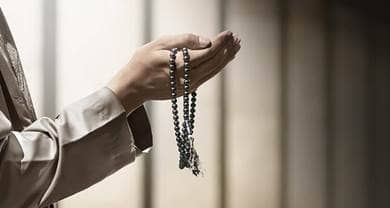
Shiites share key forms of devotion with the Sunnis, such as daily prayers or fasting. Many other forms of Shiites' daily devotion result either from prescriptions in Islamic law according to the Shiite interpretation (which is often only slightly different from the Sunni views) or from the model of the martyrs of Karbala and other members of the house of the Prophet. Piety in everyday life is also expressed in consulting the authorities in Islamic law (marja al-taqlid).
While Shiites and Sunnis have many rituals of daily devotion in common and both vary due to geographical and cultural diversities, slight differences in ritual and law mark Shiites as such. Since many of these rituals are conducted in the public sphere, they are also a way of displaying sectarian identities.
Like Sunnis, Shiites perform ritual prayer at five times during the day (at sunrise, noon, afternoon, evening, and night). The call to prayer differs slightly from the Sunni version. Shiites add the phrase "Come to the best of action," a formula they claim was removed by Umar. "Prayer is better than sleep," an alleged innovation of this caliph to the call to the first prayer at sunrise, is omitted. Shiites also add a third element to the profession of faith in the call to prayer (the first two being "I profess there is no god but God" and "Muhammad is the messenger of God") and state that "Ali is the deputy of God." Shiite scholars consider this statement commended, but not obligatory, and sometimes express willingness to omit it to improve the conditions for ecumenical encounter.
Minor features also distinguish the ablution (wudu) before ritual prayer as well as the prayer itself. Shiites accept under certain circumstances that feet are cleaned symbolically by wiping the outside of shoes.
Another difference marking sectarian identities within the Muslim communities is in the manner of genuflection during prayer. Prostrating Sunnis touch their prayer-mats with their foreheads, whereas Shiites touch the earth or preferably a stone of baked mud from Karbala. The imprint this stone leaves on the forehead is a mark of pride. Other signs of piety on the body are scars on the forehead, chest, and back from self-flagellation during Muharram. The body of the symbolic martyr of the reenacted Karbala gives thus evidence of the believer's sincerity. This recalls the body of the martyr, which according to both Sunni and Shiite traditions is believed not to decompose and to exhale a pleasant smell.
There are other, less formal forms of devotion that mark Shiites as such. In addition to the five daily ritual prayers, Muslims also pray on other occasions. These prayers are called dua in Arabic, and Shiites follow here the instructions attributed to the Imams. Given the great veneration for and the prominent narratives surrounding Ali, Fatima, and the Imams, Shiites invoke these whereas Sunnis appeal only to Muhammad. Shiites recall the moral qualities and events in the lives of these figures, women taking Fatima as an ideal, men Ali and Husayn. Even though it is during the first ten days of Muharram that Shiites remember those who died with Husayn, a frequently cited political dictum has it that "every day is Ashura and everywhere is Karbala." Shiites are thus expected to remember the events of Karbala during everyday life and to use the behavior of the martyrs as a general moral maxim.
Veneration can also be seen in naming children. While names such as Aisha, Abu Bakr, Umar, and Uthman are popular among Sunnis, Shiites avoid such names and prefer Ali, Hasan, and Husayn. Sunnis, on the other hand, criticize the Shiite practice of naming children Abd Ali or Abd Husayn. Other examples of naming preferences are the first names of the former president and prime minister of Pakistan, Zulfikar Ali Bhutto (1928-1979), who was named after Ali's bifurcated sword, Dhu l-Fiqar,
Depending on the environment in which a Shiite lives, his or her sectarian identity may be more or less significant. In Europe or North America, for example, being a Shiite may mean above all being a Muslim and in that sense not very different from being a Sunni. Differences may arise from the different national and linguistic backgrounds that hold ethno-cultural minorities together, and the communities probably also visit different mosques.
In countries with great political unrest, above all Iraq and Lebanon, expressing one's identity as a Shiite through specific acts of public piety (such as going to certain mosques, praying in a certain way, attending processions, displaying objects connected with the veneration of the Imams) exposes the believer to hostility and violence. Reports from Iraq in 2006 suggested that people changed their typical Sunni or Shiite names to more neutral ones.
Another form of devotion is the effort to improve the material and spiritual state of the community, as Lara Deeb has described in her study of the public piety of Shiite women in southern Beirut (An Enchanted Modern: Gender and Public Piety in Shi'i Lebanon, Princeton, 2006). For these women, the female protagonists of the sacred narratives are role models whose care for the weak and resistance against injustice are emulated.
Study Questions:
1. What is the role of prayer in Shiite spirituality?
2. What is the significance of this saying: "every day is Ashura and everywhere is Karbala"?
3. How does geography impact Shiite practices?
Back to Religion Library
Editor's picks See all columnists

Evangelical
Before You Unplug or Sign Out for Good

Evangelical
What Is the Purpose of Spiritual Gifts, and How Do You Discover Yours?

New Visions
5 Ways to Hear What God is Telling You

Muslim
How Awake Are We? When Waking Up is Falling Asleep

Latter-day Saint
"The Church supports the use of vaccinations"

Evangelical
Luther and the Beauty of Christ

The Soul of Gospel Music Explored in New Netflix Series "Voices of Fire"

Seven Ways to Think About Christian Mysticism

Evangelical

Evangelical

Muslim
Imam Ali’s letter to the Governor- Everlasting Example of Good...

Progressive Christian
Patheos Explore the world's faith through different perspectives on religion and spirituality! Patheos has the views of the prevalent religions and spiritualities of the world.
Ad-Free & Subscriber Log-In Subscription Support
- About Us
- 2026 Calendar
- Videos
- Podcasts
- Library of World Religions
- Faith In Media Tracker
- Advertise With Us
- Write for Us
- Privacy Policy
- Terms of Service
- Do Not Sell My Data
- Contact Us
- Radiant Digital
- Manage Newsletter Subscriptions
- Unsubscribe From Notifications
- Sitemap
Copyright 2008-2026, Patheos. All rights reserved.
Subscription Support Ad-Free & Subscriber Log-In
Follow Patheos