
BuddhistCatholicContemplativeEvangelicalGeneral ChristianHinduJewishLatter-day SaintMuslimNew VisionsProgressive Christian
Beliefs
- Buddhist
- Catholic
- Contemplative
- Evangelical
- General Christian
- Hindu
- Jewish
- Latter-day Saint
- More Voices
- Muslim
- New Visions
- Pagan
- Progressive Christian
Topics
- Religion News
- Food and Religion
- Sports and Religion
- Religious Art
- Religious Music and Entertainment
- Religious Events
- History and Religion
- Style and Religion
- Politics and Religion
- Women in Religion
- Recreation Outdoors and Religion
- Business Finance and Religion
- Careers Workplace and Religion
- Education and Religion
- Family Parenting and Religion
- Health Fitness and Religion
- Home and Religion
- Relationships and Religion
- Technology and Religion
- Travel and Religion
Columnists
- Buddhist Columnists
- Business Finance and Religion Columnists
- Careers Workplace and Religion Columnists
- Catholic Columnists
- Contemplative Columnists
- Education and Religion Columnists
- Evangelists Columnists
- Family Parenting and Religion Columnists
- General Christian Columnists
- Health Fitness and Religion Columnists
- Hindu Columnists
- History and Religion Columnists
- Home and Religion Columnists
- Jewish Columnists
- More Voices Columnists
- Latter Day Columnists
- Muslim Columnists
- New Visions Columnists
- Nonreligious Columnists
- Pagan Columnists
- Politics and Religion Columnists
- Progressive Columnists
- Recreation Outdoors and Religion Columnists
- Relationships and Religion Columnists
- Religion News Columnists
- Religious Art Columnists
- Religious Events Columnists
- Religious Music and Entertainment Columnists
- Sports and Religion Columnists
- Style and Religion Columnists
- Technology and Religion Columnists
- Travel and Religion Columnists
- Women in Religion Columnists
Resource Library
- 2026 Calendar
- Library of World Religions
- The 100 Most Holy Places on Earth
- Patheos Answers
- Podcasts
- Videos
- Faith Leaders Database
- Anglican Episcopalian
- Bahai
- Baptist
- Buddhism
- Christianity
- Confucianism
- Eastern Orthodoxy
- Hinduism
- Holiness and Pentecostal
- ISKCON
- Islam
- Judaism
- Lutheran
- Methodist
- The Church of Jesus Christ of Latter-day Saints
- New Age
- Paganism
- Presbytarian and Reformed
- Protestantism
- Religion Behind the Scenes
- Roman Catholic
- Scientology
- Shia Islam
- Sikhism
- Sufism
- Sunni Islam
- Taoism
- Zen
- See all religions
Research Tools
 Ad-Free & Subscriber Log-In Subscription Support
Ad-Free & Subscriber Log-In Subscription Support
Follow Patheos 

- Trending:
- Forgiveness
- |
- Marriage
- |
- Consciousness
- |
- Death Penalty
- |
- Election
- |
- Halloween
RELIGION LIBRARY
Roman Catholicism
Toggle navigation
Rituals and Worship
Sacred Time
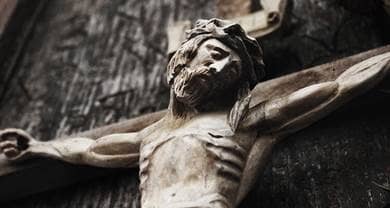
Catholics have a dual understanding of sacred time: the time of origins, when sacred events took place, and the time of renewal, when those sacred events are re-enacted. For Catholics, the most sacred events in history are the life, death, and resurrection of Jesus and the founding of the Church immediately thereafter. Despite their deep veneration of these most important of sacred times, Catholics differ from some Christians in that they do not look to the time of Jesus and the apostles as the high point of history, with everything that comes after it following a downward slope. Catholics believe that God continues to be present in the world through the medium of the Church, and that history continues to be sacralized by God's presence. God in the Person of the Holy Spirit guides the Church through both triumph and tragedy, using even the human failings of the Church's members to bring good and the call of God into the world. No matter how dark the time in which Catholics find themselves, they have an optimistic view of the flow of history and of the end toward which humanity and the world are moving.
For this reason, Catholics do not experience time as something to be escaped or shunned. Time is the vehicle through which God gathers all people, but time is a limited commodity. Catholics believe human life to be a great blessing, and something that only occurs once within the history of a soul; it is the arena in which humans may choose to accept or reject God's freely given gift of grace, moving themselves toward salvation or damnation. Time is therefore a great and wonderful gift; even when humans experience the world as travail and tears, it remains the one path toward union with God, which is the goal of all human life.
Even though time is sacralized because of God's presence in the world through the medium of the Church, humans do not tend to be aware of every moment as sacred. When Catholics re-enact the sacred events of Jesus' life, they renew their spirits by moving consciously into sacred time. First and foremost among these moments of renewal is the experience of God's presence in the Mass (Latin missa, "sent"), particularly through the Eucharist (Greek for "thanksgiving"). Catholics believe that in the mystery of the Mass, the bread and wine of the Eucharist are transformed into the body and blood of Jesus. Participating in the Eucharist gives the Catholic a direct physical connection to the sacred, a tangible communion with the divine. The reception of the Eucharist is the most sacred point in the life of the Catholic, made more extraordinary by its ability to be repeated. Mass and the celebration of the Eucharist are offered every day, but most Catholics attend Mass only on Sundays.
The Eucharist, along with Baptism, Confirmation, Reconciliation, Marriage, Holy Orders, and the Anointing of the Sick, is one of the sacraments of the Catholic Church. The celebration of each one creates a space of sacred time in the midst of everyday life; these are the moments when Catholics experience their ongoing connection to the divine most directly. The sacraments create sacred "mile markers" in human life, each pointing the way to what lies beyond this world.
Another way that Catholics mark sacred time is through the liturgical seasons of the year. Through the course of each year, Catholics re-enact a particular series of events from the life of Jesus, creating a sacred arc from the events prior to and surrounding his birth to his death and resurrection. The liturgical year includes:
· Advent, a season of waiting and hope that re-enacts the Annunciation to Jesus' mother, Mary, that she would conceive and give birth to the Son of God;
· Christmas, a roughly two-week celebration of Jesus' birth and the incarnation of God into human form;
· Lent, a six-week period devoted to repentance and fasting in preparation for Easter; and
· the Paschal season surrounding Easter, marking Jesus' death, resurrection, and ascension into heaven, which are the holiest days of the Christian year.
These are the major seasons, but in, through, and among these are a whole host of other holy days and feasts. Prominent among them are Pentecost, which recalls the descent of the Holy Spirit onto the apostles after Jesus' ascension; the Assumption of the Blessed Virgin Mary, commemorating Mary's bodily assumption into heaven; All Saints' Day, dedicated to all those who have attained heaven, immediately followed by All Soul's Day, which remembers the faithful who have died but have not yet reached heaven. There are a multitude of other feasts and holy days; in fact, every single day of the year is devoted to a particular event in sacred history or remembrance of particular saints in the Catholic pantheon.
Study Questions:
1. Describe the Catholic understandings of sacred time. How are they directly related to salvation?
2. When have the most sacred events in Catholic history taken place? Why are they not considered the “high point” of history?
3. Why could the Eucharist be called a timeless activity?
4. How does the liturgical calendar transform time? What are the major events within it?
Back to Religion Library
Editor's picks See all columnists

Evangelical
Before You Unplug or Sign Out for Good

Evangelical
What Is the Purpose of Spiritual Gifts, and How Do You Discover Yours?

New Visions
5 Ways to Hear What God is Telling You

Muslim
How Awake Are We? When Waking Up is Falling Asleep

Latter-day Saint
"The Church supports the use of vaccinations"

Evangelical
Luther and the Beauty of Christ

The Soul of Gospel Music Explored in New Netflix Series "Voices of Fire"

Seven Ways to Think About Christian Mysticism
Evangelical

Evangelical

Muslim
Imam Ali’s letter to the Governor- Everlasting Example of Good...

Progressive Christian
Patheos Explore the world's faith through different perspectives on religion and spirituality! Patheos has the views of the prevalent religions and spiritualities of the world.
Ad-Free & Subscriber Log-In Subscription Support
- About Us
- 2026 Calendar
- Videos
- Podcasts
- Library of World Religions
- Faith In Media Tracker
- Advertise With Us
- Write for Us
- Privacy Policy
- Terms of Service
- Do Not Sell My Data
- Contact Us
- Radiant Digital
- Manage Newsletter Subscriptions
- Unsubscribe From Notifications
- Sitemap
Copyright 2008-2026, Patheos. All rights reserved.
Subscription Support Ad-Free & Subscriber Log-In
Follow Patheos