
BuddhistCatholicContemplativeEvangelicalGeneral ChristianHinduJewishLatter-day SaintMuslimNew VisionsProgressive Christian
Beliefs
- Buddhist
- Catholic
- Contemplative
- Evangelical
- General Christian
- Hindu
- Jewish
- Latter-day Saint
- More Voices
- Muslim
- New Visions
- Pagan
- Progressive Christian
Topics
- Religion News
- Food and Religion
- Sports and Religion
- Religious Art
- Religious Music and Entertainment
- Religious Events
- History and Religion
- Style and Religion
- Politics and Religion
- Women in Religion
- Recreation Outdoors and Religion
- Business Finance and Religion
- Careers Workplace and Religion
- Education and Religion
- Family Parenting and Religion
- Health Fitness and Religion
- Home and Religion
- Relationships and Religion
- Technology and Religion
- Travel and Religion
Columnists
- Buddhist Columnists
- Business Finance and Religion Columnists
- Careers Workplace and Religion Columnists
- Catholic Columnists
- Contemplative Columnists
- Education and Religion Columnists
- Evangelists Columnists
- Family Parenting and Religion Columnists
- General Christian Columnists
- Health Fitness and Religion Columnists
- Hindu Columnists
- History and Religion Columnists
- Home and Religion Columnists
- Jewish Columnists
- More Voices Columnists
- Latter Day Columnists
- Muslim Columnists
- New Visions Columnists
- Nonreligious Columnists
- Pagan Columnists
- Politics and Religion Columnists
- Progressive Columnists
- Recreation Outdoors and Religion Columnists
- Relationships and Religion Columnists
- Religion News Columnists
- Religious Art Columnists
- Religious Events Columnists
- Religious Music and Entertainment Columnists
- Sports and Religion Columnists
- Style and Religion Columnists
- Technology and Religion Columnists
- Travel and Religion Columnists
- Women in Religion Columnists
Resource Library
- 2026 Calendar
- Library of World Religions
- The 100 Most Holy Places on Earth
- Patheos Answers
- Podcasts
- Videos
- Faith Leaders Database
- Anglican Episcopalian
- Bahai
- Baptist
- Buddhism
- Christianity
- Confucianism
- Eastern Orthodoxy
- Hinduism
- Holiness and Pentecostal
- ISKCON
- Islam
- Judaism
- Lutheran
- Methodist
- The Church of Jesus Christ of Latter-day Saints
- New Age
- Paganism
- Presbytarian and Reformed
- Protestantism
- Religion Behind the Scenes
- Roman Catholic
- Scientology
- Shia Islam
- Sikhism
- Sufism
- Sunni Islam
- Taoism
- Zen
- See all religions
Research Tools
 Ad-Free & Subscriber Log-In Subscription Support
Ad-Free & Subscriber Log-In Subscription Support
Follow Patheos 

- Trending:
- Forgiveness
- |
- Marriage
- |
- Consciousness
- |
- Death Penalty
- |
- Election
- |
- Halloween
RELIGION LIBRARY
Roman Catholicism
Toggle navigation
Beliefs
Sacred Narratives
The Hebrew scriptures (usually known to Christians as the Old Testament) and the New Testament lay the basic groundwork for the Catholic understanding of all reality. They show God as the creator of the world and everything in it, including humanity; humans as initially created to live in harmony with God and the world, but breaking that harmony through sin; God's ongoing interaction with humans and his continual call to resume and repair the broken relationship; and a future end of this world, once again fully in harmony with God.
Catholics understand the two major parts of the Bible to be "testaments" because they testify to the centrality of Christ in God's plan for the world and the humans within it. They believe that even the stories that do not mention Jesus by name are in some way pointing to his existence and his role in bringing humans back into right relationship with God, which makes the story of Jesus the Christ the most important narrative that Catholics hold to be sacred.
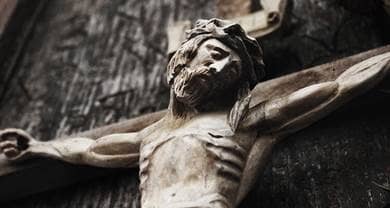
In Jesus, Catholics believe, God became incarnate-a living, breathing human being. The miraculous birth and events of Jesus' life point to his divine nature; his words and deeds show humans the way they should go about living in the world. Most important of all, Jesus' sacrificial death and resurrection make it possible for humans to become reconciled to God. Theories and theologies differ about how exactly this happens, but essentially Catholics believe that Jesus lived a life untouched by sin and yet chose to accept the punishment for sin, which is death; in doing so he repaired the broken human relationship with God. This reparation of the divine-human relationship is known as "atonement," literally "at-one-ment," which human beings could not accomplish by their own capacities; only God could heal the relationship. Nothing can be more central than this to the faith of Catholicism, and in fact all other sacred stories, all doctrine and dogma, flow from it.
All Christians hold the Bible to be divinely inspired, but there is disagreement over what exactly this means. Catholics believe that God inspired the human authors of the Bible with knowledge of the truths they would present, but did not dictate the actual words that they would write. For Catholics, what is most important in the biblical stories is what they explain about humanity's ongoing relationship with God, not always the literal meaning of the words. The biblical stories have been interpreted allegorically and symbolically since very early in Christian history, a practice that was given its classical formulation by St. Augustine (354-430). He said that Christians must approach the biblical stories with the full weight of their logic as well as of their faith, looking to the allegorical level of interpretation when the literal level contravenes reason. An expanded version of this methodology has become the standard Catholic approach to scripture.
While almost all Christians agree on the centrality of scripture, Catholics differ from most other Christian groups in giving equal weight to another sacred narrative known collectively as tradition. Tradition is the living transmission of sacred truth by the Holy Spirit through the teachings of the Church. It is most often represented in written form in the writings of the Church Fathers, the edicts of Church councils, and papal encyclicals. The Church Fathers are theologians and writers from the early centuries after Jesus who defined many of the doctrines that became foundational in Catholic Christian theology, such as what it means for Jesus to be fully human and fully divine and how the one God can be expressed in the persons of the Father, Son, and Holy Spirit. Church councils, which are gatherings of the Church's bishops, have dealt with similarly thorny theological issues. When popes send out official documents known as papal encyclicals, they are acting as leaders of the faithful and Christ's direct representatives on earth; these works are understood to express the shared faith of believers and usually deal with matters of theology, society, and morality. All these writings carry the full weight of the teaching authority that Christ entrusted to his Church.
Catholics believe that scripture and tradition together point to the sacred narrative of the Church itself, which is the vehicle of God's continuing work in the world. Revelation did not end with the closing of the New Testament but persists in the Holy Spirit's guidance of the Church. When Jesus' apostles gathered for the feast of Pentecost shortly following his death and resurrection, "suddenly a sound like the blowing of a violent wind came from heaven" as tongues of fire appeared over their heads and they received the ability to speak in languages they had not previously known (Acts 2:1-4). This, Catholics believe, was the Holy Spirit suffusing the leaders of the emerging Church with powers of teaching authority and proclamation, a power that Jesus had given particularly to his disciple Peter (meaning Rock), declaring that "on this rock I will build my church" (Matthew 16:18).
The Book of Acts illustrates Peter's leadership among the apostles, and by the early 2nd century Church leaders such as Bishop Ignatius of Antioch would recognize Peter as the first bishop of Rome and the beginning of the line of leadership that stretched down to their time and beyond. These are the men who are now call the popes, and Catholics believe that their leadership is a vital part of the sacred narrative of God's unending presence in the world through the medium of the Church.
Beyond the two major poles of Catholicism's sacred narratives lie other stories such as the biographies of saints. Saints are people who followed the example of Jesus in living their lives closely in communion with God and were able to overcome great adversities with faith. The accounts of saints' lives and deeds are known as hagiographies, and they often tell of miraculous acts the saints performed and their ability to withstand extraordinary suffering and even death without breaking their faith in God's love and mercy.
The lives of the saints are held up as models for all Catholics to follow, and Catholics are encouraged to call upon them as intercessors before God, just as someone might ask living loved ones to pray for him or her. Devotions to different saints emerged from the belief in the "communion of saints," the trust that all the faithful, living and dead, share a bond of faith; frequently, these devotions were related to factors such as the saint's birthplace, profession, or lifestyle that encouraged imitation.
Study Questions:
1. Why do Catholics hold the entirety of the Bible to be sacred?
2. What sacred narrative is associated with Jesus’ life? Why is still held in high regard amongst Catholics?
3. Do Catholics hold the Bible as inerrant? Why or why not?
4. Why is tradition important to the understanding of scripture?
Back to Religion Library
Editor's picks See all columnists

Evangelical
Before You Unplug or Sign Out for Good

Evangelical
What Is the Purpose of Spiritual Gifts, and How Do You Discover Yours?

New Visions
5 Ways to Hear What God is Telling You

Muslim
How Awake Are We? When Waking Up is Falling Asleep

Latter-day Saint
"The Church supports the use of vaccinations"

Evangelical
Luther and the Beauty of Christ

The Soul of Gospel Music Explored in New Netflix Series "Voices of Fire"

Seven Ways to Think About Christian Mysticism

Evangelical

Evangelical

Muslim
Imam Ali’s letter to the Governor- Everlasting Example of Good...

Progressive Christian
Patheos Explore the world's faith through different perspectives on religion and spirituality! Patheos has the views of the prevalent religions and spiritualities of the world.
Ad-Free & Subscriber Log-In Subscription Support
- About Us
- 2026 Calendar
- Videos
- Podcasts
- Library of World Religions
- Faith In Media Tracker
- Advertise With Us
- Write for Us
- Privacy Policy
- Terms of Service
- Do Not Sell My Data
- Contact Us
- Radiant Digital
- Manage Newsletter Subscriptions
- Unsubscribe From Notifications
- Sitemap
Copyright 2008-2026, Patheos. All rights reserved.
Subscription Support Ad-Free & Subscriber Log-In
Follow Patheos