
BuddhistCatholicContemplativeEvangelicalGeneral ChristianHinduJewishLatter-day SaintMuslimNew VisionsProgressive Christian
Beliefs
- Buddhist
- Catholic
- Contemplative
- Evangelical
- General Christian
- Hindu
- Jewish
- Latter-day Saint
- More Voices
- Muslim
- New Visions
- Pagan
- Progressive Christian
Topics
- Religion News
- Food and Religion
- Sports and Religion
- Religious Art
- Religious Music and Entertainment
- Religious Events
- History and Religion
- Style and Religion
- Politics and Religion
- Women in Religion
- Recreation Outdoors and Religion
- Business Finance and Religion
- Careers Workplace and Religion
- Education and Religion
- Family Parenting and Religion
- Health Fitness and Religion
- Home and Religion
- Relationships and Religion
- Technology and Religion
- Travel and Religion
Columnists
- Buddhist Columnists
- Business Finance and Religion Columnists
- Careers Workplace and Religion Columnists
- Catholic Columnists
- Contemplative Columnists
- Education and Religion Columnists
- Evangelists Columnists
- Family Parenting and Religion Columnists
- General Christian Columnists
- Health Fitness and Religion Columnists
- Hindu Columnists
- History and Religion Columnists
- Home and Religion Columnists
- Jewish Columnists
- More Voices Columnists
- Latter Day Columnists
- Muslim Columnists
- New Visions Columnists
- Nonreligious Columnists
- Pagan Columnists
- Politics and Religion Columnists
- Progressive Columnists
- Recreation Outdoors and Religion Columnists
- Relationships and Religion Columnists
- Religion News Columnists
- Religious Art Columnists
- Religious Events Columnists
- Religious Music and Entertainment Columnists
- Sports and Religion Columnists
- Style and Religion Columnists
- Technology and Religion Columnists
- Travel and Religion Columnists
- Women in Religion Columnists
Resource Library
- 2026 Calendar
- Library of World Religions
- The 100 Most Holy Places on Earth
- Patheos Answers
- Podcasts
- Videos
- Faith Leaders Database
- Anglican Episcopalian
- Bahai
- Baptist
- Buddhism
- Christianity
- Confucianism
- Eastern Orthodoxy
- Hinduism
- Holiness and Pentecostal
- ISKCON
- Islam
- Judaism
- Lutheran
- Methodist
- The Church of Jesus Christ of Latter-day Saints
- New Age
- Paganism
- Presbytarian and Reformed
- Protestantism
- Religion Behind the Scenes
- Roman Catholic
- Scientology
- Shia Islam
- Sikhism
- Sufism
- Sunni Islam
- Taoism
- Zen
- See all religions
Research Tools
 Ad-Free & Subscriber Log-In Subscription Support
Ad-Free & Subscriber Log-In Subscription Support
Follow Patheos 

- Trending:
- Forgiveness
- |
- Marriage
- |
- Consciousness
- |
- Death Penalty
- |
- Election
- |
- Halloween
RELIGION LIBRARY
Presbyterian and Reformed
Toggle navigation
Rituals and Worship
Symbolism
Because Zwingli made every effort to model worship on the practices of the early Church as found in the Bible, he (and Calvin following him) was in some ways a more radical reformer than Luther. Whereas Luther permitted traditional practices to continue unless proscribed by scripture, Zwingli tried to abolish any practice not prescribed by scripture. The result for symbolism in Reformed churches has been significant.
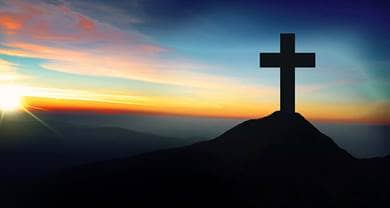
Reformed Churches are far more likely than Lutheran churches (or Anglican, or certainly Catholic) to be stripped bare. There are few images or statues. Typically Reformed sanctuaries have a cross without the body of Jesus on it, symbolizing the resurrection, rather than a crucifix with the body of Jesus, symbolizing Christ's passion. The walls are usually white, and if there are decorations they tend to be simple geometrical patterns.
Luther did not discontinue the wearing of vestments by clergy. In fact he often wore his monk's robes to worship. In Calvin's Geneva clergy adopted the practice of wearing black robes rather than vestments. These robes were associated with university professors, a "secular" calling, rather than with Roman priests. Marie Dentière, who was a French woman and proponent of the Reformation, once criticized Calvin for wearing these robes, pointing out that if he took the priesthood of all believers with complete seriousness he would adopt more common street clothes for preaching.
There are for Reformed churches, as for others, colors associated with each liturgical season. The communion table and pulpit will often be dressed in violet for Advent, Lent, and the first three days of Holy Week. White is used for Christmas Eve and Christmastide, Epiphany, Maundy Thursday, Eastertide, and Trinity Sunday. Red is used for Good Friday and Pentecost. Green is used for the Sundays after Pentecost.
The iconoclastic tradition of Reformed and Presbyterian Christianity led to a longstanding distrust of symbols. For many centuries, Presbyterians seemed to believe that any reliance on symbolism to manifest or display or teach Christian truth subtracted from the authority they accorded to scripture alone. Meeting houses were very simple. This dependence on words and the belief that such dependence was a zero sum game that allowed for no symbolism was strengthened by revivals in the 18th and 19th centuries, which relied almost exclusively on the words of the Bible and of the preacher. Many Presbyterians believed, well into the 19th century, that music had no place in worship. Horace Bushnell (1802-1876), a Congregational minister, made the case in the 19th century that Reformed Christians ought not forget that words, too, had symbolic meaning. Despite his stature as one of the most prominent American theologians of the 19th century, his admonitions were largely ignored.
Not until the late 19th and early 20th centuries did Presbyterian and Reformed Christians begin to soften their stance against symbols. Southern Presbyterians in Presbyterian Church in the U.S. commissioned a seal for their denomination in 1891. Though it was widely used, distrust of symbols prevented its formal adoption as the seal of the denomination until 1956. Northern Presbyterians also created a seal, adopting it at the 1892 General Assembly. While this willingness to create seals indicates a lessening of iconoclastic distrust, the seals themselves are extremely literalistic. They basically consist of pictures of the Bible. Not until 1959 does a Presbyterian denomination in the United States (the Presbyterian Church [U.S.A.]) adopt a seal that depicts a cross. To depict a cross had seemed to Reformed Christians, since Zwingli's reform of Zurich in the 1520s, to smack of Catholicism and Roman Catholic reliance on imagery.
The official seal of the Presbyterian Church (U.S.A.), adopted in 1985, is at first glance simply a cross. It is intended to capture some of the important emphases of the Reformed tradition. The cross is made up of a dove, representing the Holy Spirit, as well as a Bible sitting open on a lectern, indicating the Reformed principle of sola scriptura, and the importance of preaching and learning in the Reformed tradition. The flames at the base of the cross indicate a triangle, representing the Trinity. The flames symbolize both the burning bush from which God spoke to Moses, and the outpouring of the Spirit at Pentecost that founded the Church. Today's Presbyterian churches are increasingly making use of symbols and a high aesthetic that contribute to the liturgical space and rich experience of worship.
Study Questions:
1. In what ways could Zwingli’s efforts, despite his theology, classify him as more radical than Luther?
2. Describe the symbolism used within Reformed Churches. Why are they typically bare?
3. How is color used as a medium of symbolism?
4. When did Presbyterian and Reformed churches begin to accept symbols? What was the result?
5. Describe the Presbyterian Church (USA)’s seal. What does it symbolize?
Back to Religion Library
Editor's picks See all columnists

Evangelical
Before You Unplug or Sign Out for Good

Evangelical
What Is the Purpose of Spiritual Gifts, and How Do You Discover Yours?

New Visions
5 Ways to Hear What God is Telling You

Muslim
How Awake Are We? When Waking Up is Falling Asleep

Latter-day Saint
"The Church supports the use of vaccinations"

Evangelical
Luther and the Beauty of Christ

The Soul of Gospel Music Explored in New Netflix Series "Voices of Fire"

Seven Ways to Think About Christian Mysticism

Evangelical

Evangelical

Muslim
Imam Ali’s letter to the Governor- Everlasting Example of Good...

Progressive Christian
Patheos Explore the world's faith through different perspectives on religion and spirituality! Patheos has the views of the prevalent religions and spiritualities of the world.
Ad-Free & Subscriber Log-In Subscription Support
- About Us
- 2026 Calendar
- Videos
- Podcasts
- Library of World Religions
- Faith In Media Tracker
- Advertise With Us
- Write for Us
- Privacy Policy
- Terms of Service
- Do Not Sell My Data
- Contact Us
- Radiant Digital
- Manage Newsletter Subscriptions
- Unsubscribe From Notifications
- Sitemap
Copyright 2008-2026, Patheos. All rights reserved.
Subscription Support Ad-Free & Subscriber Log-In
Follow Patheos