
BuddhistCatholicContemplativeEvangelicalGeneral ChristianHinduJewishLatter-day SaintMuslimNew VisionsProgressive Christian
Beliefs
- Buddhist
- Catholic
- Contemplative
- Evangelical
- General Christian
- Hindu
- Jewish
- Latter-day Saint
- More Voices
- Muslim
- New Visions
- Pagan
- Progressive Christian
Topics
- Religion News
- Food and Religion
- Sports and Religion
- Religious Art
- Religious Music and Entertainment
- Religious Events
- History and Religion
- Style and Religion
- Politics and Religion
- Women in Religion
- Recreation Outdoors and Religion
- Business Finance and Religion
- Careers Workplace and Religion
- Education and Religion
- Family Parenting and Religion
- Health Fitness and Religion
- Home and Religion
- Relationships and Religion
- Technology and Religion
- Travel and Religion
Columnists
- Buddhist Columnists
- Business Finance and Religion Columnists
- Careers Workplace and Religion Columnists
- Catholic Columnists
- Contemplative Columnists
- Education and Religion Columnists
- Evangelists Columnists
- Family Parenting and Religion Columnists
- General Christian Columnists
- Health Fitness and Religion Columnists
- Hindu Columnists
- History and Religion Columnists
- Home and Religion Columnists
- Jewish Columnists
- More Voices Columnists
- Latter Day Columnists
- Muslim Columnists
- New Visions Columnists
- Nonreligious Columnists
- Pagan Columnists
- Politics and Religion Columnists
- Progressive Columnists
- Recreation Outdoors and Religion Columnists
- Relationships and Religion Columnists
- Religion News Columnists
- Religious Art Columnists
- Religious Events Columnists
- Religious Music and Entertainment Columnists
- Sports and Religion Columnists
- Style and Religion Columnists
- Technology and Religion Columnists
- Travel and Religion Columnists
- Women in Religion Columnists
Resource Library
- 2026 Calendar
- Library of World Religions
- The 100 Most Holy Places on Earth
- Patheos Answers
- Podcasts
- Videos
- Faith Leaders Database
- Anglican Episcopalian
- Bahai
- Baptist
- Buddhism
- Christianity
- Confucianism
- Eastern Orthodoxy
- Hinduism
- Holiness and Pentecostal
- ISKCON
- Islam
- Judaism
- Lutheran
- Methodist
- The Church of Jesus Christ of Latter-day Saints
- New Age
- Paganism
- Presbytarian and Reformed
- Protestantism
- Religion Behind the Scenes
- Roman Catholic
- Scientology
- Shia Islam
- Sikhism
- Sufism
- Sunni Islam
- Taoism
- Zen
- See all religions
Research Tools
 Ad-Free & Subscriber Log-In Subscription Support
Ad-Free & Subscriber Log-In Subscription Support
Follow Patheos 

- Trending:
- Forgiveness
- |
- Marriage
- |
- Consciousness
- |
- Death Penalty
- |
- Election
- |
- Halloween
RELIGION LIBRARY
Methodist
Toggle navigation
Rituals and Worship
Sacred Space
Space for Methodists, as for most Protestants, is less differentiated into sacred/profane than in some other traditions. There is no temple at which sacrifices must be performed, nor is there a region of the world where the divine is more present than in other regions. In part this is because Christians in general believe that God (especially, on earth, as the Holy Spirit) is equally present everywhere. In part this is because Protestants emphasize preaching and the sacraments over other possible means of receiving God's grace (such as icons or mediation by a priest in a special place, for example). In part this is because of a complicated shift in western culture and philosophy and science in the 16th through the 18th centuries that affects all western religious traditions and that makes differences in space (and time) seem less plausible to people.
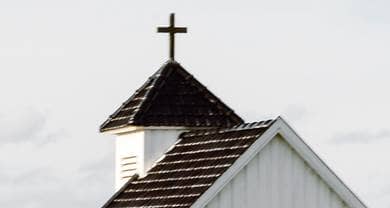
That said, the Methodist (and Protestant) emphasis on preaching and the sacraments has influenced the architecture of churches. Methodists often experience these buildings and the sanctuaries within them as being more holy (in the sense of set apart from the everyday world for contact with the divine) than other places.
Because Methodism was intended as a renewal movement within the Anglican Church, it did not originally have separate buildings. Methodists typically preached in the open air, or in Anglican pulpits when allowed, and met in private homes. Wesley did purchase and later build facilities for society meetings. Following the American Revolutionary war, when Methodism became a separate denomination in the United States, Methodists began building their own worship structures. At first these were relatively simple meeting houses.
As Methodists grew in affluence, their churches became more elaborate. In the early and middle 20th century a "Romantic" movement swept many American churches. This movement saw the Middle Ages as the age of faith. Many gothic churches were built, and later Georgian churches, for aesthetic reasons but also on the theory that more impressive places of worship would attract more members. By the time the United Methodist Church was formed in 1968, gothic churches were too expensive, and aesthetic tastes in the United States had changed.
Methodist Churches do not differ greatly from other Protestant churches. The physical set up of Methodist worship space is strongly influenced by the twin emphases of worship: preaching the word (from scripture) and receiving the sacraments. A typical church will have a narthex, which is a vestibule or hallway between the outside of the building and the sanctuary, or main worship hall. The main worship hall, often called a sanctuary, has a nave, which is the area in which the congregation sits, and a raised chancel up front. The building itself is sometimes shaped like a cross, and Methodists sometimes refer to the chancel end of the sanctuary as "east," the back of the nave as "west," and either side as north and south, whether or not the church is actually laid out on these compass points. This is the result of a long tradition in (European) church building in which the chancel (and in it the altar table) faces east (toward Jerusalem, or toward the sunrise, symbolizing the resurrection).
In the chancel one typically finds a table for the sacrament of communion (whether or not it is called an "altar" has been controversial at some points in Methodist history), a baptismal font, and a pulpit in which the preacher stands to deliver the sermon. Often there is a "communion" or "altar rail" around the chancel, at which people can kneel to pray or receive communion. In the 19th century the pulpit was usually in the center of the chancel. In the 20th century a "divided chancel" became common, with the table or altar in the center against the east wall, the pulpit on one side, and a lectern (for scripture reading) on the other. More recent architecture is varied, but often has a free-standing table in the center, the pulpit on one side, and the baptismal font or lectern on the other.
Sacred Space:
Study Questions:
1. How does Methodism's understanding of God eliminate the need for sacred space?
2. Why are sanctuaries considered holy?
3. What was the role of churches in early Methodism? In contemporary Methodism?
4. Describe the common architecture of the Methodist Church.
Back to Religion Library
Editor's picks See all columnists

Evangelical
Before You Unplug or Sign Out for Good

Evangelical
What Is the Purpose of Spiritual Gifts, and How Do You Discover Yours?

New Visions
5 Ways to Hear What God is Telling You

Muslim
How Awake Are We? When Waking Up is Falling Asleep

Latter-day Saint
"The Church supports the use of vaccinations"

Evangelical
Luther and the Beauty of Christ

The Soul of Gospel Music Explored in New Netflix Series "Voices of Fire"

Seven Ways to Think About Christian Mysticism
Evangelical

Evangelical

Muslim
Imam Ali’s letter to the Governor- Everlasting Example of Good...

Progressive Christian
Patheos Explore the world's faith through different perspectives on religion and spirituality! Patheos has the views of the prevalent religions and spiritualities of the world.
Ad-Free & Subscriber Log-In Subscription Support
- About Us
- 2026 Calendar
- Videos
- Podcasts
- Library of World Religions
- Faith In Media Tracker
- Advertise With Us
- Write for Us
- Privacy Policy
- Terms of Service
- Do Not Sell My Data
- Contact Us
- Radiant Digital
- Manage Newsletter Subscriptions
- Unsubscribe From Notifications
- Sitemap
Copyright 2008-2026, Patheos. All rights reserved.
Subscription Support Ad-Free & Subscriber Log-In
Follow Patheos